Prabowo Pays Condolence Visit to Megawati's Home: Political Ties Amid Mourning
Baca dalam 60 detik
- Presiden Prabowo Subianto menyambangi kediaman Megawati Soekarnoputri di Jalan Teuku Umar, Jakarta, pada Senin (28/9) sore untuk menyampaikan belasungkawa atas wafatnya Guruh Soekarnoputera.
- Kedatangan Prabowo disambut langsung oleh Megawati yang didampingi Puan Maharani; pertemuan disebut berlangsung personal dan tidak menyinggung urusan politik praktis.
- Momen ini dinilai sebagai penanda cairnya relasi antara istana dan PDI Perjuangan, meski publik menanti apakah kehangatan tersebut berlanjut ke kerja sama politik yang lebih substantif.
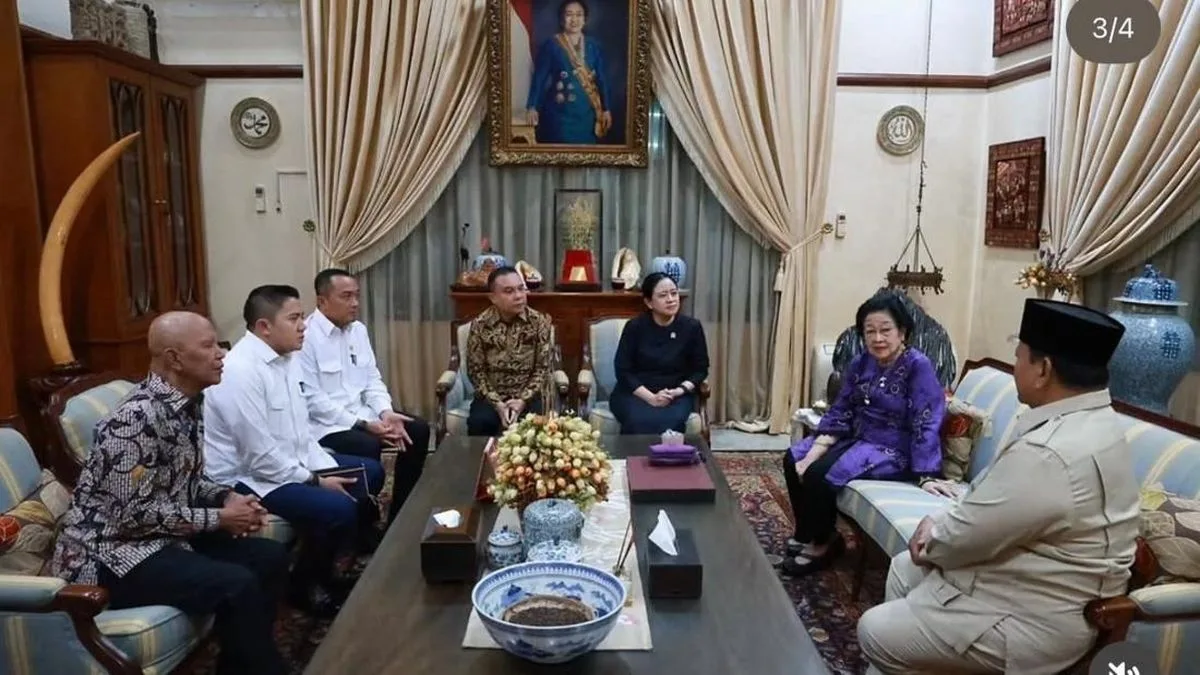
President Prabowo Subianto visited the residence of Indonesia's fifth president, Megawati Soekarnoputri, on Jalan Teuku Umar, Central Jakarta, on Monday (28/9) evening. The head of state's arrival was not for a state agenda, but to convey his condolences over the passing of Guruh Soekarnoputera, Megawati's younger brother and a PDI Perjuangan politician.
Information gathered from a written statement by PDI Perjuangan central board chairman Said Abdullah on Tuesday (29/9) said Prabowo arrived at around 17.45 WIB. He came with House Deputy Speaker Sufmi Dasco Ahmad, State Secretary Minister Prasetyo Hadi, and Cabinet Secretary Tedy Indra Wijaya. The entourage was received directly by Megawati, accompanied by her daughter, Puan Maharani, who is also the House Speaker.
According to Said, the visit was purely for condolences. "The President and his entourage came to pay their respects and express their condolences over the death of Mas Guruh Soekarnoputera," he said. He explained that when the body was laid out and through the burial procession, Prabowo had not been able to attend because of his packed government agenda. Said said the family understood the time constraints, especially since Guruh's passing was sudden.
Notably, the meeting was described as warm and personal. Said said Megawati and Prabowo offered prayers for each other. Prabowo prayed that the late Guruh would be accepted by Allah SWT, while Megawati prayed for the President's health and the smooth running of his state duties. "This meeting was very good, maintaining ties with one another. As a friend, Ibu Mega was certainly very moved by the President's attention," Said said.
"When the President arrived at Teuku Umar, he was immediately received by Ibu Mega, accompanied by Mbak Puan Maharani, and I was asked to join them." — Said Abdullah, Chairman of PDI Perjuangan's Central Board
In the context of national politics, such a cordial meeting is rare amid the tensions that often color relations between the palace and opposition parties. PDI Perjuangan, although outside the circle of power, remains a major electoral force. As such, every meeting between Prabowo and Megawati is always read as a political signal, not merely a social visit. Said stressed there was no political discussion in the meeting, but the public will certainly weigh that statement for itself.
For Indonesia, the stability of relations between the president and the leader of a major party has direct implications for the smooth running of the legislative agenda in the House. Puan Maharani, who was also present, holds a key role in determining the direction of deliberations on laws and the budget. The personal warmth between Prabowo and Megawati could serve as capital to reduce friction in parliament, especially ahead of deliberations on strategic policies such as the state budget and sectoral bills.
On the other hand, the public needs to watch whether this moment of mourning will develop into more concrete political cooperation, or stop merely as a gesture of sympathy. After all, in recent months, the dynamics between the government and PDI Perjuangan have still been marked by a tug-of-war of interests, from the cabinet reshuffle issue to the party's stance on a number of government policies.
What is clear is that Prabowo's presence at the mourning house signals that the personal channel of communication between the two figures remains intact. In Indonesia's political tradition, personal ties often serve as the glue that can thaw formal frostiness. However, how far that warmth will affect the national political landscape going forward still awaits the next concrete step. Will this cordial visit become a gateway to broader reconciliation, or merely a brief episode amid mourning?