The Weeknd Rocks JIS, Promises to Return to Jakarta: Signal That Indonesia's Concert Market Is Drawing More Attention
Baca dalam 60 detik
- The Weeknd sukses menggelar konser After Hours Til Dawn Tour 2026 di Jakarta International Stadium selama dua malam, Sabtu (26/9/2026) dan Minggu (27/9/2026).
- Dalam sela penampilan, Abel Tesfaye menyatakan akan kembali ke Jakarta dalam waktu dekat setelah absen sejak kunjungan terakhirnya ke Bali pada 2018.
- Antusiasme penonton yang memadati JIS menjadi indikasi kuat bahwa Indonesia, khususnya Jakarta, semakin diperhitungkan sebagai pasar utama tur musik global.
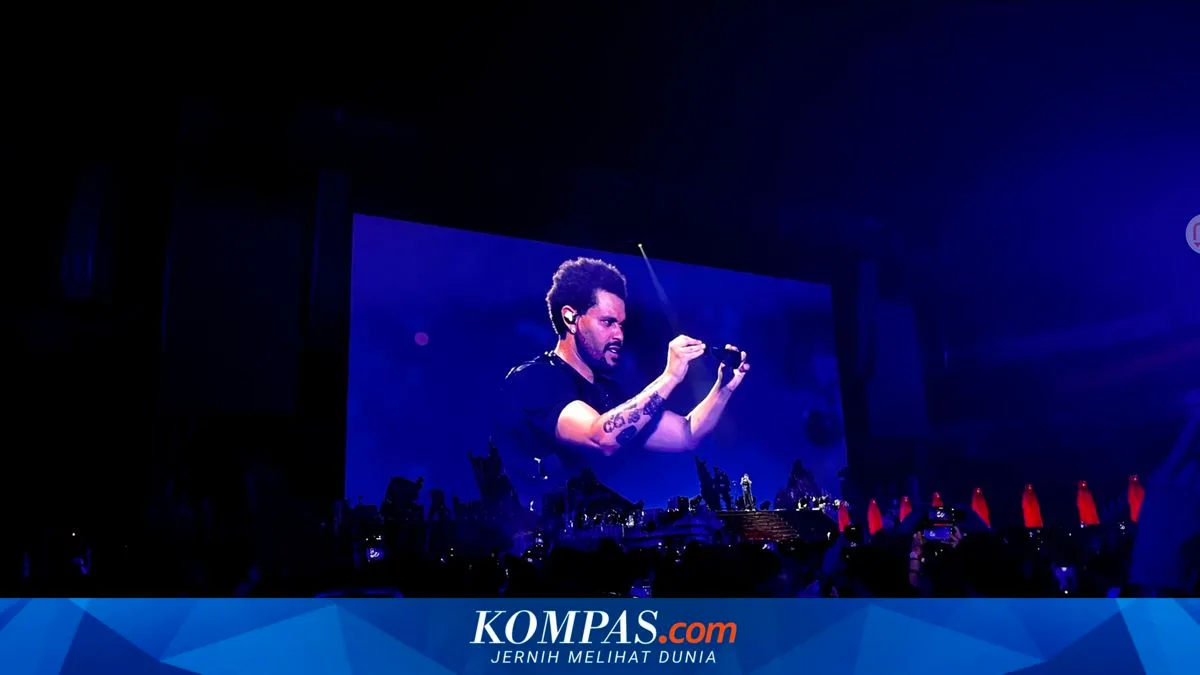
JAKARTA – After an eight-year absence from Indonesian stages, The Weeknd has finally returned and immediately proved his pull. The After Hours Til Dawn Tour 2026 LIVE IN ASIA Day 1 concert, held at Jakarta International Stadium (JIS) on Saturday night (26/9/2026), drew thousands of fans and marked a new chapter for the country's concert industry.
The performance by Abel Tesfaye – The Weeknd's real name – was energetic from the start. A run of hits including "After Hours", "Starboy", "Can't Feel My Face", "Out of Time", "I Feel It Coming", "Die for You", "Call Out My Name", and "São Paulo" was delivered without pause, triggering mass singalongs from the JIS stands. The grand stage design and lighting added to the intensity, making the night not just a concert but a celebration.
Interestingly, between his performances, Abel took time to speak to the audience. He admitted it had been far too long since he had set foot in Indonesia. "The last time I came to Indonesia was around 2018, to Bali. I didn't expect it to take this long to come back," he said, as quoted from a statement received by LyndHub. Seeing the extraordinary enthusiasm, he promised to return soon. "From the energy you gave tonight, Jakarta, I know I'll be back again very soon," he said.
The statement was immediately met with thunderous cheers. Abel also highlighted the fact that the concert was held on two consecutive nights, something he said rarely happens. "We're doing this concert for two nights. Two full nights, from the left side to the right side," he said. He even stressed that there was no bad seat at JIS that night, praise that reinforced the venue's position as one of the best stadiums in Southeast Asia.
For Indonesia, this concert is more than entertainment. The presence of an artist of The Weeknd's caliber – a multiple Grammy winner with a global fan base – delivers a direct economic impact: hotel occupancy around North Jakarta rises, the culinary and transportation sectors get a boost, and Jakarta's image as a music tourism destination grows stronger. The government, through the Ministry of Tourism and Creative Economy, notes that international-scale music concerts can contribute hundreds of billions of rupiah to the local economy, from ticket sales and merchandise to spending by domestic and foreign tourists.
Challenges remain, however. JIS's capacity of 82,000 spectators demands solid crowd management. At this concert, entry and exit queues were relatively orderly, though some fans complained about limited public transport access after the event. Going forward, integration with mass transit services such as MRT and TransJakarta needs to be improved so that the concert experience in Jakarta becomes more competitive compared with other cities in Asia.
From an industry perspective, The Weeknd's promise to return is a positive signal that global promoters are starting to look at Indonesia as a main market, not just a stopover. Major world tours have often skipped Indonesia due to logistics and regulatory considerations. If this concert is a commercial and operational success, it is not impossible that other top-tier artists will follow. The government is also being urged to simplify permits and provide fiscal incentives for international event organizers, as Singapore and Malaysia have done.
The question now: can Indonesia use this moment to level up as a host of world tours? The Weeknd has already given the green light. Now it is the turn of domestic stakeholders to prove that Jakarta – and Indonesia more broadly – deserves to be a main stage, not merely a supporting act.