Six-Year-Old Girl Breaks Rubik's World Record, Here's the Secret Behind It
Baca dalam 60 detik
- Lian Yunzhi, anak berusia enam tahun asal Chengdu, Tiongkok, mencatatkan rekor dunia rata-rata 3x3 putri dengan waktu 4,27 detik di Guangzhou.
- Di balik pencapaian itu, ia berlatih 2–3 jam setiap hari kerja dan hingga enam jam pada akhir pekan, serta mempelajari lebih dari 1.300 algoritma Rubik.
- Kisah ini menyoroti fenomena anak-anak Tiongkok yang menekuni speedcubing secara intensif, memicu diskusi tentang pendidikan anak dan kesehatan mata.
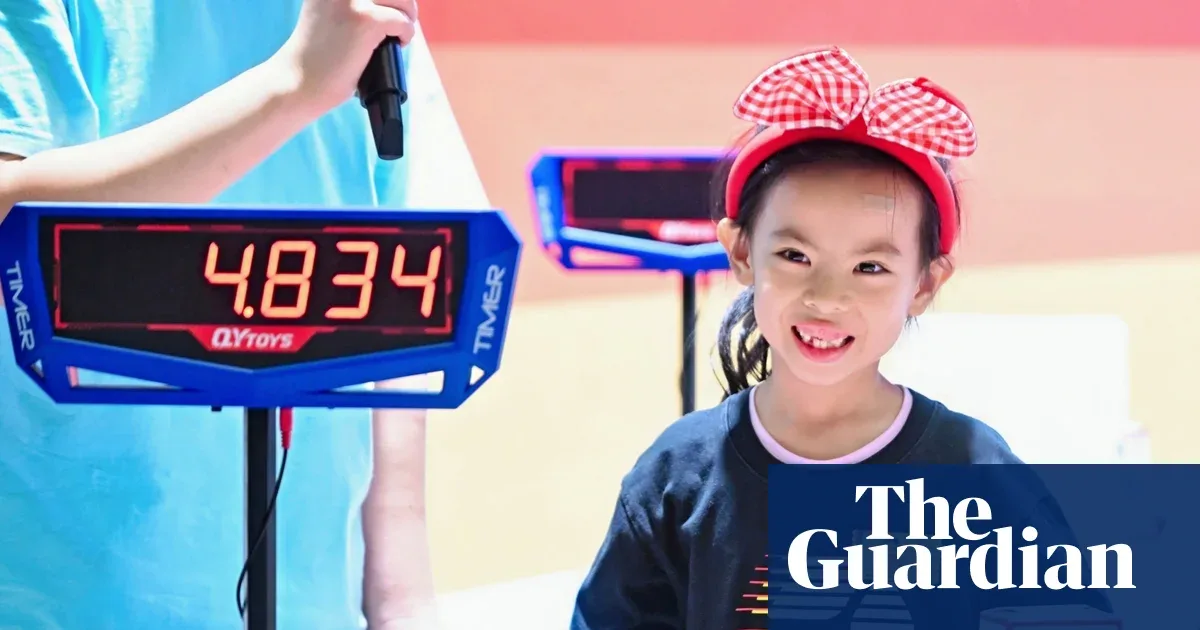
A six-year-old girl from Chengdu, China, Lian Yunzhi, has written her name into the record books after solving a 3x3 Rubik's Cube with an average time of 4.27 seconds at a speedcubing event in Guangzhou on 16 September. The feat broke the previous record of 4.52 seconds, which she had also set earlier this month, and on some single attempts she was even able to solve it in under four seconds.
Zhizhi's success—as she is affectionately known—was not an overnight achievement. Her mother, Lin Yangxi, said her daughter trains two to three hours every school day and can reach six hours on weekends. "She was very excited and felt all her hard work had paid off," Lin told The Guardian. Her name is now known throughout the school, and even senior students come to her class asking for her autograph.
Zhizhi's journey began at age four, when her mother enrolled her in a speedcubing class as one of seven or eight extracurricular activities, including dancing, painting, and gymnastics. Although it started as a trial, her parents saw great potential in the sport. "We proactively chose to invest more time," Lin said. According to her, cubing helps improve concentration, memory, logical thinking, and spatial awareness.
But the road to the top was not smooth. After several months of training, Zhizhi hit a plateau at an average of eight seconds for three to four months. "Honestly, both as parents and as a child, we felt like giving up at that point," Lin recalled. The turning point came when they found a specialist teacher in Shanghai who taught more than 1,300 Rubik's algorithms. Since then, her speed has increased rapidly.
Although speedcubing involves minimal physical injury, Lin remains vigilant about her daughter's eye health, given the high prevalence of myopia in China. She regularly checks Zhizhi's vision. Lin also admitted she was very nervous during this month's championship, but was amazed by her daughter's ability to handle pressure. "She handled the pressure well in the crucial moments," she said.
"We just want to accompany her as far as she can go. This can forge resilience and perseverance in her, which will be useful in whatever she chooses later."
— Lin Yangxi, mother of Lian Yunzhi
The phenomenon of children pursuing speedcubing intensively like Zhizhi is not new in China. The country is known for its strict culture of academic and non-academic competition from an early age. However, Zhizhi's story raises questions about the balance between achievement and childhood. Lin herself does not see her daughter pursuing a career in speedcubing, but stresses that the sport instills good habits. "She used to envy children who had more time to play, but then she said she was no longer envious because pursuing her goal makes her happy," Lin said.
For Indonesia, this story can serve as a mirror. Amid growing interest in brain sports such as cubing and chess, support for early-age development is still often constrained by access and cost. Indonesia's speedcubing community is actually quite active, with a number of local competitions recognized by the World Cube Association. However, to produce a world champion, a more established ecosystem is needed: specialist coaches, training facilities, and parents' understanding of the importance of balance. Zhizhi's story shows that investing time and resources from an early age can bear fruit, but it also reminds us of the risk of excessive pressure on children.
Going forward, the question is not only how fast Zhizhi can break her next record, but how the world of children's education balances ambition and well-being. Will this kind of intensive development model become the new norm, or will it instead spark debate about the line between achievement and a child's right to play?