FIAD Urges Government to Stop Changing Curricula: Implementation Evaluation Is More Urgent
Baca dalam 60 detik
- Forum Intelektual Antardisiplin (FIAD) menilai penggantian kurikulum nasional yang terlalu sering justru mengabaikan persoalan mendasar: kualitas implementasi di ruang kelas.
- Alih-alih merancang kurikulum baru, FIAD mendorong penguatan asesmen kebutuhan, pendampingan guru, serta pemantauan dampak kebijakan pendidikan secara berkelanjutan.
- Forum yang diisi akademisi, guru, pekerja, hingga petani ini juga menyoroti ketimpangan fasilitas kota-desa dan mendesak otonomi profesional guru serta pendidikan hak-hak pekerja bagi siswa.
The Interdisciplinary Intellectual Forum (FIAD) is calling on the central government to stop making curriculum changes its main response to national education problems. At a meeting at Gedung Indonesia Menggugat in Bandung last weekend, the forum — made up of academics, teachers, workers, and farmers — argued that the most urgent task now is not drafting a new curriculum but ensuring the existing one actually runs in classrooms.
The call comes amid a long-standing habit in Indonesia's education bureaucracy of changing the curriculum framework whenever power rotates. Since the 1998 reform, at least four curricula have come and gone: the Competency-Based Curriculum (2004), the School-Level Curriculum (2006), the 2013 Curriculum, and the Merdeka Curriculum (2022). The anecdote "change the president or change the minister, change the curriculum" has become a kind of cynical acknowledgment of the instability in education policy direction.
According to FIAD, the main problem is not the design of the curriculum document but the extent to which educational goals are translated into daily learning practice. The forum questioned whether the learning process actually has an impact on students, and what support teachers and schools really need. "What needs strengthening is implementation evaluation," FIAD said in a press release received by journalists on Monday (28/9).
In the forum's view, education cannot be reduced to the transfer of knowledge in mathematics, science, language, or technical skills alone. Education must also cultivate the ability to think, make decisions, live together fairly, and build civilization. Forum participants stressed the importance of giving children room to ask questions, explore, build imagination, and consider various possibilities before making decisions.
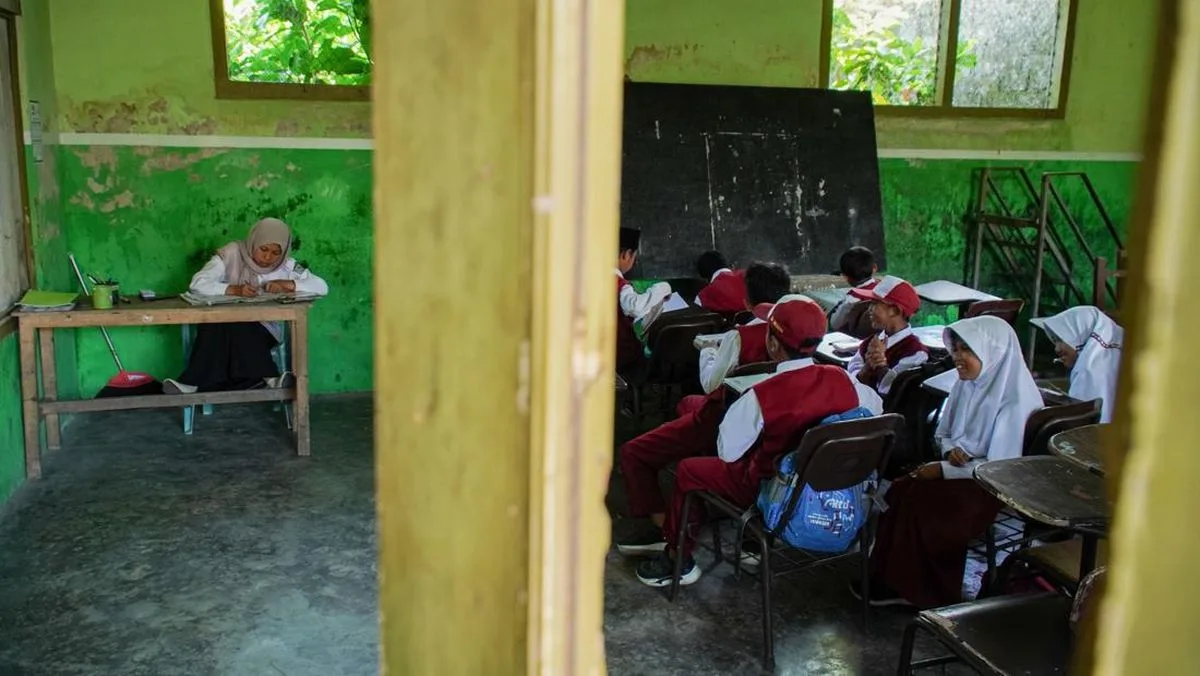
FIAD also highlighted the gap in facilities between urban and rural schools. Urban schools with infrastructure and technology support are seen as having room for acceleration that is not always available in the regions. The forum therefore proposed the idea of contextual autonomy: giving schools and regions the flexibility to tailor learning to local needs and potential, without abandoning national education goals and standards. The curriculum, it argued, needs to make room for learning based on local context, including biodiversity potential and the character of each region.
"Teachers are not merely positioned as policy implementers or deliverers of material, but as educators, facilitators of critical thinking, and shapers of character." — FIAD
Beyond the curriculum, FIAD highlighted teacher professional autonomy as a prominent issue, alongside the classic issue of welfare. Teachers are seen as needing enough room to develop learning and adapt it to students' needs. The forum also pushed for the growth of a "student exploitation radar" — a critical awareness that equips learners with an understanding of workers' rights, recruitment processes, employment contracts, the risk of exploitation, human trafficking, and forced labor.
In a discussion that also involved M. Isnur of YLBHI and legal expert Asfinawati of STHI Jentera, participants stressed that students' readiness for the world of work must not be measured solely by their ability to get a job. Education should produce individuals capable of understanding and protecting their rights when they enter the labor market. FIAD itself is a cross-disciplinary forum driven by a number of academics from various campuses, with a manifesto read out at Taman Ismail Marzuki, Jakarta, on 13 August 2026.
FIAD's push serves as a mirror for the direction of Indonesia's education policy going forward. If the government again chooses the path of curriculum replacement as a quick fix, the risk of reform fatigue at the school level will keep recurring. Conversely, if implementation evaluation, teacher mentoring, and contextual autonomy are genuinely carried out, national education has a chance to break out of the cycle of symbolic change. The question now: are policymakers willing to measure success by the impact in classrooms, rather than by how new the name of the curriculum being launched is?