Google Pixel Watch 3, 4, 5 Get Free Update: Hypertension to Insulin Resistance Detection
Baca dalam 60 detik
- Google merilis pembaruan gratis untuk Pixel Watch 3, 4, dan 5 yang menghadirkan pemantauan tekanan darah, resistensi insulin, dan kualitas pernapasan tidur.
- Fitur ini tidak memberikan diagnosis instan, melainkan analisis tren bulanan yang dapat membantu pengguna memantau risiko kesehatan metabolik dan kardiovaskular.
- Pengguna Fitbit Air akan mendapatkan fitur serupa akhir tahun ini, tetapi memerlukan langganan Google Health Premium.
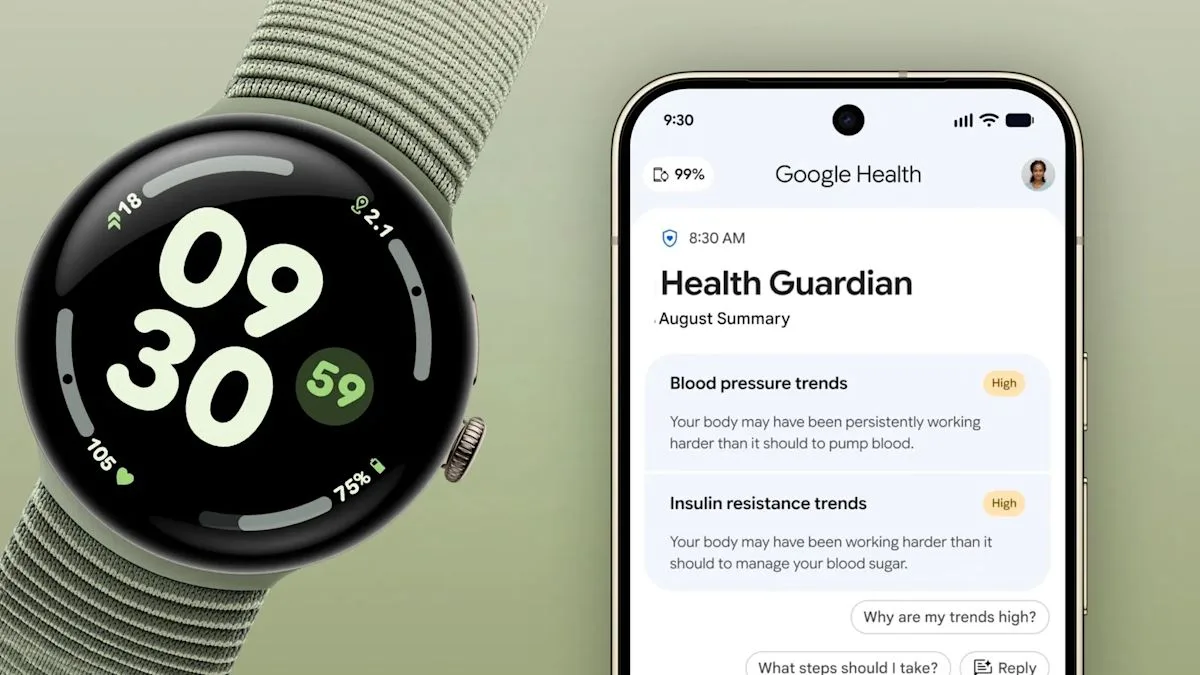
Google has officially rolled out a free software update for its three latest smartwatch models, the Pixel Watch 3, 4, and 5. The update brings more advanced health monitoring capabilities, including analysis of blood pressure trends, insulin resistance, and breathing quality during sleep. The move marks a new chapter in competition in the health wearable market, where data accuracy and analytical depth are the main differentiators.
Unlike conventional medical devices, these features are not designed to provide direct clinical readings. Instead, the smartwatch collects data over time and presents monthly reports on blood pressure patterns and insulin resistance. This approach allows users to track long-term changes that may go undetected in a single examination. Google claims its insulin resistance model was trained on more than one trillion data points from 5 million users, while the blood pressure model was built from billions of minutes of raw heart rate and motion data.
In addition, a new feature for sleep breathing quality provides a report every morning on breathing variations throughout the night. This information can help users assess their overall sleep quality and adjust their routine or environment for more optimal sleep. For the Pixel Watch 4 and 5 models, Google has also added a Breathing Emergency Detection feature in several European markets. This feature can detect dangerous drops in oxygen saturation and even automatically call emergency services.
"This update shows that wearables are no longer just step counters, but are starting to venture into the realm of preventive health monitoring," said a technology analyst who declined to be named.
For Indonesia, the presence of these features opens up great opportunities amid the rising prevalence of non-communicable diseases such as hypertension and diabetes. According to data from the Ministry of Health, around 34% of Indonesia's adult population has hypertension, while diabetes prevalence reaches 10.9%. Devices like the Pixel Watch can serve as a more affordable self-monitoring aid compared to routine laboratory tests. However, the main challenge is technology adoption and awareness of the importance of continuous health data. The presence of these features could also push regulators to set stricter standards for accuracy and health data privacy.
Fitbit Air users are not left behind. Google promises that the blood pressure trend and insulin resistance features will arrive on that device by the end of this year, but with the condition of a Google Health Premium subscription. Meanwhile, Pixel Watch users can enjoy these features at no additional cost, making it a significant selling point in the premium smartwatch market.
Going forward, the question is how quickly these features will be available globally, including in Indonesia, and how Google will handle the regulatory and health data privacy aspects. If successful, the Pixel Watch could become a pioneer in an integrated digital health ecosystem, forcing competitors such as Apple and Samsung to accelerate similar innovation.