Microsoft Overhauls Copilot: Autonomous AI Agents and a 'New OS for Work'
Baca dalam 60 detik
- Microsoft meluncurkan pembaruan Copilot terbesar dengan tiga fitur utama: Home, Code, dan Autopilot yang mampu bekerja di latar belakang tanpa perintah berulang.
- Model bisnis bergeser ke penagihan berbasis pemakaian untuk fitur canggih, disertai alat FinOps for AI untuk mengendalikan biaya.
- Saham MSFT naik 3,7% setelah pengumuman, mencerminkan optimisme pasar terhadap strategi AI perusahaan.
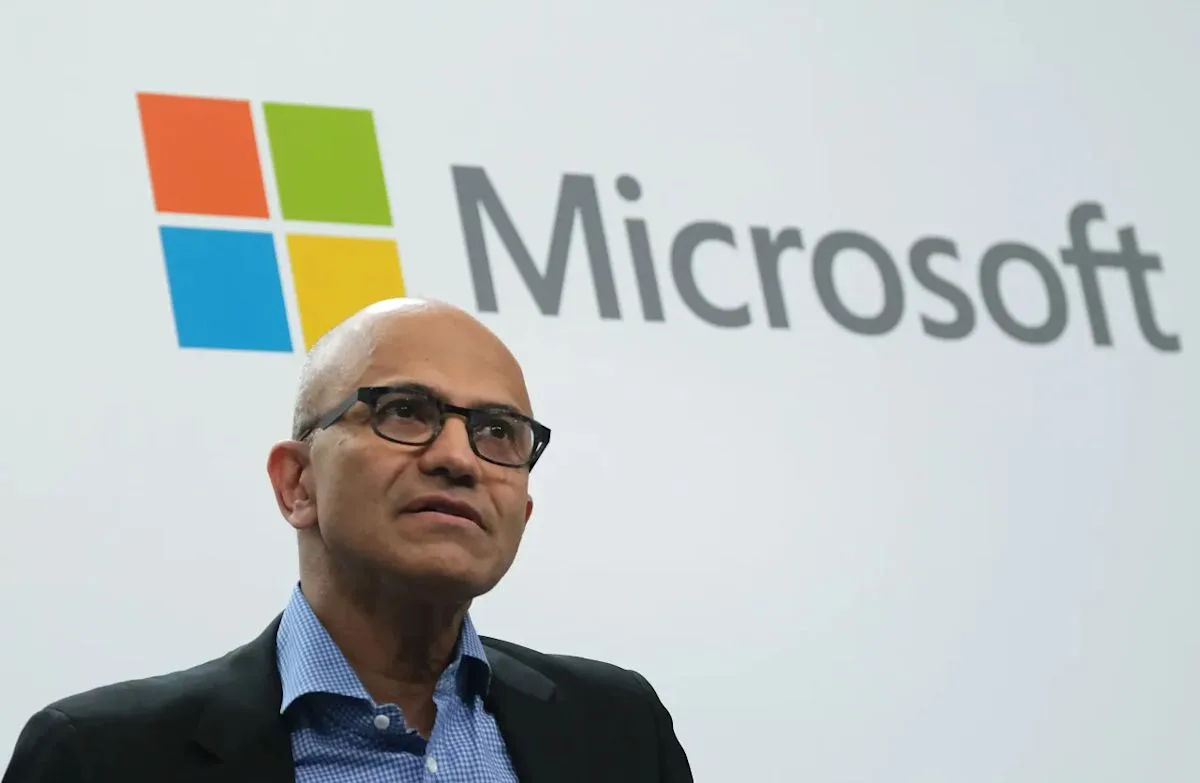
Microsoft has officially introduced the biggest update to its AI assistant, Copilot, bringing autonomous agents that can operate continuously, coding capabilities, and deep integration into Office apps. The move marks the company's effort to turn Copilot from a mere chatbot into a control center for office tasks.
CEO Satya Nadella called the new version a "new operating system for work" designed to unify various AI models, devices, and workflows. He made the statement in a post on platform X, underscoring Microsoft's ambition to dominate the AI-based productivity ecosystem.
The market responded positively. Microsoft shares (MSFT) jumped 3.7% after the opening bell and headed for their first weekly gain in four weeks. Investor sentiment toward MSFT also shifted to "very bullish" from "bullish" previously, according to data from platform Stocktwits. One user even projected the share price would break $540 by the end of next month, from its current position of around $511.
The overhaul centers on three new capabilities: Home, Code, and Autopilot. Home combines Chat and Cowork by embedding Word, Excel, and PowerPoint directly into Copilot. Users can request the creation or updating of documents, spreadsheets, and presentations without switching apps. Code lets users describe an app, dashboard, tracker, or workflow in natural language, and Copilot will build it.
However, the most significant change lies in Autopilot. Unlike conventional chatbots that wait for commands, Autopilot can keep working in the background—monitoring communication channels, following up on conversations, and handling repetitive tasks. Microsoft stresses that the agent is designed to reduce manual intervention and improve operational efficiency.
"We're building Copilot as a new OS for work that spans every model, every form factor, and every task," Nadella said.
The move is a continuation of Microsoft's effort to simplify the Copilot product line. The company recently dropped "365" from the Microsoft 365 Copilot name to become Microsoft Copilot, and changed Microsoft 365 Copilot Chat to Microsoft Copilot Chat. The app icon was also simplified and the web experience consolidated into a single address. Previously, in May, Microsoft had introduced a redesign that turned Copilot from a standalone chat box into a connected system across productivity apps.
The business model has also changed. Everyday tasks such as answering questions, drafting, and summarizing remain covered by the user's subscription. However, Cowork, Code, and Autopilot features will use usage-based billing. To help companies manage costs, Microsoft introduced FinOps for AI—a tool that lets administrators set spending policies, choose which AI models certain groups can access, manage employee requests, and track Copilot tasks that deliver useful business outcomes.
For Indonesia, this update could accelerate AI adoption in the corporate sector and digital MSMEs. With deeper Office integration, workers in Indonesia can automate administrative tasks without having to master technical skills. However, the usage-based billing model requires companies to monitor AI consumption carefully so it does not balloon. FinOps for AI is relevant for CFOs and IT managers in the country who want to control their technology budgets.
Going forward, the battle in the workplace AI assistant arena will only intensify. Microsoft faces Google (Gemini) and OpenAI (ChatGPT Enterprise), which are also aggressively offering autonomous agents. The question is whether Copilot can prove itself as an "OS for work" that truly boosts productivity, or instead adds new complexity and costs for companies. Only time will tell, but Microsoft's move this time clearly accelerates the shift toward an era of proactive AI agents.