BBC Removes Crude Joke About Victoria Beckham From Have I Got News For You
Baca dalam 60 detik
- BBC menghapus segmen lelucon yang menyamakan Victoria Beckham dengan kata kasar dari episode Have I Got News For You.
- Unit Pengaduan Eksekutif menilai lelucon itu tidak punya justifikasi editorial, berbeda dengan penggunaan kata serupa untuk David Beckham.
- Versi suntingan akan menggantikan tayangan di iPlayer, memicu diskusi soal batas humor satir di televisi publik.
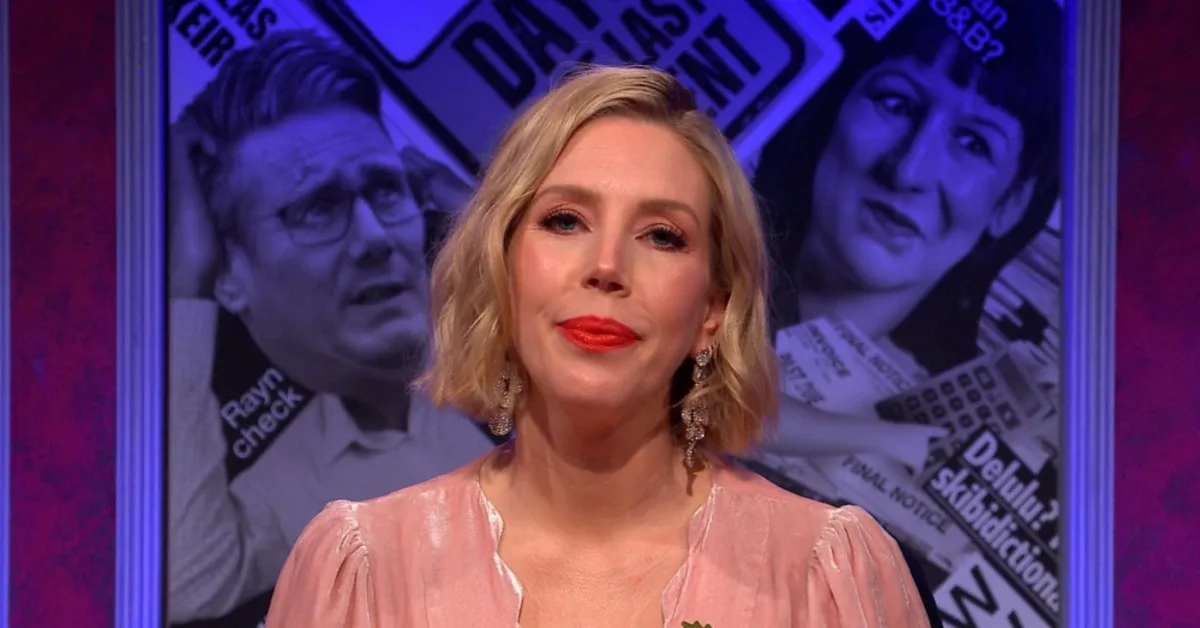
The BBC was forced to pull one segment from its satirical quiz show Have I Got News For You after two viewers complained about a joke they considered demeaning to Victoria Beckham. The decision was announced by the BBC's Executive Complaints Unit (ECU), which concluded that the joke lacked adequate editorial justification.
The incident stemmed from an episode that aired on 7 November 2025. In that segment, host Katherine Ryan and panellist Maisie Adam discussed reports that David Beckham had allegedly sent an email containing a crude word to the honours committee. Beckham was said to be upset after previously being denied a knighthood. It was in that context that Adam made a joke mentioning the crude word, and Ryan responded by linking it to Victoria Beckham.
The ECU judged that the use of the crude word in the context of David Beckham could still be editorially justified because it quoted directly from the leaked email. However, when the word was directed at Victoria, there was no accompanying journalistic reason. "There was no such justification for a comment equating Victoria Beckham with a highly offensive word," the ECU's findings read. As a result, an edited version will replace the broadcast currently available on the iPlayer platform.
The decision reaffirms that freedom of humour on British public television remains bound by editorial guidelines. The BBC had previously argued that post-watershed programmes commonly feature strong language, provided there is a verbal warning and contextual justification. However, the ECU found that limit was exceeded when the crude word was used to attack a person not directly connected to the news being discussed.
"The BBC's editorial guidelines do not require programmes to avoid all forms of offence, but every offence must be editorially justifiable," the ECU wrote in its statement.
Public reaction was divided. Some viewers questioned the use of the crude word from the outset, while others saw it as part of the show's satirical style. The BBC itself had initially defended the segment, stating that strong language in the context of a news quotation was normal. Nevertheless, the ECU's decision shows that the public broadcaster must still balance creative freedom with ethical responsibility.
For Indonesia's media industry, this case is an important mirror. Entertainment and comedy programmes in the country often rely on jokes that touch on personal matters, especially involving public figures. The Broadcasting Code of Conduct and Broadcast Programme Standards (P3SPS) issued by the Indonesian Broadcasting Commission (KPI) have in fact set similar limits: jokes must not demean a person's dignity without a basis in public interest. However, enforcement often depends on public complaints. The BBC case shows that a strong and transparent complaints mechanism can force corrections even for programmes that have already aired.
Furthermore, the BBC decision highlights how digital platforms such as iPlayer keep already-broadcast content accessible and open to re-editing. In Indonesia, streaming and video-on-demand services are beginning to face similar challenges: should old content be adjusted when objections arise? Existing regulations do not fully accommodate this dynamic, which could become a legal gap in the future.
Looking ahead, will the BBC tighten its screening of jokes targeting non-public individuals? Or, conversely, will public pressure make satirical programmes more cautious? What is clear is that the boundary between humour and insult will remain a contested space in the public sphere, including in Indonesia, which is pushing its creative industry forward without disregarding broadcasting ethics.