Undip Trains Senggi Residents to Turn Sago and Bananas into Nutritious Snacks, Tackling Stunting in Papua
Baca dalam 60 detik
- Tim Ekspedisi Patriot Undip menggelar pelatihan pengolahan pangan lokal di Senggi, Keerom, Papua, untuk cegah stunting.
- Kader Posyandu dan pelaku UMKM dilatih membuat bolu keladi, brownies pisang, cookies petatas, dan cookies sagu.
- Program ini diharapkan meningkatkan gizi anak sekaligus membuka peluang usaha baru bagi masyarakat setempat.
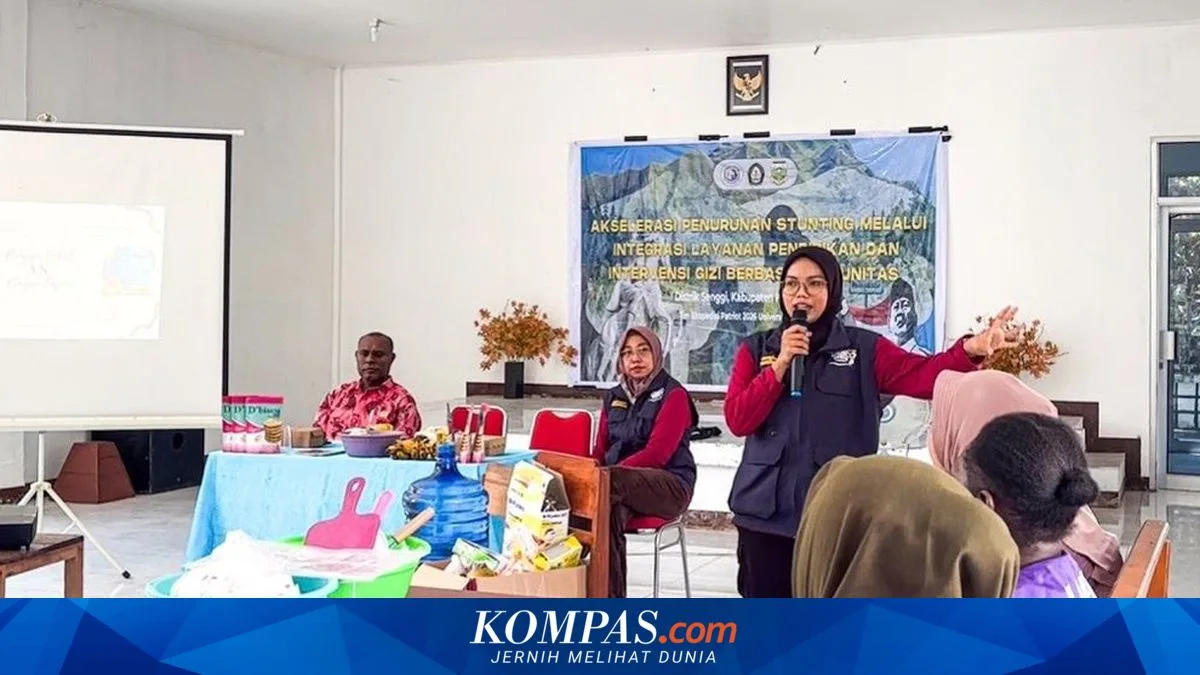
Diponegoro University (Undip), through its Patriot Expedition Team (TEP), held a training session on local food processing in the Senggi Transmigration Area, Keerom Regency, Papua. The event, held on Saturday (12/9/2026) at the UPTD Puskesmas Senggi hall, targeted 21 participants from Posyandu, Posbindu, and Malaria cadres, as well as MSME operators. They were taught to process bananas, taro, sweet potatoes, and sago into products with high nutritional value and economic potential.
The program, titled Sajian Gizi Unggul, Lestarikan Pangan Lokal (Sagu Sapa), was born out of concern over the high stunting rate in the area. Until now, local food ingredients have only been processed simply, for example by boiling or frying, without considering nutritional balance. In fact, Senggi's natural wealth holds great potential to support the nutritional needs of children and pregnant women.
The head of Team 4 of the Undip Patriot Expedition, Diana Nur Afifah, stressed that the program was designed so its benefits would be sustainable. Health cadres are expected to become the driving force behind nutrition education in the community, while MSME operators can develop local food processing into a new source of income. "Then, MSME operators can play a role in developing local food innovations into products worthy of being marketed," she said in a written statement on Friday (25/9/2026).
For Senggi residents, the training opened new horizons. Mama Mery, a Posyandu cadre from Kampung Woslay SP 2, admitted that until now she had processed local food only as it came. "We are very grateful for this activity because it adds new knowledge," she said. She hopes the knowledge gained can be shared with other interested residents.
This activity is part of stunting prevention efforts that rely not only on government nutrition interventions but also on community empowerment. By using ingredients available nearby, people can create nutritious food variations without having to depend on manufactured products that are often more expensive and less fresh.
For readers in Indonesia, especially investors and business players, steps like this show the economic potential of local food in remote areas. Developing processed products such as sago- or taro-based cookies and brownies can be a promising business opportunity, especially if packaged well and marketed digitally. In addition, the program aligns with the government's agenda on food diversification and strengthening MSMEs in eastern Indonesia.
Going forward, the success of Sagu Sapa will depend on continued mentoring. Will the cadres and MSMEs be able to maintain production consistency and break into a wider market? If so, this model can be replicated in other areas with similar characteristics, making local food the backbone of community nutrition and economy.