Indonesian Navy Receives 12 AAV Amphibious Combat Vehicles, Bolsters Marine Landing Operations
Baca dalam 60 detik
- Korps Marinir TNI AL menerima 12 unit Assault Amphibious Vehicle (AAV) tahap pertama dari total 35 unit yang direncanakan.
- Kedatangan AAV menandai modernisasi alutsista amfibi setelah terakhir kali menerima LVT-7A1 dari Korea Selatan pada 2009.
- Pengadaan ini diproyeksikan meningkatkan kemampuan operasi pendaratan di negara kepulauan, namun perlu diimbangi kesiapan logistik dan pelatihan personel.
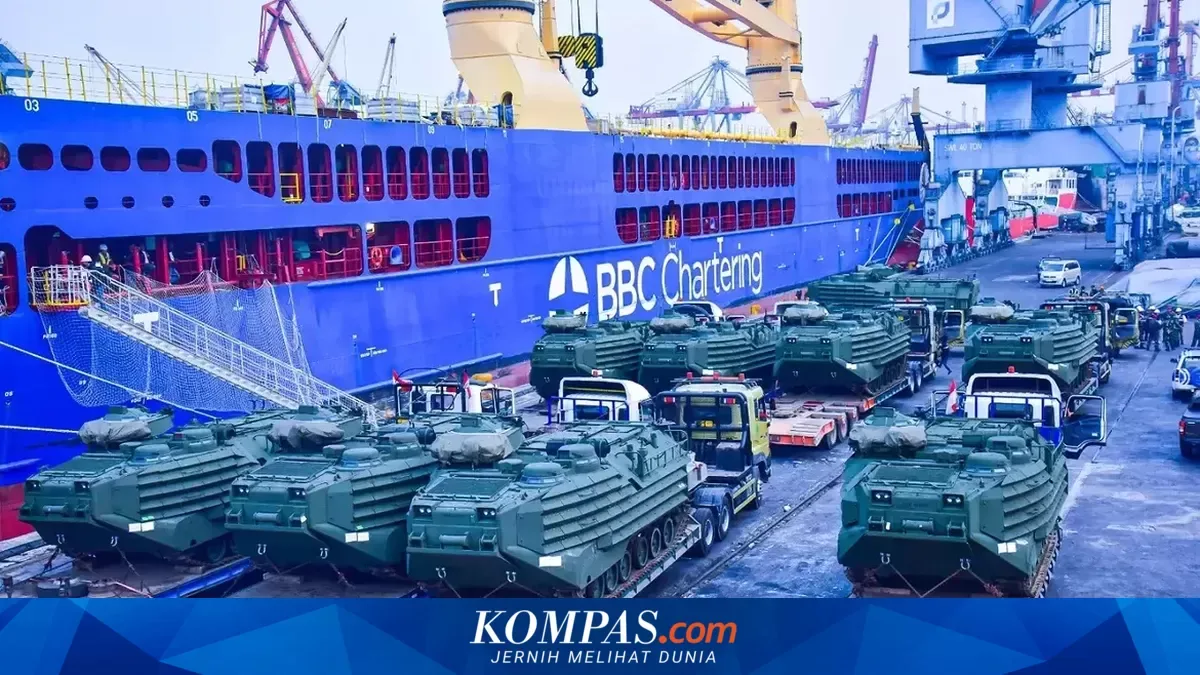
The Indonesian Navy Marine Corps officially received 12 units of the Assault Amphibious Vehicle (AAV) on Tuesday (22/9/2026). The vehicles arrived at Tanjung Priok Terminal, North Jakarta, and were immediately unloaded for transport to Hartono Marine Barracks in Cilandak, South Jakarta. The arrival marks the first phase of a plan to procure 35 AAV units that will strengthen the Marine Corps' amphibious operations capability.
Assistant for Logistics (Aslog) of the Marine Corps Command, Brigadier General TNI (Mar) Efhardian, along with several Marine Corps officials, inspected the reception process and the condition of the combat vehicles. According to the Indonesian Navy Marine Corps Information Service (Dispen Kormar), the arrival of the AAVs is an important milestone after the Marine Corps previously received 10 LVT-7A1 units from South Korea on 7 December 2009. This means there was a gap of nearly 17 years before a significant addition of new amphibious defense equipment was made.
The AAV is designed to transport troops from ship to shore and continue moving toward targets on land. The vehicle is capable of operating at sea up to Sea State 5 conditions, equivalent to wave heights of 2.5–4 meters. With this capability, the AAV provides flexibility in landing operations in Indonesian waters, which are often rough.
"The arrival of the AAV is not merely an addition of defense equipment, but also enhances sea-to-land mobility, armored protection, troop carrying capacity, and maneuver speed in supporting the amphibious capability of the Marine Corps Cavalry Regiment in an archipelagic state," said Efhardian.
This defense equipment procurement cannot be separated from Indonesia's defense needs as an archipelagic state with a coastline of more than 99,000 kilometers. Amphibious operations are one of the pillars of maritime defense strategy, particularly to face potential threats in border areas and outer islands. The modernization of the Marine Corps is in line with the government's program targeting an increase in defense strength through 2029.
For readers in Indonesia, especially those in the defense industry and investors, this step opens opportunities for domestic companies to engage in the supply chain, from maintenance and spare parts to training. However, the main challenge lies not only in procurement but also in the readiness of long-term maintenance budgets and integration with existing operating systems. The government needs to ensure adequate defense budget allocation so that new defense equipment does not become a logistical burden in the future.
Going forward, the public will be waiting to see whether the remaining 23 AAV units arrive on schedule and how the Marine Corps conducts exercises to hone personnel capabilities. The effectiveness of this force addition also depends on support from transport ships, communication systems, and adaptive operational doctrine. The big question: will defense equipment modernization be followed by transparent and sustainable defense budget reform?