AGRA Criticizes Agrarian Reform Law: Don't Narrow Its Meaning to Conflict Alone
Baca dalam 60 detik
- Aliansi Gerakan Reforma Agraria (AGRA) menilai UU Reforma Agraria yang baru disahkan DPR terlalu fokus pada penanganan konflik, bukan kesejahteraan petani.
- AGRA menyoroti definisi objek dan subjek reforma agraria yang multitafsir serta penetapan lokasi prioritas yang dianggap mendikotomikan masalah agraria.
- Kritik ini disampaikan langsung ke pimpinan DPR dalam audiensi Hari Tani Nasional, menuntut redistribusi tanah yang nyata, bukan sekadar legalisasi.
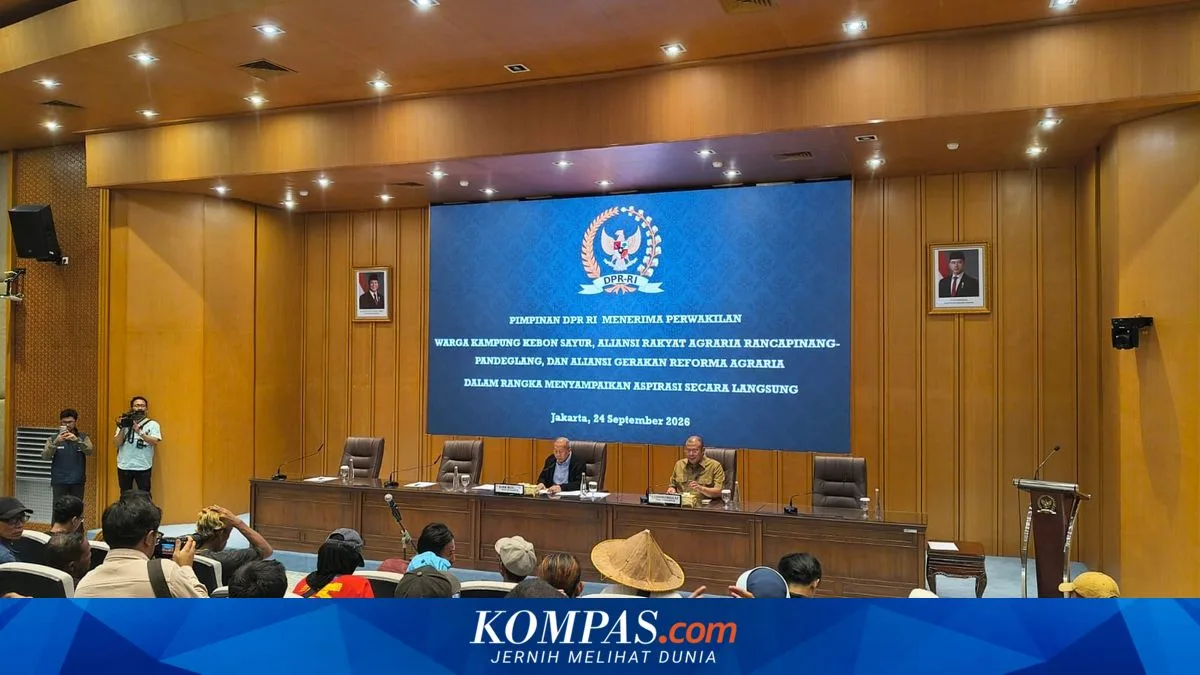
The Agrarian Reform Movement Alliance (AGRA) has leveled sharp criticism at the Agrarian Reform Regulation Law just passed by the DPR on 22 September 2026. In an audience with DPR leaders at the Parliamentary Complex in Senayan, Jakarta, on Thursday (24/9/2026), AGRA argued the regulation risks narrowing the meaning of agrarian reform to conflict handling alone, without guaranteeing the broader welfare of farmers.
AGRA Secretary-General Saiful Wathoni stressed that the core of agrarian reform should ensure land ownership for all farmers, not only those involved in disputes. "The most important thing about agrarian reform is how to ensure farmers can live prosperously by guaranteeing land ownership not only for contested land, but for all farmers," he said. He also emphasized the importance of access to production and markets so farmers can improve their standard of living.
The second criticism targeted provisions on the objects and subjects of agrarian reform. Saiful argued that most of the objects regulated are land already controlled by the people, so he worries the policy leans more toward land tenure legalization than redistribution. "We worry that the DPR members are actually planning to carry out land administration... but then wrapping it in the term redistribution," he said. Meanwhile, the definition of agrarian reform subjects is still seen as ambiguous, especially regarding the forms of association that can qualify as subjects, whether unions, cooperatives, community groups, or others.
AGRA also questioned the designation of priority locations in agrarian reform. According to Saiful, agrarian problems should not be divided into priority and non-priority because all situations in Indonesia carry equal urgency. "All problems, all situations in Indonesia cannot be dichotomized with the terms priority and non-priority," he asserted.
"We see an effort to diminish the meaning of agrarian reform to conflict handling alone. Not all problems in agrarian reform are about conflict." — Saiful Wathoni, AGRA Secretary-General
The audience was part of the commemoration of National Farmers' Day. Representatives of the action crowd were received by two Deputy Speakers of the DPR RI, Cucun Ahmad Syamsurijal and Saan Mustopa. During the meeting, Saan asked the representatives to convey their aspirations and demands directly.
For readers in Indonesia, especially investors and professionals in the property, agriculture, and forestry sectors, this law will determine legal certainty over land. If its implementation emphasizes legalization rather than redistribution, the gap in land ownership could widen and potentially trigger social tension. Conversely, redistribution that favors farmers can boost productivity and the stability of national food supply.
Going forward, the DPR and the government face the test of translating this law into operational implementing regulations. Will they accommodate AGRA's criticism by broadening the scope of agrarian reform, or stay on the existing administrative track? The public will monitor this process, especially ahead of the planting season and the dynamics of investment in the agrarian sector.