Home Minister Tito: National Inflation Depends on Local Government Performance, Not Just the Center
Baca dalam 60 detik
- Mendagri Tito Karnavian menegaskan inflasi nasional adalah hasil agregat dari pengendalian di pusat dan daerah, sehingga pemda memegang peran krusial.
- Kemendagri akan mengirim tim investigasi ke daerah yang mengalami kenaikan harga pangan selama tiga pekan berturut-turut.
- Pemerintah mempercepat digitalisasi data kependudukan untuk memperbaiki akurasi penyaluran bansos, setelah uji coba di Banyuwangi mengungkap 70 persen penerima tidak tepat sasaran.
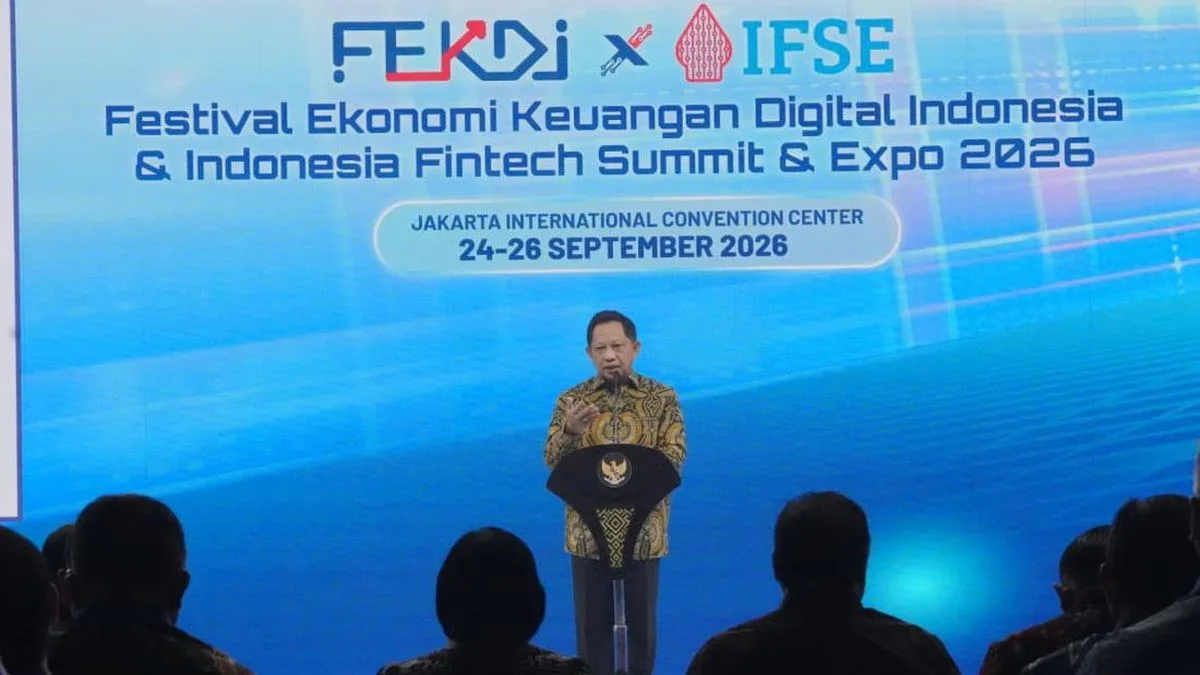
Home Minister Muhammad Tito Karnavian said local governments hold a strategic position in curbing the pace of national inflation. He made the statement while opening the 2026 Indonesia Digital Economic and Financial Festival and Indonesia Fintech Summit & Expo (FEKDI x IFSE) at the Plenary Hall of the Jakarta International Convention Center on Thursday (24/9), held alongside the 2026 National Coordination Meeting on Inflation Control and the Acceleration and Expansion of Regional Digitalization (P2DD).
According to Tito, the monthly inflation figure released by the Central Statistics Agency is not solely the work of the central government. It is an accumulation of interventions carried out at the provincial, district, and city levels. He therefore views price control in the regions as a prerequisite for national stability.
"The inflation that occurs is the aggregate work of the central and regional governments," Tito said, underlining that coordination across levels of government is non-negotiable.
He explained that food price dynamics move very quickly, making regular monitoring a necessity. The Home Ministry, together with relevant ministries and agencies, holds a regional inflation control coordination meeting every week. The forum discusses three main components: volatile food, administered prices, and core inflation.
Tito's greatest attention is on volatile food, especially food and beverages, because it concerns the livelihoods of many people. "When it comes to people's stomachs, if the price is too high, expensive, that can create grievances, dissatisfaction," he said.
To respond to repeated price spikes, the Home Ministry is preparing operational measures. If a region records price increases for three consecutive weeks, a special team will be sent to the field to identify the causes and formulate solutions. "If it happens three times, three weeks in a row, and that region stays high, we will form a team and go down there," Tito said.
On the same occasion, Tito outlined efforts to accelerate the digitalization of public services. Through the Directorate General of Population and Civil Registration, the Home Ministry is integrating population data with various ministries and agencies. The goal is for public services to run more efficiently and accurately.
One use of Dukcapil data is the verification and validation of social assistance recipients. Tito cited the results of a pilot in Banyuwangi as a reflection of the problems that have occurred so far. Nearly 70 percent of aid recipients were deemed ineligible, while about 50 percent of those who should have been entitled were not on the list. "Well, this can be fixed," he concluded.
"I try especially to really safeguard volatile items, food and beverages, because it concerns people's stomachs." — Muhammad Tito Karnavian, Home Minister
The event was attended by a number of senior officials, including Coordinating Minister for Economic Affairs Airlangga Hartarto, Bank Indonesia Governor Destry Damayanti, OJK Board of Commissioners Chair Friderica Widyasari Dewi, Deputy Speaker of the House of Representatives Cucun Ahmad Syamsurijal, and Chair of House Commission XI Mukhamad Misbakhun.
For market players and consumers, the Home Minister's statement underscores that inflation risk can no longer be separated from regional governance. When local governments are slow to respond to price shocks, the impact is immediately felt on people's purchasing power and national inflation expectations. Conversely, regions that promptly stabilize food supply can serve as a buffer for Bank Indonesia's inflation target.
Going forward, the effectiveness of the Home Ministry's investigation team and the integration of Dukcapil data will be tested. The public is waiting to see whether this data-driven approach can narrow price disparities between regions, or whether it will stop as a mere administrative instrument.