Demokrat Rejects Narrowing of Presidential Nominations in Election Bill, Two-Faction Proposal Seen as Fitting
Baca dalam 60 detik
- Partai Demokrat menolak pembatasan ruang pencalonan presiden yang berlebihan dalam RUU Pemilu.
- Usulan minimal dua fraksi pendukung dianggap opsi moderat untuk menghasilkan 3-4 kandidat.
- Komisi II DPR akan membentuk Panja RUU Pemilu sebelum masa reses pekan depan.
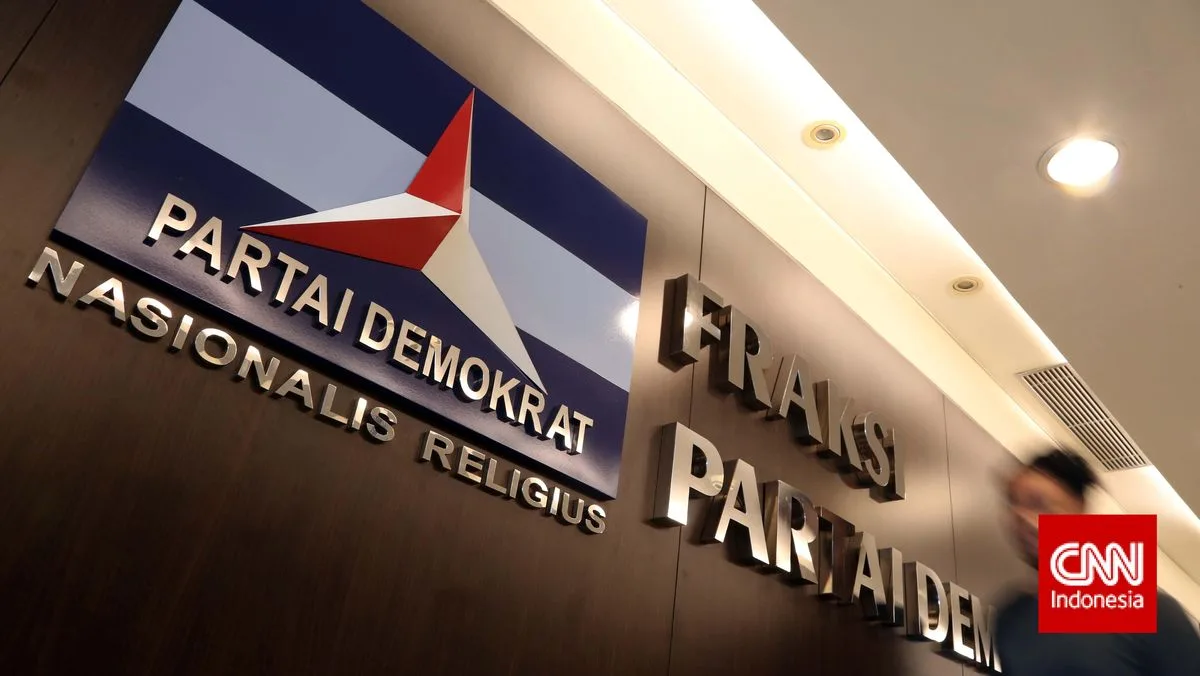
The Democratic Party has voiced its rejection of the narrowing of the space for presidential and vice-presidential nominations in the Election Bill (RUU Pemilu) currently being discussed in the DPR. The Secretary-General of the Democratic Party, Herman Khaeron, stressed that the new rules must not restrict the people's political right to freely choose their leaders.
The statement came in response to a proposal circulating in parliament that presidential and vice-presidential candidate pairs be nominated by at least two factions. According to Herman, the proposal is actually a moderate option that could produce three to four candidates, so that there are neither too many nor too few. "This is also what many observers say, don't have too many, but also don't then narrow the space for presidential and vice-presidential candidates," Herman said at the parliamentary complex, Wednesday (23/9).
Herman explained that the Democratic Party is still studying various strategic issues in the Election Bill, including the presidential threshold that has been removed through the Constitutional Court (MK) ruling. Nevertheless, he views the two-faction requirement as a step that can maintain a balance in the number of candidates. "Well, if it's limited to two factions, at minimum there would be at least three candidates or four candidates, more concentrated for instance. Let's just wait and see how this dynamic unfolds," he added.
The dynamics of the Election Bill discussion are heating up ahead of the formation of a Working Committee (Panja) by DPR Commission II. The Deputy Chair of Commission II from PDIP, Aria Bima, revealed that the leadership has instructed an acceleration of the deliberations. "Commission II, according to information from the leadership, we will soon decide on the Panja at the end of this session," Bima said at the parliamentary complex, Tuesday (22/9).
The formation of this Panja is crucial because it will determine the final direction of the rules of the game for the next election. A number of parties view the minimum two-faction requirement as a political compromise to prevent candidate fragmentation, but it also has the potential to hinder the emergence of alternative figures from outside the circle of power. Political observers assess that the final decision will depend heavily on the political configuration in the DPR, where the current grand coalition controls the majority of seats.
"Going forward, there could be debate, input, views, opinions, and of course the reference remains that the Constitutional Court is at zero percent," said Herman Khaeron.
For the Indonesian public, the presidential nomination rules in the Election Bill will have a direct impact on the choices available at the ballot box. If the two-faction requirement is imposed, small parties or new coalitions may struggle to nominate their own candidates, thereby strengthening the dominance of large parties. On the other hand, without a threshold, the number of candidates could swell and potentially split the vote. This is the balance that lawmakers are currently seeking.
Going forward, the discussion in the Panja will be an arena of tug-of-war between party interests and the principle of inclusive democracy. Will the DPR fully accommodate the MK ruling or still install a filter through the faction requirement? The public will scrutinize whether the Election Bill ultimately produces a fairer system or instead locks in the status quo.