Joint Exercise Garuda Guerrier 2026: A New Jakarta-Paris Defense Axis?
Baca dalam 60 detik
- Indonesia dan Prancis menyepakati rencana latihan militer bersama Garuda Guerrier yang akan digelar di Prancis pada November 2026.
- Kesepakatan ini menjadi penanda pertama kalinya kedua negara menggelar Annual Defense Minister Dialogue, memperkuat kemitraan strategis di bidang pertahanan.
- Kerja sama alutsista semakin konkret dengan kedatangan jet Rafale dan pembangunan kapal selam Scorpene oleh PT PAL, berpotensi mengubah lanskap kekuatan maritim regional.
Indonesia and France are finalizing plans for a joint military exercise called Garuda Guerrier, scheduled to take place in France in November 2026. The agreement signals the strengthening of a new defense axis that does not stop at arms procurement but also touches on interoperability and the professionalism of personnel from both armed forces.
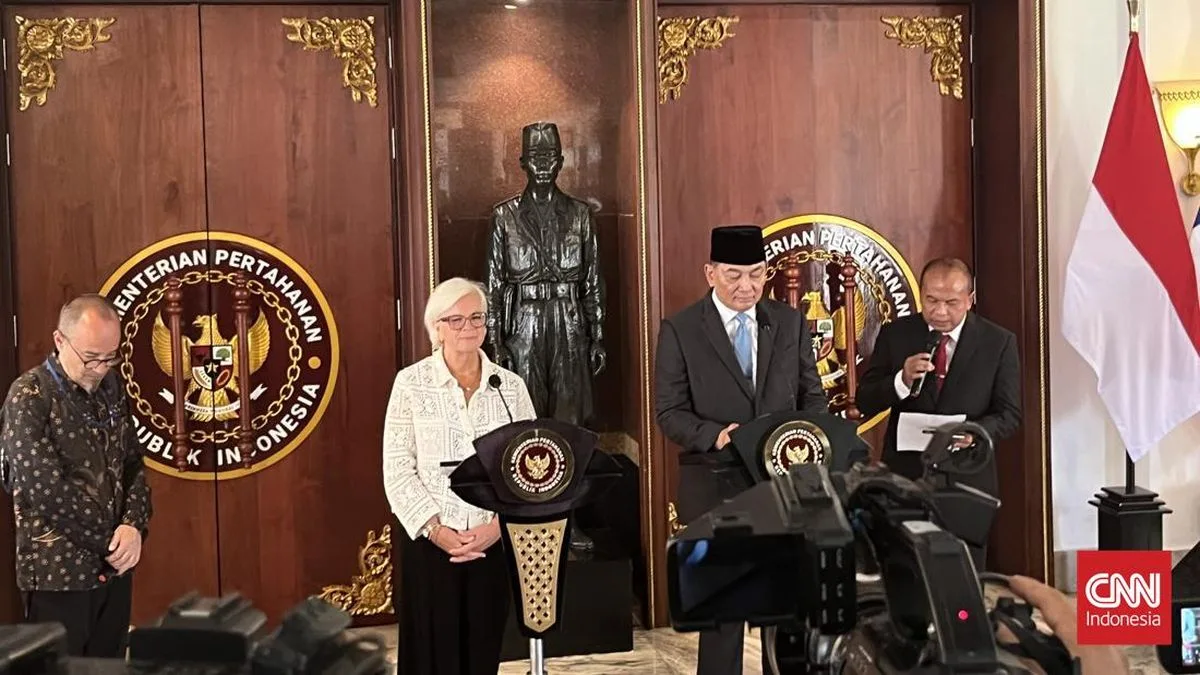
The plan was discussed in a meeting between Defense Minister Sjafrie Sjamsoeddin and French Minister of the Armed Forces Catherine Vautrin at the Ministry of Defense office in Jakarta on Wednesday (23/9). The meeting also marked the first Annual Defense Minister Dialogue between the two countries, a regular consultation forum that usually serves as an indicator of the depth of bilateral relations in the defense sector.
Sjafrie said the Garuda Guerrier exercise is part of efforts to strengthen defense cooperation that has been ongoing. Currently, the Indonesian Air Force and the French Air and Space Force are holding the Air Maneuver Exercise (AMX) Pegase. The exercise series includes an Air-to-Air Refueling (AAR) simulation involving an Airbus A330 Multi Role Tanker Transport (MRTT) aircraft, two French Rafale jets, and two Indonesian Air Force Rafale jets.
For Indonesia, involvement in such an exercise is not merely a show of capability. It is an opportunity to test and hone the technical skills of pilots and support crews in complex operational scenarios, especially in aerial refueling, a crucial capability for long-range operations. The presence of the Rafale in the exercise also accelerates the process of technology transfer and adaptation of new weapons systems for the Indonesian Air Force.
Indonesia-France defense cooperation is indeed inseparable from the good relations between the two countries' leaders. Sjafrie said cooperation in the arms sector was marked by the arrival of the first Rafale fighter jets in Indonesia and the start of construction of the first Scorpene submarine by PT PAL. PT PAL will work with French defense company Naval Group on the submarine construction in Surabaya.
"Going forward, we will continue to work together to show that the defense relationship between Indonesia and France continues to grow and is at a very positive momentum, not only for arms procurement but also for enhancing the professional capabilities of personnel and relations between the armed forces," Sjafrie said.
This step places Indonesia in an increasingly strategic position in the Indo-Pacific region. France, as a European power with territorial holdings in the Pacific, has a direct interest in regional stability. A partnership with Jakarta can serve as an anchor for Paris to expand its influence in Southeast Asia, while Indonesia gains access to top-tier military technology and training.
However, challenges remain. Integrating weapons systems from various countries of origin—given that Indonesia also has arms from the United States, Russia, and other European countries—requires logistics management and training that are not simple. Joint exercises like Garuda Guerrier are a real test of that interoperability.
Going forward, the public will be watching whether this cooperation will continue into co-production or more substantial technology transfer, rather than mere buying and selling. If successful, Indonesia could potentially become a key player in the regional defense supply chain, while also strengthening its defense diplomacy position on the global stage.