The Fifth Element Is Leaving Netflix: A Sci-Fi Masterpiece That Nearly Vanished
Baca dalam 60 detik
- Film klasik Luc Besson, The Fifth Element, dijadwalkan meninggalkan Netflix pada akhir September 2026, memberi penonton Indonesia kesempatan terakhir menyaksikannya secara legal di platform streaming.
- Kisah di balik produksinya mengungkap insiden nyaris fatal ketika negatif film rusak parah akibat kecelakaan di bandara, namun berhasil diselamatkan.
- Keunikan visual dan narasi yang berani menjadikannya cerminan era ketika blockbuster masih memberi ruang bagi eksperimen kreatif, berbeda dengan lanskap sinema arus utama saat ini.
The iconic science fiction film The Fifth Element will soon disappear from Netflix's catalog at the end of September 2026. The news is a blow to devoted fans of Luc Besson's work, and at the same time a moment to highlight once again how fragile cinema's legacy is in the digital era. For viewers in Indonesia, this is the last chance to enjoy the adventures of Korben Dallas and Leeloo legally on the platform before the rights move elsewhere or the film is pulled entirely.
Netflix's decision not to renew the license for the 1997 film is nothing new in the streaming industry. But the moment has sparked a broader discussion about how visionary works from the past are slowly eroded by algorithms and content strategies oriented toward original productions. In Indonesia itself, access to classic films like this increasingly depends on global platforms, while physical archives and screenings at independent cinemas remain very limited.
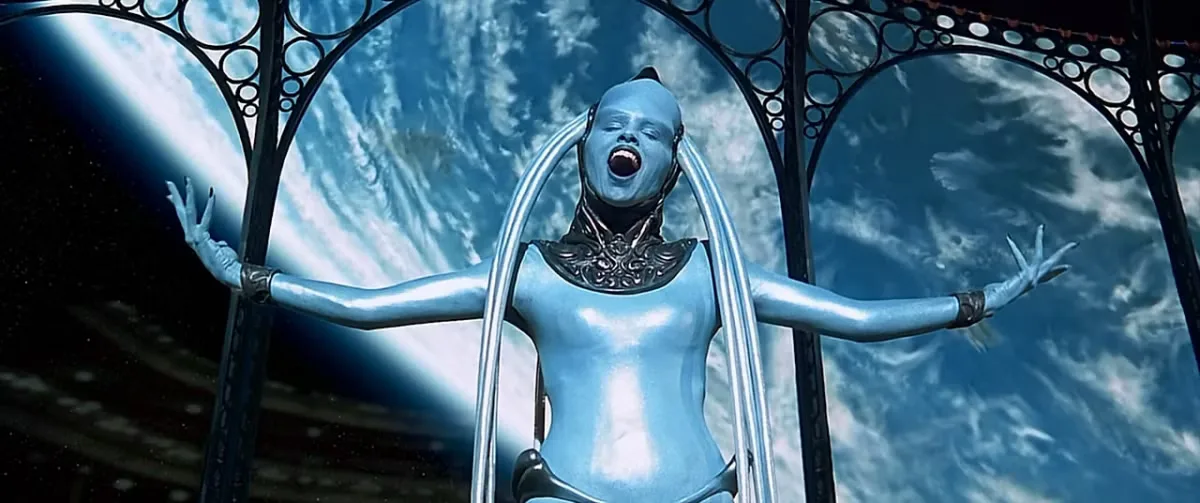
What makes The Fifth Element special is not merely its status as a blockbuster. The film almost never made it to the big screen. After shooting wrapped, the negative reels were shipped from London to Los Angeles for post-production. According to associate producer John Amicarella, part of the shipment fell onto the tarmac at Los Angeles International Airport and was run over by a forklift. Amicarella was then confronted with several trash bins filled with destroyed film pieces. One of the damaged scenes was the performance of a blue-skinned alien opera singer who is later shot dead—a scene now remembered as one of the most iconic moments in sci-fi history. Fortunately, the footage was salvaged, and so was the film.
The plot of The Fifth Element is audacious even by today's standards. Set in the 23rd century, the film follows Korben Dallas, a former special forces soldier turned flying taxi driver in New York. His life changes when Leeloo, a mysterious figure who is the incarnation of a deity, falls onto the roof of his cab. Leeloo is the Fifth Element, capable of activating four ancient elemental stones—earth, air, fire, and water—to fight a cosmic evil that returns every 5,000 years. If that sounds complicated, it is. Yet Besson weaves it all into a sci-fi fairy tale that is both strange and captivating.
The main antagonist, Zorg, is played by Gary Oldman with a half-Texas accent and a half-bald hairstyle covered in plastic. Midway through the film appears Ruby Rhod, played by Chris Tucker in a leopard-print leotard—a role originally offered to Prince. Rather than collapsing under its own weirdness, the film instead becomes one of the most distinctive sci-fi blockbusters ever made.
The bright color palette is the main differentiator. If Dune or Blade Runner offer dark, neon-tinged moods, The Fifth Element instead presents a future full of color, eccentric practical costumes, and odd little details. Amicarella once described it as a collision between a comic book, a Salvador Dalí painting, and a heavy metal album cover. This approach is also reflected in the cast's performances: Willis is the grounded center, while the others perform at maximum intensity.
The film is also bold in showing sexuality rarely found in modern sci-fi. Leeloo spends most of the film in a skimpy bandage costume, and all the costumes were designed by Jean-Paul Gaultier. At a future McDonald's, female servers wear strapless red dresses with gold arcs covering their chests. Flight attendants appear in light blue uniforms that expose the midriff. Besson's world is filled with eccentric, attractive, and messy people—a universe that feels truly alive.
"The film feels like a collision between a comic book, a Salvador Dalí painting, and a heavy metal album cover." — John Amicarella, associate producer
Behind all its weirdness and grandeur, The Fifth Element endures because it has a sincere heart. Its main message is not a bigger weapon, but a love worth fighting for. The idea may seem clichéd, but that is precisely why audiences keep rediscovering the film nearly three decades after its release.
For Indonesia, the film's departure from Netflix can serve as a reminder that our consumption of global pop culture depends heavily on the licensing policies of foreign companies. When a film of this caliber disappears, local viewers lose easy access to a work that shaped the world's cinematic imagination. Will local streaming platforms or national video-on-demand services take over? Or will we see bold films like this appear in our digital spaces less and less often?
If you have never seen The Fifth Element, now is the right time to chase it down. If you have, a rewatch will remind you of a time when blockbusters felt stranger, bolder, and far more fun.