AI-Based Blood Test Detects Early-Stage Pancreatic Cancer, Offering New Hope Amid Late Diagnoses
Baca dalam 60 detik
- Tes darah eksperimental bernama PANXEON yang menggabungkan tiga penanda biologis dan kecerdasan buatan mampu mengidentifikasi kanker pankreas stadium I dan II pada 87% kasus dalam studi internasional terhadap hampir 1.800 orang.
- Pendekatan ini juga mendeteksi displasia tingkat tinggi—perubahan prakanker—pada lebih dari 64% pasien dengan kista pankreas berisiko tinggi, membuka peluang intervensi sebelum kanker invasif berkembang.
- Meski masih dalam tahap riset dan tidak menggantikan pencitraan medis, tes ini berpotensi menjadi lapisan skrining tambahan bagi kelompok berisiko, dengan implikasi besar bagi negara seperti Indonesia yang menghadapi keterbatasan alat diagnostik dini.
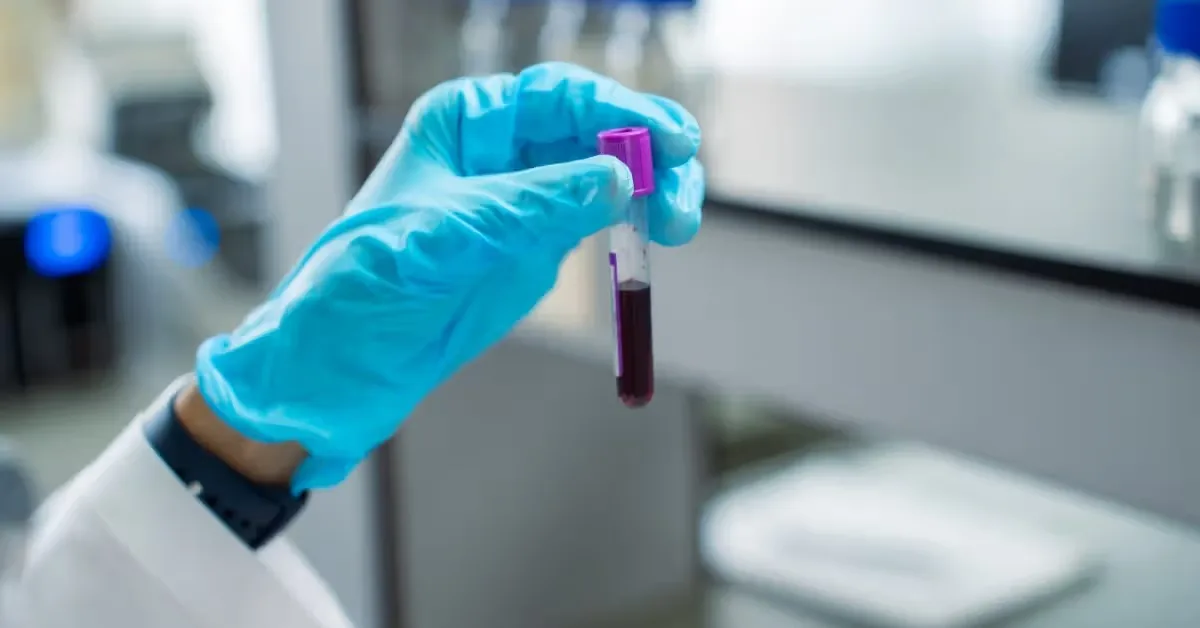
An experimental blood test that combines three biomarkers and an artificial intelligence (AI) system can detect early-stage pancreatic cancer with 87% accuracy, according to an international study published in Nature Medicine. The findings offer new hope amid the high mortality rate of pancreatic cancer, which is often detected late.
Pancreatic cancer is indeed rare compared to breast, lung, or colorectal cancer, but its mortality rate is disproportionate. In the United States, an estimated 67,530 people will be diagnosed in 2026 and 52,740 of them will die. Although it accounts for only about 3% of all cancer cases, the disease is responsible for 8% of cancer deaths. These data reflect how difficult early detection is: the majority of patients are only diagnosed after the cancer has spread, with a 5-year relative survival rate of only 44% if still localized, dropping to 3% if it has metastasized.
The study, involving nearly 1,800 participants from the United States, Europe, and Asia, tested PANXEON, a liquid biopsy developed by a research team from City of Hope. Unlike previous approaches that only compared cancer patients with healthy individuals, PANXEON was tested in populations with varying levels of risk, including those with pancreatic cysts or family history. The test not only detects stage I and II cancer but also high-grade dysplasia—an advanced precancerous condition—in more than 64% of patients with high-risk cysts.
Senior author of the study, Ajay Goel, PhD, AGAF, from City of Hope, emphasized that the most significant finding is the test's ability to detect cancer at a stage when it is still curable. "PANXEON can identify a high proportion of stage I and II pancreatic cancers, where treatment is most potentially curative," he told Medical News Today. He also highlighted the importance of evaluation in relevant clinical populations, not just comparison with healthy individuals.
"What makes this study exciting is the possibility that a simple blood test could one day help identify pancreatic cancer before symptoms appear and before the disease spreads. That is the window where we have the greatest opportunity to change outcomes." – Ajay Goel, PhD, AGAF
Although promising, PANXEON is still investigational. The test is not intended to replace MRI or endoscopic ultrasound, but rather to be an additional layer of information in surveillance. Goel explained that positive or rising molecular signals could help identify high-risk individuals who need earlier imaging or closer monitoring. "Over time, serial blood testing could make surveillance more personalized, combining genetic risk, imaging, and molecular changes," he added.
The group most likely to benefit in the short term are those with a strong family history, cancer predisposition gene variants, pancreatic cysts, or chronic pancreatitis. For the general population, further prospective studies are needed before this test can be used for routine screening. The main challenge is ensuring accuracy remains high across diverse populations and whether use of the test actually improves patient survival.
For Indonesia, these findings open a discourse on the need to adopt AI- and biomarker-based diagnostic technologies for cancers that are difficult to detect. Pancreatic cancer in Indonesia is often diagnosed at an advanced stage due to limited access to advanced imaging and biopsy. If such a blood test proves effective and affordable, developing countries could consider integrating it into national screening programs, especially for at-risk groups. However, without local clinical trials and laboratory infrastructure readiness, implementation remains far from reality.
The question ahead: will multi-biomarker tests like PANXEON become a new standard in early detection of pancreatic cancer, or just an additional tool for developed countries? The answer will depend on the results of further validation trials and the commitment of health systems to invest in life-saving technology.