Hong Kong Launches First Five-Year Plan, John Lee Sets Binding Targets
Baca dalam 60 detik
- John Lee Ka-chiu memperkenalkan cetak biru pembangunan lima tahun pertama Hong Kong, menandai pergeseran dari perencanaan tahunan ke arah strategi jangka panjang.
- Dari 22 indikator utama, lima di antaranya bersifat wajib dan berfokus pada isu lingkungan, sementara 17 lainnya merupakan target proyeksi.
- Langkah ini menyelaraskan prioritas Hong Kong dengan rencana pembangunan nasional Tiongkok 2026-2030, dengan implikasi bagi posisi ekonomi kota tersebut di kawasan.
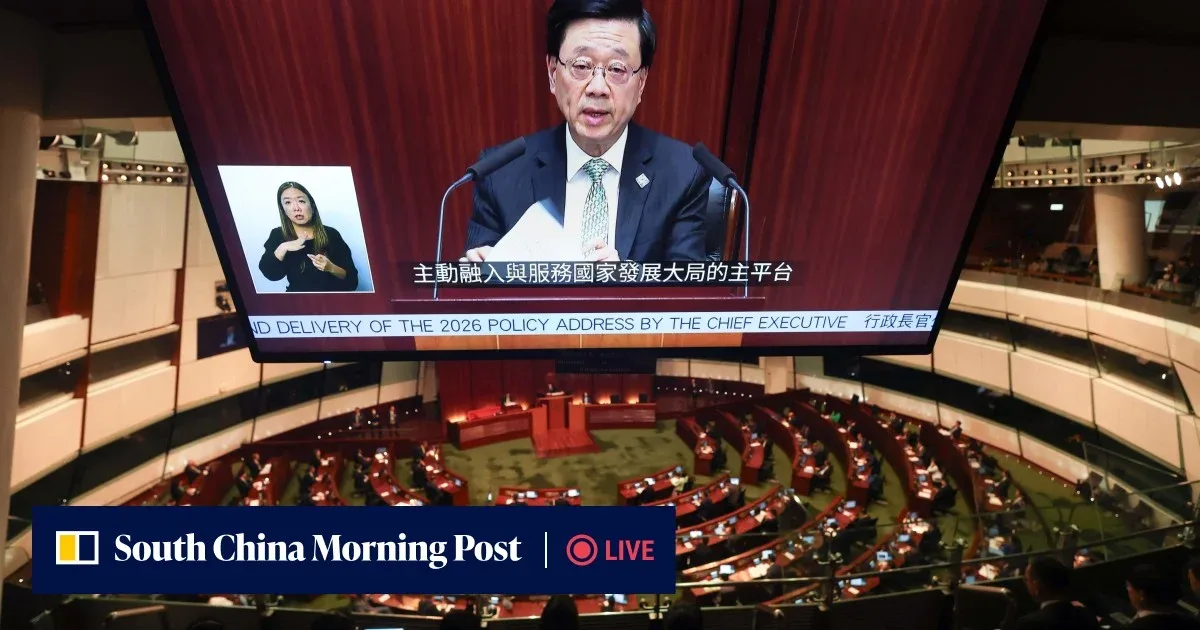
Hong Kong leader John Lee Ka-chiu officially laid out the city's first five-year development plan before the legislature, followed by his annual policy address. The strategic document marks a new milestone because, for the first time, Hong Kong has a medium-term blueprint separate from the government's annual report.
The plan, which went through two months of public consultation, is designed to align Hong Kong's priorities with China's national development roadmap for 2026-2030. Lee set 22 key indicators, five of which are binding targets, most of them focused on environmental protection. Meanwhile, the other 17 indicators are anticipatory or projections.
According to Lee, the five-year document serves as a long-term strategic guide with deep significance for Hong Kong's development direction. He stressed that the annual policy address will remain the yearly execution report, detailing how the government implements the plan over a one-year period. This year's address also marks the last policy address of Lee's current term.
"This five-year plan provides a long-term blueprint and strategic direction for Hong Kong's development with far-reaching significance," Lee said, as quoted from his statement at the legislature.
Hong Kong's move reflects a trend in Asia where city or autonomous region governments are increasingly adopting multi-year development planning to provide certainty in the investment climate. For Indonesia, this development is worth watching because Hong Kong is one of the main financial centers that competes directly with Singapore and serves as an investment bridge between China and Southeast Asia. As Hong Kong strengthens its long-term regulatory framework, its appeal as a gateway for capital into the region could increase, especially in sectors aligned with environmental targets and green technology.
The Indonesian government itself is pushing various development targets in the National Medium-Term Development Plan (RPJMN) 2025-2029, with an emphasis on energy transition and the digital economy. If Hong Kong succeeds in executing its binding environmental targets, this could create collaboration opportunities in carbon markets, green financing, and clean technology. Conversely, failure to meet those targets could reduce Hong Kong's credibility in the eyes of global investors who increasingly factor in sustainability.
Some observers assess that setting binding targets is a strong signal that Hong Kong wants to demonstrate its commitment to the climate agenda, while also reinforcing its position as a responsible international financial center. However, they also warn that without a clear accountability mechanism, binding targets will only be a symbol without real impact. The big question is how the Hong Kong government will measure, report, and follow up if those targets are not met.
With Lee's term coming to an end, the sustainability of this five-year plan will depend heavily on the next administration. If the plan is continued and executed with discipline, Hong Kong could become an example for other cities in Asia in integrating environmental targets into development planning. However, if political priorities shift, this blueprint risks becoming a neatly filed document without implementation. The business world, including from Indonesia, will be watching whether Hong Kong can maintain consistency between rhetoric and realization.