China Claims Discovery of Gold-Silver Deposit on Western Pacific Seabed, Not Far from Indonesia
Baca dalam 60 detik
- Ekspedisi Xiangyanghong 10 milik China menemukan sulfida polimetalik kaya emas dan perak di dasar Pasifik Barat, dengan kadar emas mencapai 15,4 ppm dan perak 1.271 ppm.
- Lokasi deposit berada di zona ekonomi eksklusif China, namun letaknya di kawasan tektonik aktif dekat perbatasan Lempeng Eurasia dan Lempeng Laut Filipina, yang secara geografis berdekatan dengan Indonesia.
- Penambangan komersial masih terkendala tekanan laut dalam dan kompleksitas geologis, sehingga dampak ekonominya bagi pasar mineral global belum akan terasa dalam waktu dekat.
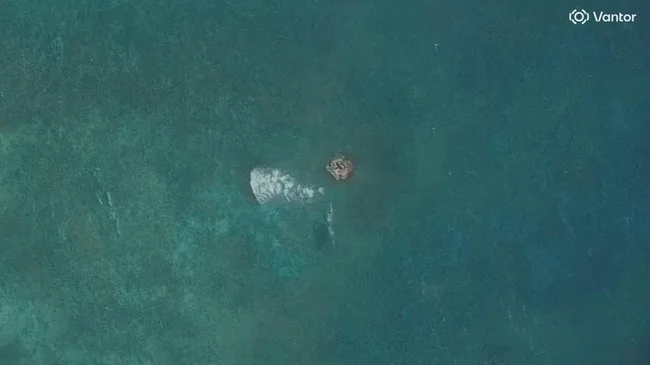
China announced the discovery of mineral deposits rich in gold and silver on the seabed of the Western Pacific, a claim that immediately drew attention because of its location relatively close to Indonesian waters. A research team from Tsinghua University, the Qingdao Institute of Marine Geology, and Shanghai Jiao Tong University reported that ore samples from the area contain up to 15.4 grams of gold per ton and 1,271 grams of silver per ton—concentrations described as far exceeding the average of land-based deposits.
The expedition, named Xiangyanghong 10, lasted 18 days starting August 10, 2026, with seven dives by a specialized submarine. Media affiliated with the Beijing government, Global Times, stated that the deposit lies in a back-arc basin in the Western Pacific, specifically within China's exclusive economic zone. This means that although it is in an area geographically close to Indonesia, the sovereignty claim over the resource falls entirely under China's jurisdiction.
The deposit is classified as polymetallic sulfide, a seabed deposit containing various metals—copper, iron, zinc—in the form of sulfide compounds, plus precious metals. Its main minerals include chalcopyrite, pyrite, and sphalerite. Its formation process is linked to hydrothermal activity in an active tectonic zone, near the boundary of the Eurasian Plate and the Philippine Sea Plate. Global Times claims the find could potentially reach the scale of a world-class seabed deposit.
However, as reported by CCTV News, this active hydrothermal deposit is not yet ready for mining. High pressure in the deep sea and complex geological conditions are the main obstacles. There is no information on estimated reserve volume, exploitation costs, or a schedule for further exploration. This uncertainty makes the "world-class" claim indicative rather than a verifiable production figure.
"Initial analysis in the ship's laboratory shows minerals of important economic value," Global Times said in a statement, without detailing the testing method or the accuracy level of the samples.
For Indonesia, this finding is more relevant as a mirror of marine resource strategy. As an archipelagic country with underwater wealth that has not been optimally developed, Indonesia faces a similar question: how ready are domestic technology and regulations to explore seabed minerals? China has deployed research vessels and specialized submarines, while Indonesia still relies on limited surveys and foreign cooperation.
From a market perspective, the discovery has not yet changed the global supply balance. Gold and silver prices are more influenced by monetary policy and industrial demand than by a single find that has not entered the production stage. In the long term, however, if China succeeds in developing deep-sea mining technology, it could reduce its dependence on mineral imports and strengthen its bargaining position in the global metals supply chain. Investors in the mining and energy sectors need to watch whether this project will lead to international partnerships or instead tighten China's dominance in the region.
The big question: will Indonesia accelerate deep-sea resource exploration to keep pace with China's move, or remain a spectator in a region that is geographically so close? Without technological and policy breakthroughs, Indonesia's underwater potential could continue to lag behind countries that invest more aggressively in marine research.