10-Year Clause in New UK-EU Treaty: A Post-Brexit Middle Path That Invites Controversy
Baca dalam 60 detik
- Pemerintah Inggris dan Uni Eropa resmi mempublikasikan dua traktat hasil kesepakatan 'reset' pascabrexit, dengan klausul penghentian 10 tahun yang mewajibkan kompensasi biaya infrastruktur perbatasan.
- Kesepakatan mencakup ekspor pangan, perdagangan emisi, dan skema mobilitas pemuda, diprediksi mendongkrak ekspor komoditas pertanian utama hingga 16%.
- Oposisi Konservatif dan Reform UK mengancam membatalkan atau menolak membayar klausul, sementara pemerintah menekankan manfaat ekonomi dan menepis wacana rejoining Uni Eropa.
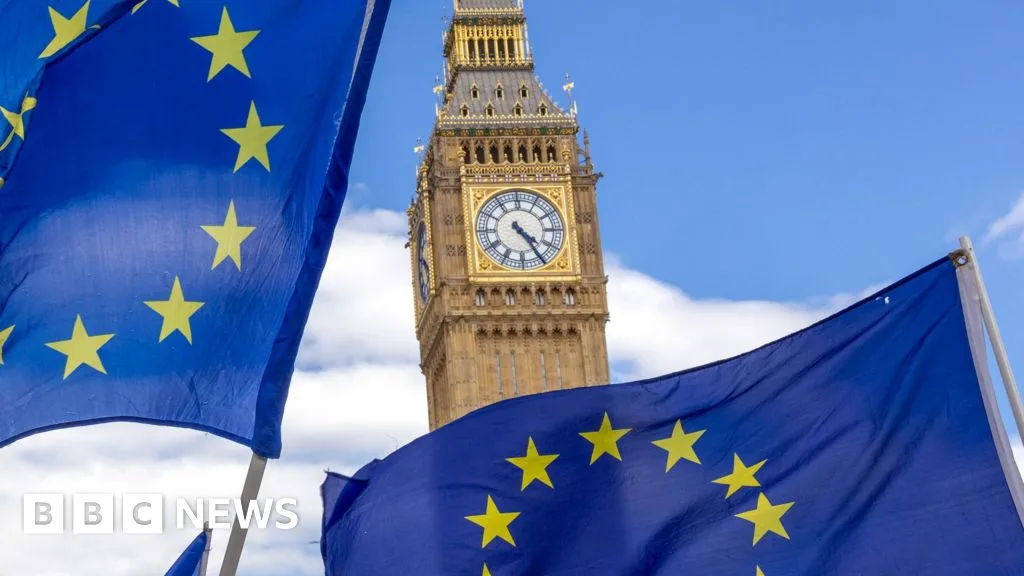
The UK government and the European Union on Thursday (XX/XX) released the legal documents of two treaties agreed last week as part of efforts to 'reset' post-Brexit relations. One crucial point that immediately drew scrutiny was a 10-year termination clause in the food trade agreement, which binds both parties to bear 'reasonable and proportionate' costs if either terminates the deal and must rebuild the border inspection infrastructure that had been slated for large-scale cuts.
The publication completes a series of previously agreed documents, including the Cost Reduction Bill, the legal instrument for executing most of the agreement's contents. The government also released a new impact assessment covering various sectors and regions, one of which projects a 16% increase in UK exports of key agricultural commodities to the EU.
The 10-year clause serves as a kind of safety net for the EU: if London chooses to exit the agreement, it remains obliged to bear the financial consequences of dismantling border facilities that had been agreed for reduction. For the UK, the provision creates a political dilemma because it ties the hands of the next government in taking unilateral policy decisions.
Fierce reaction came from the opposition. Conservative Party leader Kemi Badenoch said she would scrap the agreement, while Nigel Farage of Reform UK said he would not pay any compensation. The stance shows that Brexit remains a sharp dividing line in UK domestic politics, even as the current government tries to frame it as a pragmatic step to reduce trade costs.
Minister for European Affairs Hamish Falconer stressed that the Cost Reduction Bill enables implementation of the two main trade agreements. "It removes paperwork for our food and drink traders, protects billions of pounds of UK exports from the carbon tax, and makes doing business with our largest trading partner cheaper and easier," he said, as quoted by the BBC.
Beyond food trade, the treaty also covers linking the UK and EU emissions trading schemes, which will expand to cover the aviation and maritime industries. The UK will be invited to attend European Commission meetings and expert groups as an observer, and to take part in food security emergency planning, but without voting rights in decision-making. The bill also contains plans to use secondary legislation granting ministers direct authority to align regulations, allowing changes with looser parliamentary scrutiny.
The UK Prime Minister called the new deal with the EU a "pragmatic" step and "not a stepping stone to anything else". He also stressed that rejoining the European Union without a referendum was "unimaginable". Several former prime ministers urged that the Brexit debate not be reopened, but he judged them "stuck in the past" and stressed there would be no protracted Labour discussion on Europe. Badenoch accused the prime minister of having "oversold" the deal and "trying to take Britain back to 2015".
For Indonesia, the UK-EU agreement offers a lesson on how a country emerging from a trade-relations crisis can design a financially binding termination clause to maintain the stability of cooperation. As the UK strengthens its market access to the EU, Indonesian products competing in agriculture and processed food need to watch for a potential shift in European consumer preferences toward cheaper, bureaucracy-free British goods. On the other hand, the UK's involvement as an observer in EU regulation could serve as a precedent for third countries in drafting trade agreements that balance sovereignty and market access.
Going forward, the big question is how far this 10-year clause will bind London's political flexibility if the government changes. Will financial compensation be an effective barrier to unilateral cancellation, or will it instead boomerang and sharpen domestic debate? What is clear is that the treaty has placed the UK in a unique position: legally and financially bound to the EU, yet still outside its institutional structure with limited voting rights.