Constitutional Court Tested: Indigenous Communities Demand Clear Limits on Land-Burning Exemption
Baca dalam 60 detik
- Dua masyarakat adat memohon Mahkamah Konstitusi memperjelas siapa yang berhak atas pengecualian larangan membakar lahan dalam UU Cipta Kerja.
- Pemohon menilai rumusan 'masyarakat' yang kabur membuka celah bagi korporasi untuk berlindung di balik dalih kearifan lokal.
- Jika dikabulkan, praktik tebas-bakar tradisional hanya boleh dilakukan oleh komunitas adat dengan batas luas 2 hektar dan sekat bakar.
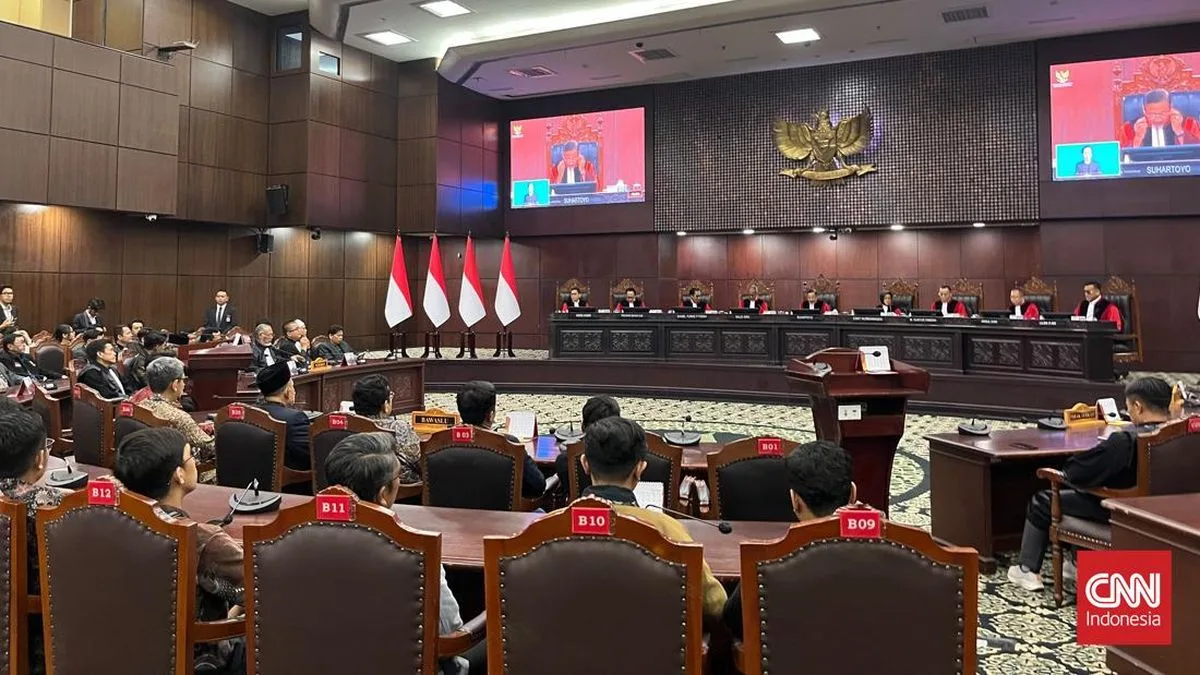
The Constitutional Court (MK) has received a petition for judicial review of Article 22 point 24 of the Annex to Law Number 6 of 2023 on Job Creation, which amends Article 69 paragraph (2) of Law Number 32 of 2009 on Environmental Protection and Management (PPLH). The petition was filed by two indigenous communities on Wednesday (11/11/2026): Putes Lekas, Chair of the Regional Council of the Indigenous Peoples Alliance of the Archipelago for North Barito/Indigenous Dayak Taboyan Community, and Era Purnama Dewi, a resident of Kampar Regency, Riau. Both ask the MK to give a constitutional interpretation that the exemption from the ban on clearing land by burning applies only to members of customary law communities who have carried out the practice for generations based on local wisdom.
The issue stems from the phrase "masyarakat yang melakukan kegiatan dimaksud dengan memperhatikan sungguh-sungguh kearifan lokal" (communities carrying out the said activity with due regard for local wisdom) in the a quo article. There is no clear limit on who is meant by "masyarakat" (community), so the exemption is open to multiple interpretations. The petitioners' legal counsel from VST and Partners, A. Fahrur Rozi, argues that the ambiguity of the norm's subject creates a legal loophole exploited by parties outside indigenous communities, including large-scale land preparers, to burn land under the pretext of local wisdom.
According to Rozi, indigenous communities have a traditional knowledge system that cannot be equated with burning practices by non-indigenous communities. "These non-indigenous groups have no traditional knowledge system, do not build firebreaks, and do not follow the customary calendar. It is this uncontrolled burning that then spreads into forest and land fire (karhutla) disasters," he said in the hearing.
Rozi explained that the Dayak Taboyan community still practices rotational farming with the slash-and-burn method as part of a traditional agricultural system inherited from their ancestors. The practice is not done carelessly: land clearing follows the seasonal calendar, is carried out collectively, is preceded by notification to neighboring field owners, and includes building firebreaks to control the spread of fire. "The rotational slash-and-burn farming our community has carried out for generations has never been the source of karhutla because it is bound by strict customary rules and local rituals," said Putes Lekas, as conveyed by Rozi.
However, every time karhutla strikes, customary farmers are always blamed as the cause and face criminal threats. The situation is worsened by the issuance of Presidential Instruction Number 11 of 2026 on Strengthening Enforcement of the Ban on Land Clearing by Burning, which instructs uniform prohibition. The policy is seen as further cornering customary farmers because it does not distinguish traditional practices from commercial burning.
The second petitioner, Era Purnama Dewi, a resident of Kampar, Riau, was a victim of respiratory problems from exposure to karhutla haze throughout September to October 2026. According to her, the loss of a good and healthy environment occurs because the state has no firm normative standard to distinguish burning for customary farming from commercial burning. She hopes the MK will provide clear limits so that the right to a healthy environment is no longer violated.
In their petitum, the petitioners ask the MK to declare Article 22 point 24 of the Annex to Law No. 6/2023, which amends Article 69 paragraph (2) of Law 32/2009, contrary to the 1945 Constitution and conditionally lacking binding legal force. They request that the MK interpret the exemption from the ban on burning land as applying only to: (1) members of customary law communities who have lived and cleared land by burning for generations; (2) field clearing for subsistence needs; (3) a land area of at most 2 hectares per household; (4) use for local-variety crops; (5) mandatory surrounding firebreaks; and (6) not for business purposes and not carried out by or for holders of business licenses.
This petition is a test for the MK in balancing environmental protection, indigenous rights, and karhutla law enforcement. If granted, the ruling could become an important precedent that clearly distinguishes sustainable traditional practices from destructive commercial burning. However, if the MK rejects it, the legal loophole in the Job Creation Law could continue to be exploited to avoid responsibility for the annual haze disaster. The public now awaits a ruling that not only resolves the dispute over the norm but also provides ecological justice for victims and customary farmers.