NASA Opens Door to Hubble Rescue, but There Is a 2032 Deadline
Baca dalam 60 detik
- NASA menerbitkan permintaan informasi pada 29 Oktober 2025 untuk mencari mitra industri yang mampu melakukan servis di orbit, termasuk menaikkan ketinggian Hubble.
- Teleskop yang diluncurkan 1990 itu diperkirakan akan jatuh ke atmosfer Bumi pada 2033–2034 akibat hambatan atmosfer, sehingga misi penyelamatan harus dilakukan paling lambat 2032.
- Administrator NASA Jared Isaacman menilai upaya penyelamatan layak dipertimbangkan jika biayanya lebih murah daripada meluncurkan misi baru, meski opsi deorbit terkendali juga tetap terbuka.
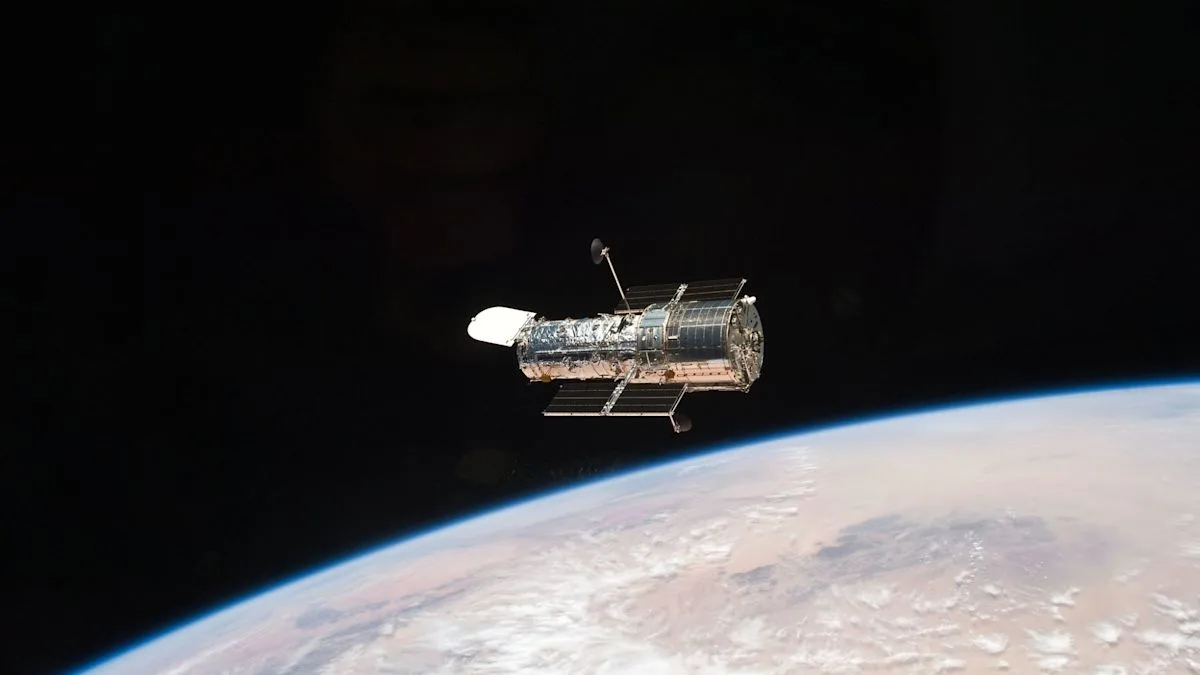
NASA has officially reopened the discussion on rescuing the Hubble Space Telescope. On 29 October 2025, the United States space agency published a request for information (RFI) inviting industry to submit ideas for in-orbit servicing, including raising Hubble's altitude, which continues to decline due to atmospheric drag. The move signals that Hubble—though still operating normally—will not be left to wait for its scheduled fall to Earth in 2033 or 2034.
Hubble was launched in April 1990 together with the European Space Agency (ESA) and has been serviced five times by astronauts on space shuttle missions, most recently in 2009. Over more than three decades, the observatory has produced findings that changed humanity's understanding of the universe, including evidence that the expansion of the cosmos is accelerating—an achievement later awarded a Nobel. Hubble data has also underpinned at least 23,000 scientific publications, and to this day astronomers' requests for observation time are said to be about seven times the capacity available each year.
Yet behind that record, Hubble faces an increasingly real threat. Atmospheric drag is causing its orbit to decay slowly, and NASA estimates the telescope will re-enter Earth's atmosphere naturally in 2033 or 2034. Therefore, if a servicing mission is to happen, its execution window must fall in 2032. This deadline is the important context for why the latest RFI is not merely ceremonial: there is a technical deadline that cannot be negotiated.
Interestingly, this rescue discussion first surfaced in 2022. At the time, technology billionaire Jared Isaacman proposed using SpaceX hardware for a Hubble servicing mission. NASA rejected it, citing the risk to an observatory that was still healthy. Now, after Isaacman took office as NASA administrator in December 2025, the agency's stance appears to have softened. In a statement on 30 October, Isaacman stressed that Hubble's scientific value means NASA must seek every reasonable opportunity to keep it operating, especially if the cost is lower than launching a new mission.
"Still worth exploring. That was then. Now it is still worth pursuing—Hubble deserves it," Isaacman wrote in a post on X on 30 October, as quoted from an official NASA statement.
Nevertheless, the RFI does not point exclusively toward a rescue. NASA is also opening the possibility of other scenarios, including a controlled and safe re-entry or orbital disposal at the end of Hubble's service life. In other words, the deorbit option remains part of the consideration, not merely an alternative that has been set aside.
NASA's experience with the Swift Observatory offers a valuable lesson. In early 2025, NASA partnered with Katalyst Space Technologies on a USD 30 million mission to raise Swift's orbit, which was also declining due to atmospheric drag. The rescue mission, prepared quickly to catch up with increased solar activity, was successfully launched in the summer. However, control problems caused Katalyst's LINK vehicle to fail to rendezvous with Swift. The observatory, which has operated for 22 years—far exceeding its two-year design life—is expected to enter the atmosphere on 4 November 2025.
The Swift failure shows that in-orbit servicing is no simple matter. It requires precision engineering, reliable vehicle control, and careful risk calculation. But for Hubble, the stakes are higher: this telescope is not only a scientific asset but also a pop-culture icon through images such as "Pillars of Creation" in the Eagle Nebula. The wider public knows it, and that puts its own pressure on NASA not to rush down the deorbit path.
In the Indonesian context, this development is relevant to the domestic astronomy community and space technology industry. Although Indonesia does not yet have in-orbit satellite servicing capacity, discussion of the low-orbit economy and space debris management is increasingly important. A policy of responsible orbit management, including the option of controlled deorbit, could be a lesson for developing countries that are beginning to rely on satellites for telecommunications and Earth observation.
Going forward, NASA's decision will depend on how attractive the proposals submitted through the RFI are, and whether the cost of a servicing mission can be pressed below that of launching a new telescope. If Hubble is successfully rescued, it could continue providing valuable data for several more years. If not, the world must prepare to say goodbye to one of humanity's most important windows on the universe. Will Hubble end its life in a controlled burn-up in the atmosphere, or will new hands in orbit extend its breath?