League Cup 2026/2027: 36 Clubs Compete as New Format and Packed Schedule Pose a Test
Baca dalam 60 detik
- League Cup 2026/2027 diikuti 36 tim dari BRI Super League dan Pegadaian Championship, digelar 3 November 2026 hingga 19 Mei 2027.
- Format 12 grup dengan juara grup lolos ke babak 12 besar, dilanjutkan delapan besar, semifinal, dan final single match.
- Direktur Kompetisi I.League, Asep Saputra, menekankan pentingnya pengaturan jadwal di tengah padatnya BRI Super League.
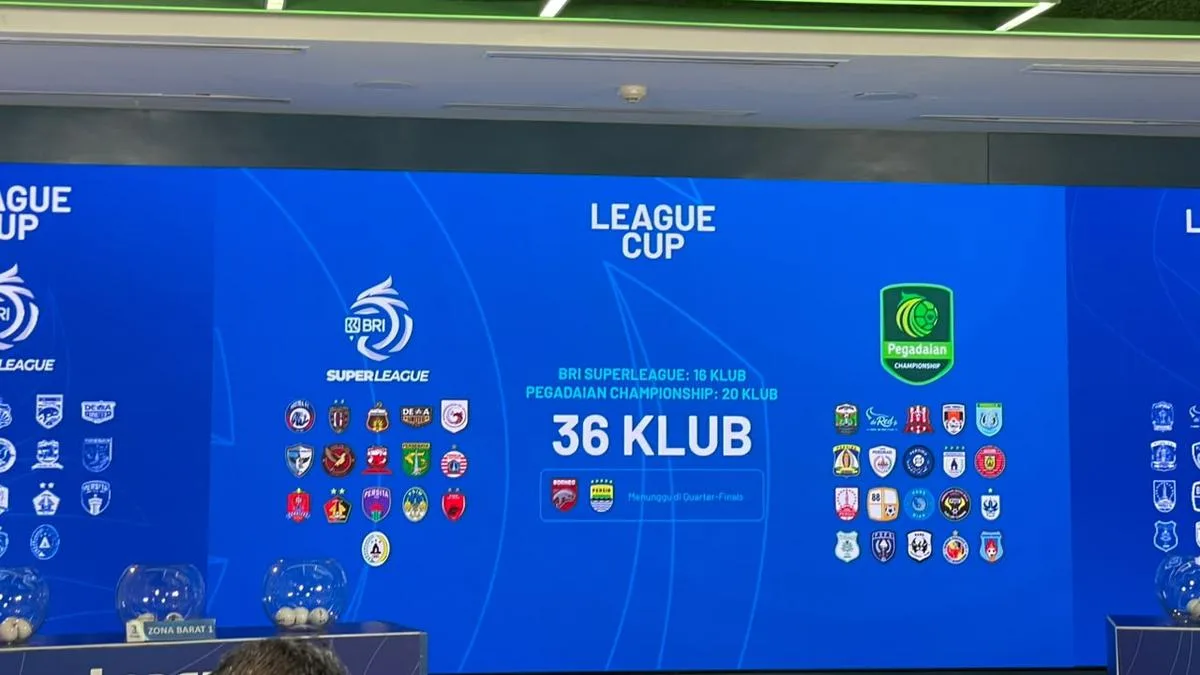
Indonesian football competition is back under a new name: League Cup 2026/2027. The tournament, which brings together 36 clubs from the two top tiers, is scheduled to run from 3 November 2026 to 19 May 2027 with a format different from the previous edition. Its arrival is a proving ground for BRI Super League and Pegadaian Championship clubs to gauge squad depth amid a packed domestic schedule.
The 36 participants are split into 12 groups of three teams each. Every contestant will play two matches in the group phase, for a total of 72 preliminary games. Only group winners advance to the round of 12, to be held on 15-17 January 2027 in a single-match format. Hosting rights in this round are decided by the best record during the group phase, giving teams an added incentive to perform consistently from the start.
After the round of 12, the competition moves into the quarterfinals, which already include Persib as BRI Super League champion and Borneo FC as runner-up. Both teams receive a bye, while the others must battle through the group phase. The quarterfinals on 30-31 January 2027 also use a single-match format, with hosting rights decided by draw. A similar format applies in the semifinals on 21 April 2027, and the final is scheduled for 19 May 2027 at a venue yet to be determined.
I.League Competition Director Asep Saputra said tournament preparations cover three crucial aspects: competition format, match mechanism, and schedule management. He highlighted the heavy challenge, as the League Cup must run alongside the BRI Super League, which also has a packed calendar. "We must ensure there are no schedule clashes that harm clubs, especially those playing in Asian competitions," Asep said in his official statement. The remark underscores the need for synergy between the league operator and clubs so the tournament stays competitive without sacrificing performance in other competitions.
For participating clubs, the League Cup is more than an extra trophy. The tournament is a chance for promoted teams or second-tier clubs to test themselves against elite sides, as well as a stage for rotating young players. However, a schedule that sits close to regular league matches could trigger player fatigue. Some observers argue that a group format in which only the winner advances makes every match fierce from the start, but also reduces room for teams to experiment.
Commercially, the presence of 36 teams from two different divisions can broaden the reach of the national football market. Yet logistical challenges and broadcast rights distribution remain unfinished business. The competition operator must ensure every match is delivered with adequate production quality, especially knockout-stage games featuring big teams. If successful, the League Cup could become a blueprint for integrating competitions across tiers in the future.
With the schedule already laid out, the question now is: can participating clubs manage the match load without sacrificing their ambitions in the domestic league? And will the League Cup 2026/2027 produce surprises from underdog teams, or will it be dominated by established powers such as Persib and Borneo FC? Indonesian football fans await the answer starting 3 November.