Surface Laptop Ultra at $40 Million Rupiah: Microsoft and Nvidia Bet on "Agentic PC"
Baca dalam 60 detik
- Microsoft dan Nvidia membuka preorder Surface Laptop Ultra berbasis platform RTX Spark mulai 7 Oktober 2026, dengan harga mulai 2.599 dolar AS hingga 5.899,99 dolar AS untuk konfigurasi tertinggi.
- Klaim kemampuan menjalankan model AI 120 miliar parameter secara lokal masih berasal dari produsen, belum diverifikasi benchmark independen, dan bergantung pada kuantisasi serta optimasi aplikasi.
- Peluncuran ini menandai dorongan industri menuju komputasi AI hibrida di perangkat, tetapi ekosistem perangkat lunak, keamanan, dan kepatuhan perusahaan belum matang.
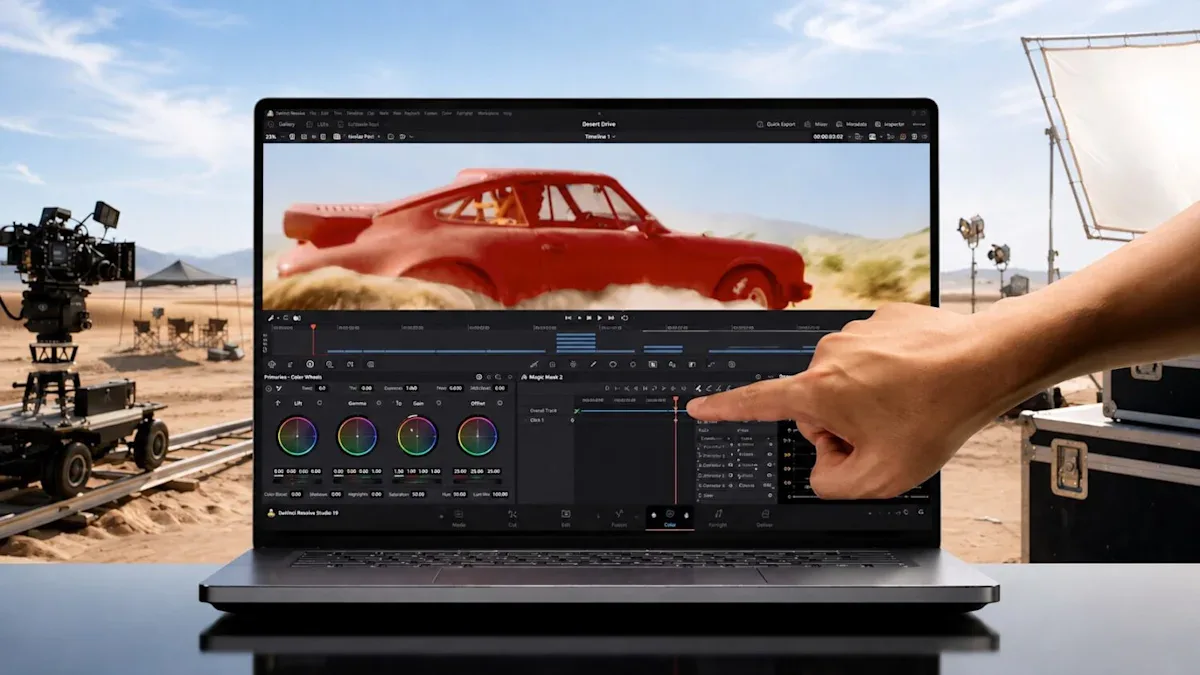
Microsoft officially opened preorders for the Surface Laptop Ultra on October 7, 2026, with first shipments scheduled for October 16. The laptop is the first device to carry the RTX Spark platform developed in collaboration with Nvidia, and is sold starting at $2,599 or around Rp40 million, while the top variant is priced at $5,899.99 or nearly Rp92 million.
Those figures position the Surface Laptop Ultra not as a mainstream consumer device, but as a work tool for developers, AI researchers, and creators who rely on heavy GPU compute loads. Microsoft calls the launch the beginning of the "agentic PC" era — a product strategy claim worth testing, not merely marketing narrative.
Architecturally, RTX Spark combines a Blackwell GPU, an Arm-based Grace CPU, and a pool of unified memory shared by the CPU and GPU. Microsoft claims the device can run inference of AI models up to 120 billion parameters locally, with AI compute capacity reaching one petaflop. That claim, however, comes from Microsoft and Nvidia themselves, not from third-party testing.
The crucial question: can that 120 billion parameter figure really be run day to day? That number is better read as a theoretical capability limit. Model quantization, memory bandwidth, and the level of application optimization will determine how smoothly large models actually run. Without independent benchmarks, this performance claim still leaves room for doubt.
Microsoft's approach is not entirely local. The architecture in question keeps privacy-sensitive and latency-critical tasks on the device, then offloads heavy loads to cloud services. GitHub is preparing HydraFusion to route programming tasks between local and cloud models, though its status is still an experimental preview and not yet widely available. Microsoft also introduced Execution Containers, a sandbox environment that limits agent access to files and networks with policies enforced at runtime.
The "agentic PC" label is more an industry prediction and product strategy; the software ecosystem has not yet widely validated it.
What remains unresolved are the fundamental issues: agent reliability, user approval flows, permission audits, and corporate compliance. Without that framework, the promise of autonomous on-device computing risks stalling as a technological demo.
There are other technical consequences as well. The Surface Laptop Ultra runs on the Windows on Arm ecosystem through Nvidia's N1X chip family, not the conventional x86 architecture. Game support at launch is limited; according to The Verge, Call of Duty compatibility is only scheduled for 2027. Anti-cheat compatibility and driver maturity remain obstacles for buyers who prioritize gaming.
The RTX Spark ecosystem does not stop at one product. Microsoft also opened preorders for the Surface RTX Spark Dev Box, a developer workstation priced at $5,999 scheduled to ship in November 2026. Asus, Dell, HP, Lenovo, and MSI are also preparing systems based on the same platform, expanding RTX Spark's reach beyond Microsoft's own devices.
For Indonesia, this wave of AI PCs could potentially change the landscape of device procurement in the research, higher education, and creative industries. But with prices equivalent to tens of millions of rupiah per unit, domestic adoption is likely limited to campus laboratories, technology companies, and large production studios. The government and institutions need to recalculate their IT budgets if they want to follow this local computing trend, while considering the readiness of supporting electricity and network infrastructure.
The "agentic" bet will only pay off if the software, permission frameworks, and developer ecosystem move as fast as the hardware. The question for prospective buyers in Indonesia and globally: is this premium of tens of millions of rupiah worth the ability to run large AI models independently, or is it merely buying a promise that is not yet mature?