Prabowo and the Merah Putih Cabinet Send Floral Tributes, Guruh Soekarnoputra to Be Buried Beside Fatmawati
Baca dalam 60 detik
- Presiden Prabowo Subianto mengirim karangan bunga duka di kediaman Guruh Soekarnoputra, Jalan Sriwijaya Raya, Jakarta, disusul sejumlah menteri Kabinet Merah Putih.
- Guruh wafat pada Sabtu dini hari di RS MRCCC Siloam Semanggi dalam usia 73 tahun setelah menjalani perawatan intensif; jenazah akan dikebumikan di TPU Karet Bivak selepas zuhur.
- Kepergian putra bungsu Soekarno ini menutup babak terakhir generasi langsung pendiri republik sekaligus menguji soliditas politik keluarga Soekarno menjelang agenda nasional berikutnya.
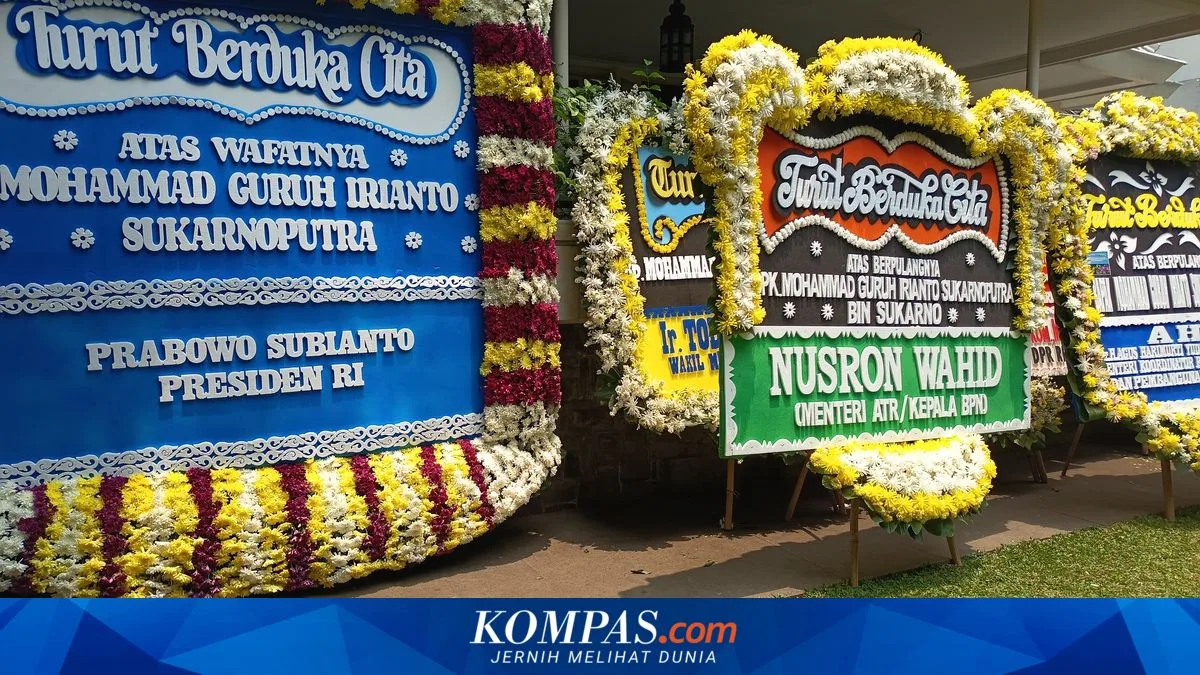
President Prabowo Subianto sent a floral tribute to the residence of the late Guruh Soekarnoputra at Jalan Sriwijaya Raya Number 26, Jakarta, shortly after news of the death of the youngest son of Indonesia's first president, Soekarno, spread on Saturday (26/9/2026) morning. The arrangement, in a light blue palette with yellow, red, and white accents, was placed right at the entrance of the mourning house, bearing a short message: "Turut Berduka cita, atas wafatnya, Mohammad Guruh Irianto Sukarnoputra, Prabowo Subianto Presiden RI."
Similar condolences flowed in from a number of presidential aides. Agrarian and Spatial Planning Minister/Head of BPN Nusron Wahid, Coordinating Minister for Infrastructure and Regional Development Agus Harimurti Yudhoyono, and Cabinet Secretary Teddy Indra Wijaya were recorded as sending floral arrangements to the same location. Prabowo also expressed his condolences through his personal Instagram account, adding a second layer of political communication channels amid the mourning of the extended Soekarno family.
Guruh breathed his last at 04.16 WIB at MRCCC Siloam Hospital, Semanggi, Jakarta, at the age of 73. The man whose full name was Mohammad Guruh Irianto Sukarnoputra bin Soekarno had previously been treated intensively at the same facility and his condition was at one point reported to be critical. The news of his death was only confirmed by the family and PDI Perjuangan on Saturday morning, after the public had spent the past few days following the health developments of the younger brother of PDI-P Chairwoman Megawati Soekarnoputri.
PDI-P Secretary-General Hasto Kristiyanto confirmed that the body would be buried beside the grave of his mother, Fatmawati Soekarno, at TPU Karet Bivak, Jakarta, after the zuhur prayer. The decision places Guruh within the immediate family line of the proclamator—a symbolic position rarely held by other political figures in Indonesia, given that Fatmawati was the republic's first first lady.
"Guruh akan dimakamkan di samping makam ibunya, Fatmawati Soekarno, di TPU Karet Bivak, Jakarta, selepas shalat zuhur," ujar Hasto Kristiyanto, seperti dikutip dari pernyataan resmi partai.
For readers in Indonesia, especially professionals and market participants, Guruh's passing is more than just a family bereavement. He was one of the few figures who directly linked the Soekarno era to today's political landscape, including through his position as Megawati's younger brother—a figure who still determines the direction of PDI-P, the party with the largest mass base in Indonesia. Every event touching the inner circle of the Soekarno family always has a knock-on effect on coalition calculations, the distribution of posts, and the legislative agenda in Senayan.
In addition, Guruh was known as an artist and dancer who spent years in the performing arts, far from the bustle of practical politics. That profile meant he was often seen as a guardian of the Soekarno family's cultural legacy, not merely an electoral actor. In the context of the Prabowo–Megawati relationship, which has alternately warmed and cooled, the floral gesture from the Palace can be read as a signal of institutional respect as well as a marker that the communication line between the executive and PDI-P remains open, at least on the protocol front.
What bears watching going forward is how PDI-P's internal dynamics unfold after Guruh's passing, especially if talk emerges of restructuring the party or regenerating its leadership. The public is also waiting to see whether the series of final tribute ceremonies will involve figures from across camps, which could serve as an indicator of the national political temperature ahead of the next major agendas. The question is simple yet strategic: will this moment of mourning become a bridge to reconciliation, or instead the starting point of a new chapter of tension within the circles of power?