Anthropic Opens Physical Biology Lab, Claims New Enzyme Discovery Aided by Claude
Baca dalam 60 detik
- Anthropic meresmikan laboratorium basah biologi di Bay Area untuk menjembatani eksperimen komputasional dan pengujian fisik.
- Tim ilmuwan melaporkan identifikasi enzim array-associated reverse transcriptases (ART) pada bakteriofag, hasil analisis pola DNA berulang.
- Langkah ini menandai pergeseran kompetisi AI ke ranah penemuan obat, bersaing dengan Isomorphic Labs dan OpenAI.
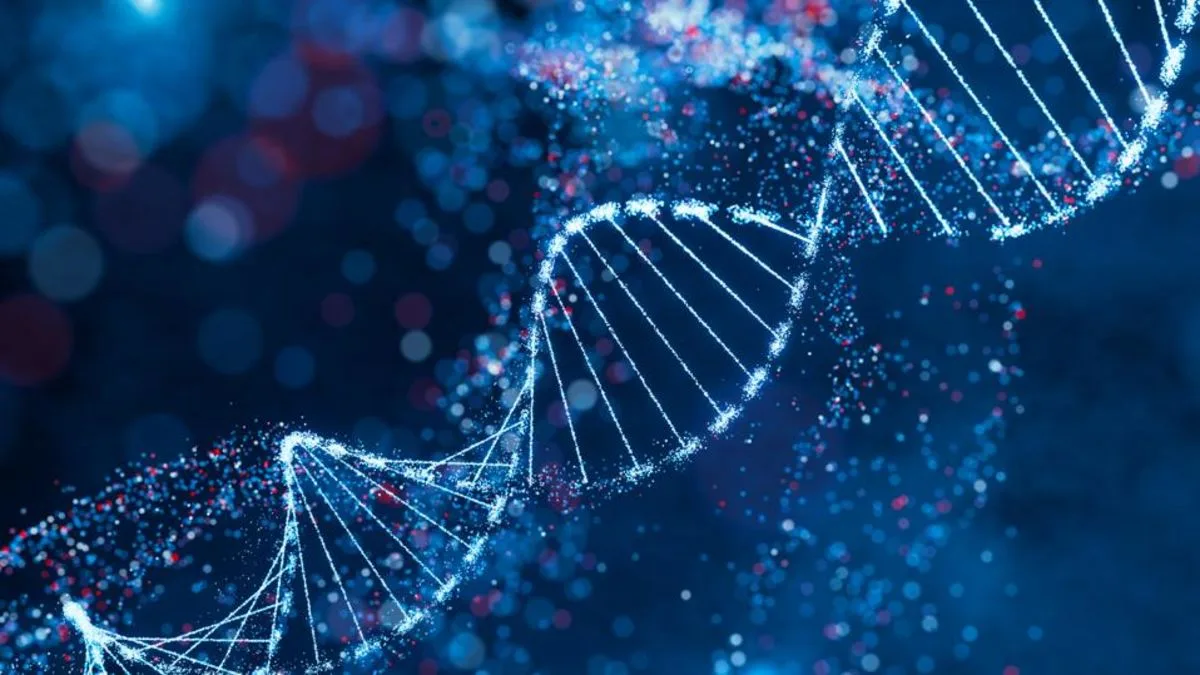
Artificial intelligence company Anthropic announced the establishment of a wet biology lab in the Bay Area, United States, and this week claimed its first discovery: a previously uncharacterized enzyme system, dubbed array-associated reverse transcriptases (ART), found in bacteriophages. The finding was published early to demonstrate the Claude model's capability to accelerate biological research, while also opening a new chapter in competition in the arena of AI-based drug discovery.
Anthropic's move is not merely business expansion. Until now, large language models such as Claude have been able to generate millions of biological hypotheses in seconds, but final validation still requires human hands and laboratory equipment. By having its own physical facility, Anthropic can directly test its computational predictions, shortening the cycle from simulation to real experiment. The company's head of life sciences, Eric Kauderer-Abrams, stressed that laboratory work remains the ultimate test in biology. "We believe that to do biology, the test ultimately still is and will remain in real lab work," he said, adding that their approach mimics the conventional biotechnology model that combines internal facilities and external partners.
The claim of the ART discovery emerged from analysis of DNA repeat patterns that, according to Anthropic's team of scientists, mark an enzyme system that had never been described before. They stated that work to understand the main function of ART is still ongoing, but sharing the finding early was considered important to demonstrate Claude's capabilities and provide insight to the broader research community. Although its practical applications are not yet clear, some observers view this as a significant leap for AI-assisted scientific discovery.
"We realized this pattern marks a previously uncharacterized enzyme system, found in bacteriophages, which we call array-associated reverse transcriptases. Our work to understand its main function is still ongoing," the Anthropic research team said in a statement.
Anthropic is not alone. Alphabet, through Isomorphic Labs, which was spun off from DeepMind in 2021, has already been engaged in this field, even launching AlphaFold3 in 2024 to predict the structure of proteins, DNA, and RNA to accelerate drug discovery. OpenAI is also increasingly aggressive in publishing biological research literature and recently expanded the availability of GPT-Rosalind, a model specialized for life sciences research. Although it has not announced its own wet lab, OpenAI is expected to follow suit to maintain competitiveness.
For Indonesia, this development offers both opportunity and challenge. National biological and pharmaceutical research is still dominated by conventional methods with limited laboratory infrastructure and funding. The presence of AI models such as Claude or AlphaFold3 can be a shortcut to accelerate the discovery of drug candidates, especially for tropical diseases that are less of a priority for global pharmaceutical companies. However, without adequate wet labs and trained human resources, computational findings will be difficult to verify into real products. Collaboration between universities, BRIN, and the domestic pharmaceutical industry is key so that Indonesia is not merely a consumer of technology, but also a producer of knowledge.
Going forward, the question is no longer whether AI can generate scientific hypotheses, but how quickly and how cheaply those hypotheses can be turned into tested therapies. If Anthropic and its competitors succeed in proving that the drug discovery cycle can be cut from over a decade to a matter of months, the landscape of the global pharmaceutical industry will change fundamentally. Indonesia needs to decide whether it will be a spectator or help build a research ecosystem that takes advantage of this wave.