New Microsoft Surface Pro and Laptop Take On MacBook Air, Fanless but Still Cool
Baca dalam 60 detik
- Microsoft resmi memperkenalkan Surface Pro 12 inci dan Surface Laptop 13 inci dengan chip Snapdragon X2 Plus, mulai dijual 13 Oktober mendatang.
- Kedua perangkat mengandalkan sistem pendingin pasif tanpa kipas, namun mampu menjalankan aplikasi kreatif berat secara bersamaan tanpa throttling.
- Langkah ini menandai upaya serius Microsoft merebut segmen laptop premium yang selama ini dikuasai Apple, dengan harga mulai 1.149 dolar AS.
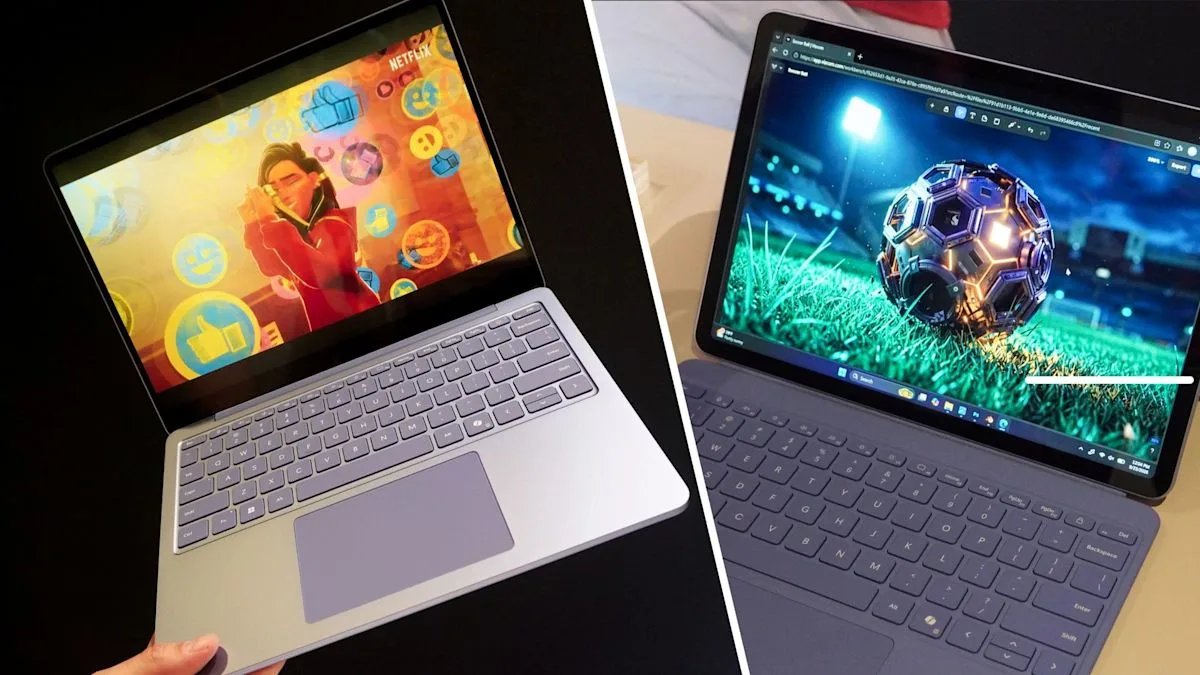
Microsoft has officially announced the 12-inch Surface Pro and 13-inch Surface Laptop powered by the Snapdragon X2 Plus chip. Both devices are scheduled to launch on October 13 with prices starting at USD 1,149 for the Surface Pro and USD 1,199 for the Surface Laptop. The move is a strong signal that Microsoft is serious about challenging the MacBook Air's dominance in the premium thin-and-light laptop segment.
For the past few years, Apple has indeed been the main benchmark for quiet, cool, and long-lasting laptops. Every thin Windows laptop is always compared with the MacBook Air, and often loses on heat management and battery life. However, this latest Surface generation brings significant changes. In early testing, both devices were able to run heavy creative workflows—from digital sketching, 3D rendering in Blender, to multi-layer editing in Photoshop—simultaneously without significant hiccups.
The main advantage lies in the passive cooling design. The Surface Pro and Surface Laptop no longer use active fans, relying instead on solid cooling pipes. In previous generations, fanless designs often ended in thermal throttling and hot aluminum bodies. Now, after running various heavy applications, the back of the Surface Pro still feels cool to the touch. This is a technical achievement rarely found in Windows devices of its class.
In terms of design, Microsoft has fitted a sharp 500-nit PixelSense display and a keyboard with satisfying travel. The aluminum body comes in playful color options, hiding the power beneath. The Surface Pen on the Pro model also features two-way haptics, enabling tactile interaction with apps—for example, vibration when aligning images in Photoshop or sound effects when navigating Windows 11. The feature does feel like a gimmick, but it shows great potential if more apps support it.
Even so, there is an ergonomic note on the 12-inch Surface Pro. Unlike previous models, the keyboard deck can no longer attach magnetically to the bottom bezel to form an additional stand. The connection only happens at the bottom spine. Without an angled magnetic support, lap use is predicted to be shakier than a traditional clamshell laptop. This is a trade-off that needs further testing.
For the Indonesian market, the presence of the Surface Pro and Surface Laptop with the Snapdragon X2 Plus could be an attractive alternative for creative professionals and mobile workers who want a powerful device without noisy fans. However, the fairly premium price—on par with the MacBook Air—may be a consideration, especially with import taxes and distribution costs. If Microsoft can deliver a broader ecosystem of apps compatible with the ARM architecture, these devices could potentially change the premium laptop landscape in the country.
"This is the first Surface that can truly rival the everyday magic of the MacBook Air," the reviewer wrote in his hands-on report.
With silent operation, thermal stability, and snappy chip performance, the Surface Pro and Surface Laptop are Microsoft's closest attempt to match the MacBook Air experience. The question is, are Windows users in Indonesia ready to switch to these fanless ARM devices, or are they still waiting for more mature app support?