Xiaomi 18 Pro and Pro Max Officially Launched: 2nm Chip, Privacy Display, Jumbo Battery
Baca dalam 60 detik
- Xiaomi memperkenalkan duo flagship 18 Pro dan 18 Pro Max di China, masing-masing mengusung Snapdragon 8 Elite Gen 6 dan Extreme Gen 6 berbasis fabrikasi 2nm.
- Keduanya memiliki layar belakang fungsional, sistem kamera Leica identik, dan baterai berkapasitas besar, namun varian Pro Max dibanderol lebih mahal.
- Peluncuran global dan harga resmi di luar China masih menunggu konfirmasi, sementara efektivitas fitur privasi dan daya tahan baterai perlu diuji independen.
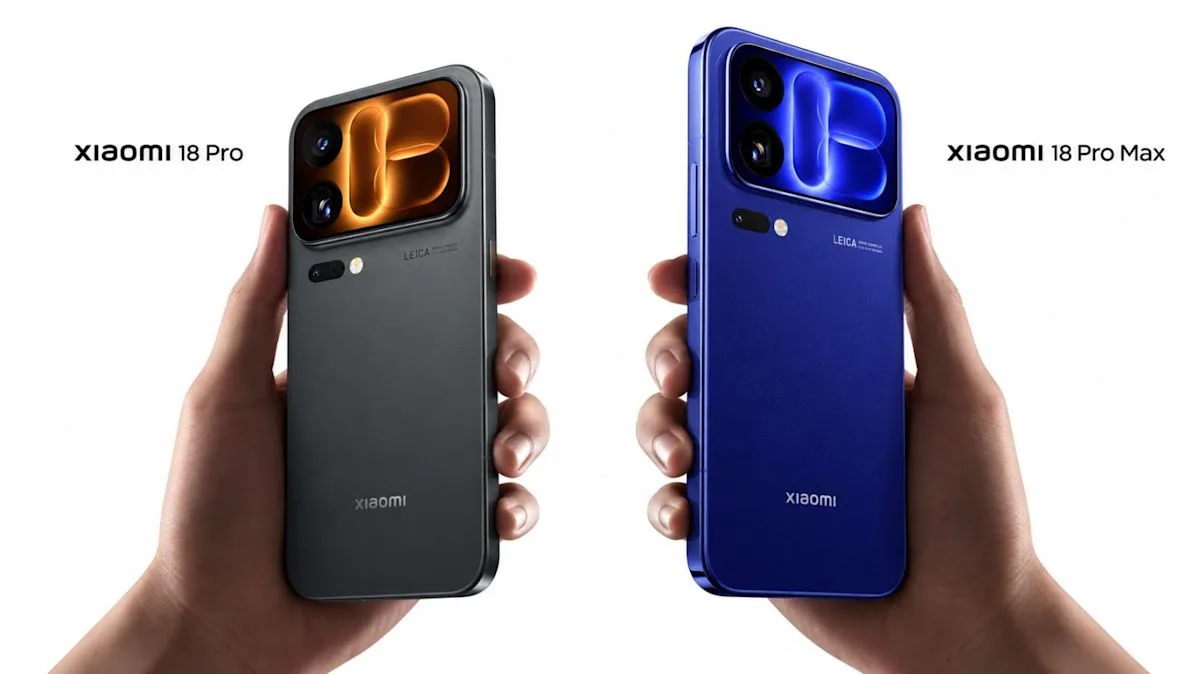
Xiaomi officially launched the Xiaomi 18 Pro and Xiaomi 18 Pro Max in China on 23 September 2026. These phones are the first devices to carry the Snapdragon 8 Elite Gen 6 chip for the Pro variant, while the Pro Max gets the Snapdragon 8 Elite Extreme Gen 6. Both are claimed to be flagship platforms based on a 2nm manufacturing process, although independent benchmark results are not yet available.
Xiaomi's move marks a new chapter in competition in the premium segment. If previously differentiation between variants often lay in camera configuration, this time Xiaomi has instead made the camera hardware identical in both models. The main differences lie in screen size, battery capacity, and chipset type. This strategy is seen as underscoring Xiaomi's effort to expand options for consumers without sacrificing photography quality.
On the display side, the Xiaomi 18 Pro carries a 6.4-inch LTPO AMOLED panel with 2K-class resolution, while the Pro Max jumps to 6.9 inches. Both support a variable refresh rate of 1–120Hz and peak brightness of up to 4,000 nits according to manufacturer claims—this figure refers to maximum output, not sustained brightness under direct sunlight. The screen is protected by Dragon Crystal Glass 3.
More interestingly, Xiaomi has introduced a secondary display on the back of the phone. The Xiaomi 18 Pro has a 2.66-inch OLED screen, while the Pro Max gets a 2.86-inch 120Hz panel. This screen is not merely decorative: users can use it to frame selfies with the main camera, run AI-based wallpapers and widgets, and interact with the Xiao AI assistant. Some mini apps reported to be available include a water-drinking reminder, an egg-boiling timer, and a recipe tool—a signal that Xiaomi wants to make the rear display a functional platform.
Privacy features are one of the advantages Xiaomi is promoting. Unlike common software-based privacy modes, Xiaomi's implementation is reported to work at the panel level by narrowing the viewing angle. The effect is similar to a privacy filter on a laptop, but embedded directly in the screen. Xiaomi claims this feature is more configurable than Samsung Galaxy S26 Ultra's privacy implementation, with location-based triggers and the ability to restrict notifications, floating windows, and split-screen mode. A dedicated AI button on the left side is provided for quick access. However, this claim still needs to be proven through independent testing, including its impact on brightness and power consumption.
On endurance, the Xiaomi 18 Pro carries a 7,000mAh battery—up 11% from the previous generation—while the Pro Max has 8,500mAh, an increase of 13%. Both support 100W wired charging. For wireless charging, reports cite 50W in some sources and 27W in others; consumers are advised to wait for Xiaomi's official specifications. It is worth noting that the camera hardware of both models is identical, so the Pro Max premium essentially buys a larger screen, a larger battery, and the highest-tier chipset, not a different camera system. Both run HyperOS 4 and have an IP69 rating (resistant to dust and high-pressure water jets).
"We want the rear screen to be more than just a visual accessory. This is an early step toward richer interaction," said a Xiaomi spokesperson during the launch session, as quoted from media coverage.
For the Indonesian market, the arrival of the Xiaomi 18 Pro and Pro Max could shake up the country's flagship segment. Xiaomi is known for being aggressive in offering devices with high specifications and competitive prices. If officially released, this duo will compete closely with the Samsung Galaxy S series and the latest-generation iPhone. However, international pricing has not been announced, and the privacy display feature may require regulatory adjustments. In addition, Indonesian consumers need to watch whether the rear display will receive adequate local app support.
Going forward, the big question is not only about specifications, but whether these rear display and privacy innovations are truly useful in daily use. Xiaomi needs to prove that battery endurance matches its claims, that the privacy feature does not sacrifice brightness, and that mini apps on the secondary screen can last beyond a mere demo. Without that, the Pro Max premium may be hard to justify in the eyes of global consumers.