Rizieq Forms KM 50 Advocacy Team, Demands Trial of Six FPI Members at Human Rights Court
Baca dalam 60 detik
- Habib Rizieq Shihab mengumumkan pembentukan Tim Advokasi KM 50 yang melibatkan pengacara nasional dan internasional.
- Tim ini menyiapkan laporan investigasi pelanggaran HAM berat dan akan mengungkap pihak yang diduga membiarkan kasus tidak sampai ke pengadilan HAM.
- Rizieq menuntut pemerintah mengusut ulang tragedi 2020 dan membawa perkara ke Pengadilan HAM, bukan pengadilan pidana umum.
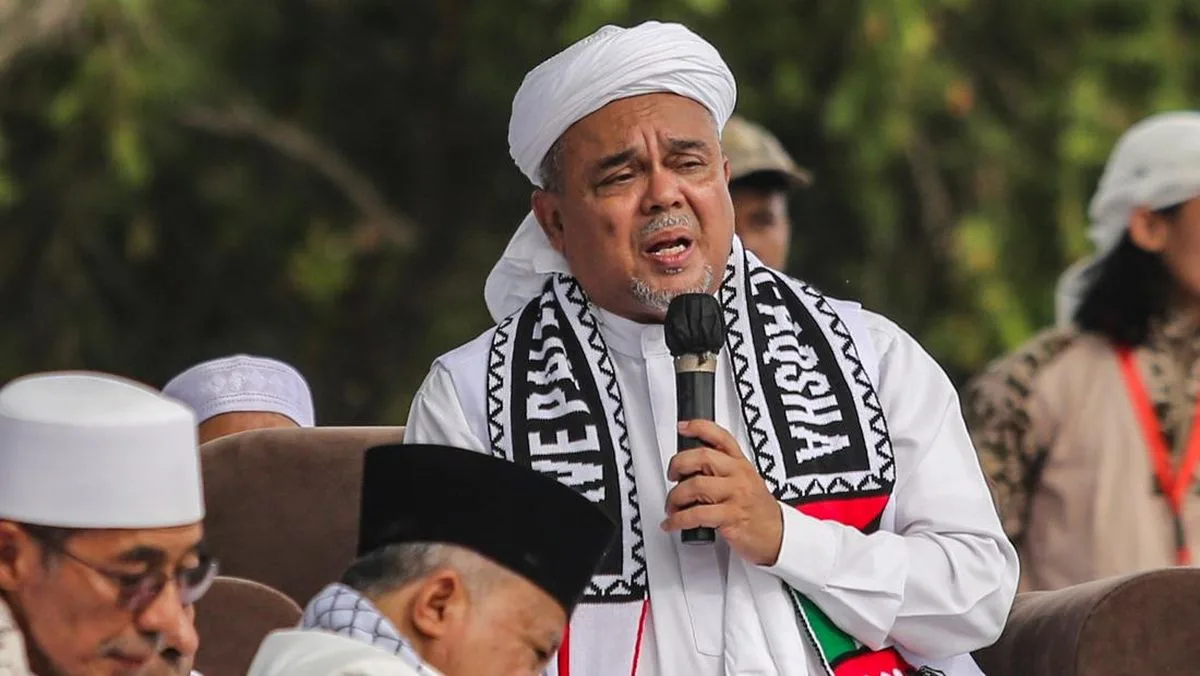
Habib Rizieq Shihab has officially formed the KM 50 Advocacy Team to resolve the mystery behind the deaths of six members of the Islamic Defenders Front (FPI) in the bloody 2020 incident. Rizieq made the announcement in a video recording while attending the Reuni Akbar 212 in Central Jakarta on Saturday (28/11), marking a new chapter in legal efforts demanding justice for the victims.
According to Rizieq, the team includes not only domestic lawyers but also international advocates licensed to practice before the International Human Rights Court in The Hague, the Netherlands. The move was taken because the KM 50 case has been reported to human rights courts in Geneva, Switzerland, and The Hague. Rizieq stressed that the advocacy team had prepared an investigative report on gross human rights violations in a proportional, professional, comprehensive, and argumentative manner.
In his statement, Rizieq highlighted two matters the advocacy team will expose. First, the parties that have the authority and legal obligation to bring this case to a human rights court but instead let it languish. Second, those directly responsible for the active actions in the KM 50 incident. "Who are they? The KM 50 Advocacy Team, which has long worked hard and with full responsibility, will present them at the Reuni Akbar 212 event," Rizieq said, as quoted from his statement.
Rizieq's demand that the KM 50 case be tried at a human rights court rather than an ordinary criminal court is a crucial point. He argues that substantive justice can only be achieved through the human rights mechanism. The statement comes amid renewed public scrutiny after several parties, including Culture Minister Fadli Zon, disclosed testimony about the condition of the victims' bodies, which were allegedly tortured before death.
"I witnessed the bodies being cruelly tortured before they were killed. Eyes were stabbed, vital organs damaged and so on," Fadli Zon said via his X account on Wednesday (25/11).
Previously, Head of Bakom RI Syahganda Nainggolan stated that President Prabowo Subianto was open to reopening the KM 50 shooting case. "The President remains concerned about all victims from the era before he became president, including KM 50," Syahganda said at Hotel St. Regis, Jakarta, on Wednesday (25/11). The statement signals that the government may not close the door to a re-investigation.
However, the formation of the advocacy team by Rizieq adds political pressure on the government. On one hand, demands to thoroughly investigate gross human rights violations are growing stronger; on the other, the legal process in Indonesia still faces challenges, including possible intervention and the slow handling of past human rights cases. Rizieq's move to bring the issue to an international forum could be a double-edged sword: accelerating resolution or further sharpening polarization.
Going forward, the public will wait to see whether the KM 50 Advocacy Team actually reveals the names of those allegedly responsible, and how the government responds to the demand for a trial at a human rights court. Without a breakthrough, this case could become a test of Indonesia's commitment to upholding human rights and transitional justice.