Women's Parliamentary Caucus Demands 30 Percent Quota Become Legal Obligation, Not a Recommendation
Baca dalam 60 detik
- KPPRI mendesak agar aturan keterwakilan perempuan 30 persen di parlemen diubah dari sekadar anjuran menjadi kewajiban yang mengikat partai politik.
- Usulan sanksi tegas bagi partai yang mengabaikan pencalonan perempuan di setiap dapil menjadi inti dorongan dalam revisi UU Pemilu.
- Permintaan serupa juga menyasar komposisi penyelenggara pemilu, dari KPU hingga Bawaslu, hingga level kabupaten/kota dan provinsi.
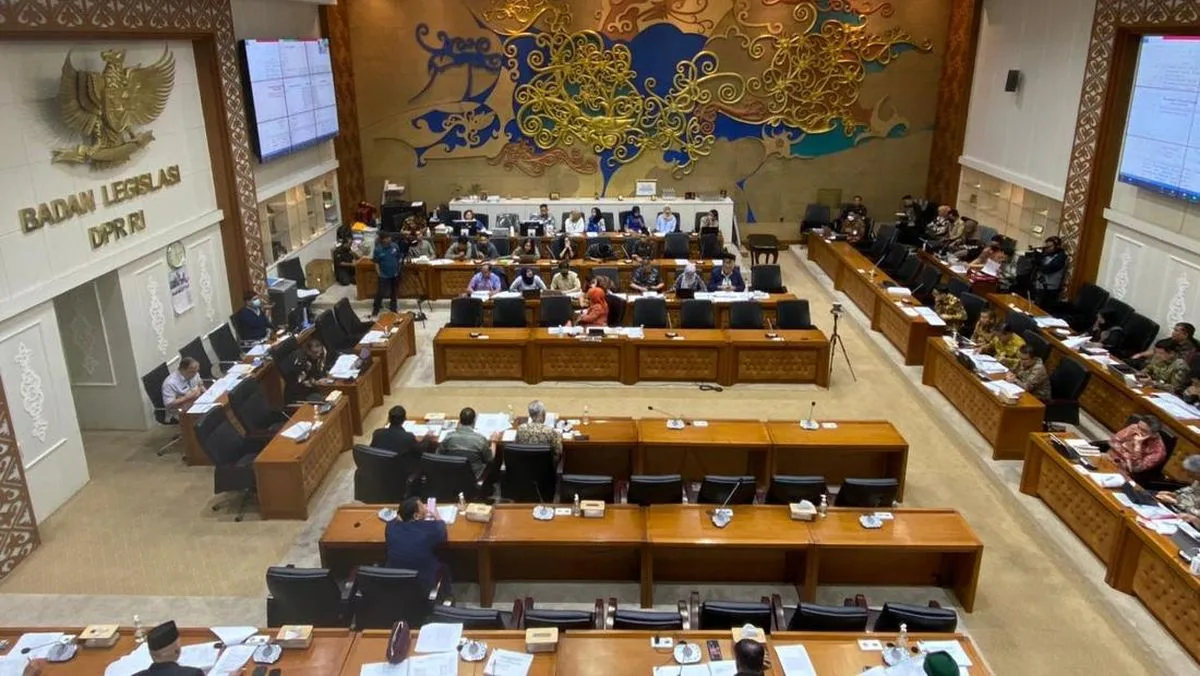
The Women's Parliamentary Caucus of the Republic of Indonesia (KPPRI) has once again raised the issue of women's representation in national politics. At a national consolidation held at the parliamentary complex on Wednesday (25/11), they demanded that the 30 percent quota for women in the legislature no longer be a recommendation but a legally binding obligation.
The chair of the KPPRI national consolidation, Nurul Arifin, said the caucus had submitted its recommendations to House Commission II, which is currently deliberating the revision of the Election Law. One of the crucial points proposed is a sanction for political parties that fail to nominate women in every electoral district (dapil). "A party that does not nominate women in every district will automatically be disqualified," Nurul said after the event.
The push is not without reason. So far, although the 30 percent threshold has long been regulated, its implementation has often fallen short. Many political parties meet only the formal requirement without a genuine commitment to placing women in competitive positions. KPPRI argues that without firm sanctions, the representation target will remain a number on paper.
Beyond parliament, KPPRI highlighted the composition of election organizers. Nurul said many KPU offices at the district/city and provincial levels still have no women members. "We ask for 30 percent women because in fact regional KPU offices often have no women at all," she said. The request covers the KPU, Bawaslu, and the Election Organizers' Honorary Council (DKPP).
The KPPRI chair, who is also a member of the Regional Representative Council (DPD RI), Badikenita Putri Beru Sitepu, added that this year's national consolidation was the second since the last one was held in 2017. According to her, since its formation in 2001, KPPRI has consistently fought for women's position in parliament, and the revision of the Election Law is the main vehicle for achieving it. "We hope the 30 percent rule is not just recommended but mandatory," she said.
KPPRI's push is in line with a Constitutional Court ruling that once ordered women's leadership in every House commission. However, implementation on the ground remains far from expectations. Several political observers argue that without systemic change in party recruitment, the 30 percent target will be difficult to achieve. Political parties tend to place women as a complement to administrative requirements rather than as potential cadres.
If KPPRI's proposal is adopted in the Election Law, the impact will be significant. Political parties will have to overhaul their nomination strategies, and election organizers will be required to be more inclusive. However, challenges remain: resistance from major parties that feel gender quotas limit their room to maneuver. In addition, patriarchal political culture remains strong in many regions.
Going forward, the ball is in the court of the House and the government. Will the revision of the Election Law truly accommodate KPPRI's demands, or will it instead produce another compromise that weakens the spirit of representation? The public, especially women voters, will scrutinize every debate in Commission II. After all, the quality of Indonesia's democracy is also determined by how much room is given to women to sit in decision-making seats.