Shenzhou 24 Carries Pakistani Astronaut to Chinese Space Station, a New Chapter in Orbital Diplomacy
Baca dalam 60 detik
- China meluncurkan Shenzhou 24 dari Jiuquan pada Rabu, mengangkut dua astronaut China dan satu warga Pakistan dalam misi berawak pertama yang melibatkan kru asing di stasiun luar angkasa Tiangong.
- Kehadiran Muhammad Zeeshan Ali menandai terobosan diplomasi teknologi Beijing di Asia Selatan, sekaligus memperluas cakupan program luar angkasa China di tengah persaingan dengan Amerika Serikat.
- Misi ini akan menjalankan lebih dari 90 eksperimen ilmiah, termasuk uji cyanobacteria fotosintetik, sebelum Ali kembali ke Bumi dengan Shenzhou 23.
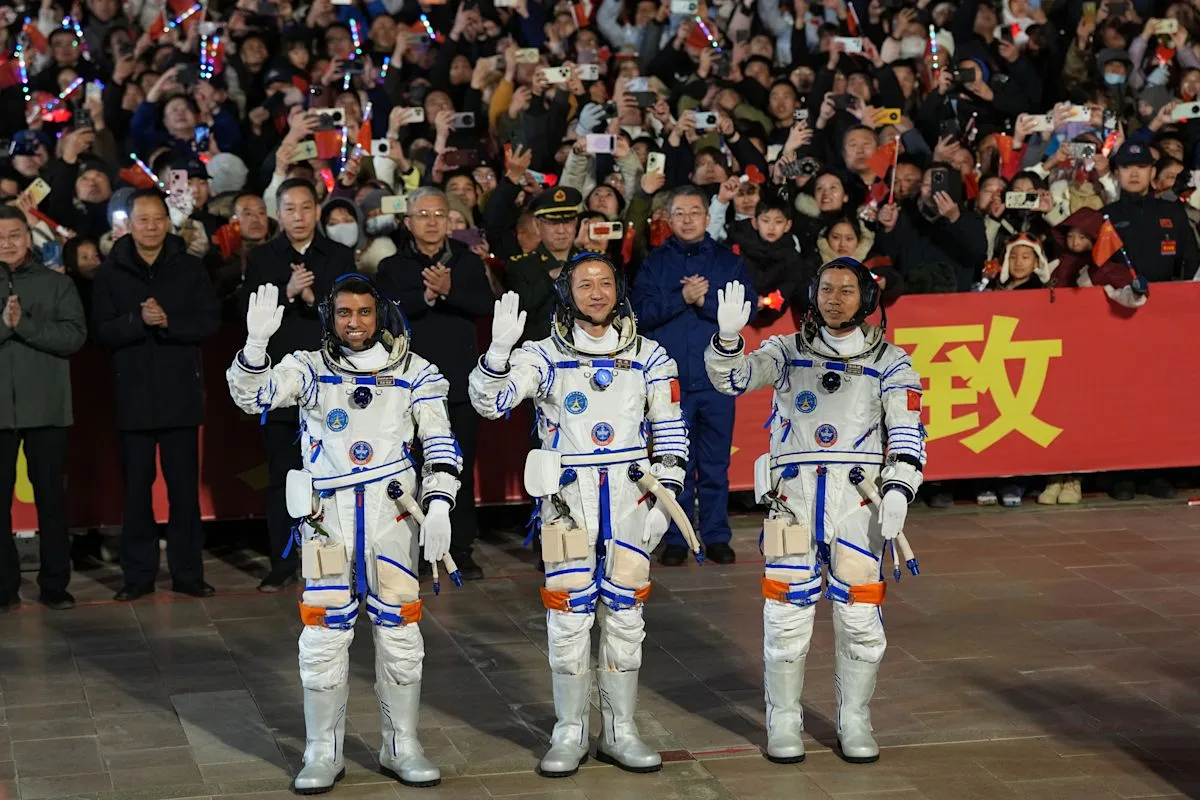
China has written a new chapter in its crewed space program after the Shenzhou 24 rocket lifted off from the Jiuquan Satellite Launch Center on Wednesday, carrying three astronauts—two from China and one from Pakistan. It is the first time the Tiangong space station has received a foreign crew since it became fully operational.
Pakistani astronaut Muhammad Zeeshan Ali, 40, flew alongside Tang Hongbo (51) and Wu Yi (39). The launch marked the first joint flight between Chinese and foreign astronauts in the history of China's crewed space program, as reported by the AP news agency from Jiuquan. Earlier, hundreds of residents attended a send-off ceremony and captured the moment on their phones.
Ali will not stay long in orbit. He is scheduled to carry out a short-duration mission, including a photosynthetic cyanobacteria experiment, before returning to Earth aboard Shenzhou 23. Meanwhile, the two Chinese astronauts will continue a series of more than 90 scientific experiments and technology tests during their stay on the station.
For Beijing, Ali's participation is more than a technical achievement. The move demonstrates China's ability to project influence through space cooperation, particularly in South Asia, a region that has long been an arena of competing influence with India and the United States. Pakistan itself is seeking to develop its aerospace technology capacity, and China's space program offers a more open access route than partnerships with Western countries.
Space policy observers assess that missions of this kind strengthen Tiangong's position as a platform for scientific diplomacy. Unlike the International Space Station (ISS), which is dominated by Western countries, Tiangong is positioned by China as an alternative for developing countries that want to send researchers into orbit. Nevertheless, transparency and access to experimental data remain a focus of the international community.
On the science side, the photosynthetic cyanobacteria experiment carried out by Ali could offer insight into oxygen and food production in a microgravity environment—a crucial issue for long-term crewed mission plans to the Moon and Mars. The test is also relevant for countries seeking to develop self-sustaining life-support technology in the future.
The success of Shenzhou 24 extends the list of achievements of China's space program in recent years, from landing on the far side of the Moon to returning samples from the lunar surface. Yet a question looms: will this cooperation model encourage more countries to send astronauts to Tiangong, or will it widen the divide between the space blocs led by China and the United States? The answer will shape the direction of global space governance in the coming decade.