Claude Proves the Riemann Hypothesis, Mathematicians Ask: AI Breakthrough or Corporate Showboating?
Baca dalam 60 detik
- Levent Alpöge dari Anthropic mengklaim Claude membantu membuktikan Hipotesis Riemann dalam enam minggu, dan dua lembaga independen telah memverifikasi lewat bahasa Lean.
- Klaim ini memicu perdebatan etis karena muncul sehari setelah Anthropic melantai di Nasdaq, sementara raksasa teknologi lain juga membiayai riset matematika dengan pendekatan serupa.
- Bagi Indonesia, adopsi AI dalam riset dasar bisa mempercepat inovasi, tetapi memerlukan tata kelola dan investasi SDM agar tidak sekadar menjadi penonton.
The Riemann Hypothesis, a nearly 170-year-old unsolved mathematical puzzle, has been claimed to have been proven with the help of Claude, Anthropic's artificial intelligence model. Levent Alpöge, a mathematician at the company, announced that he and Claude had formulated a solution in about six weeks. The claim immediately drew attention because two independent organizations—the Lean Focused Research Organization and the Mathlib Initiative—said they had verified the proof using the Lean programming language.
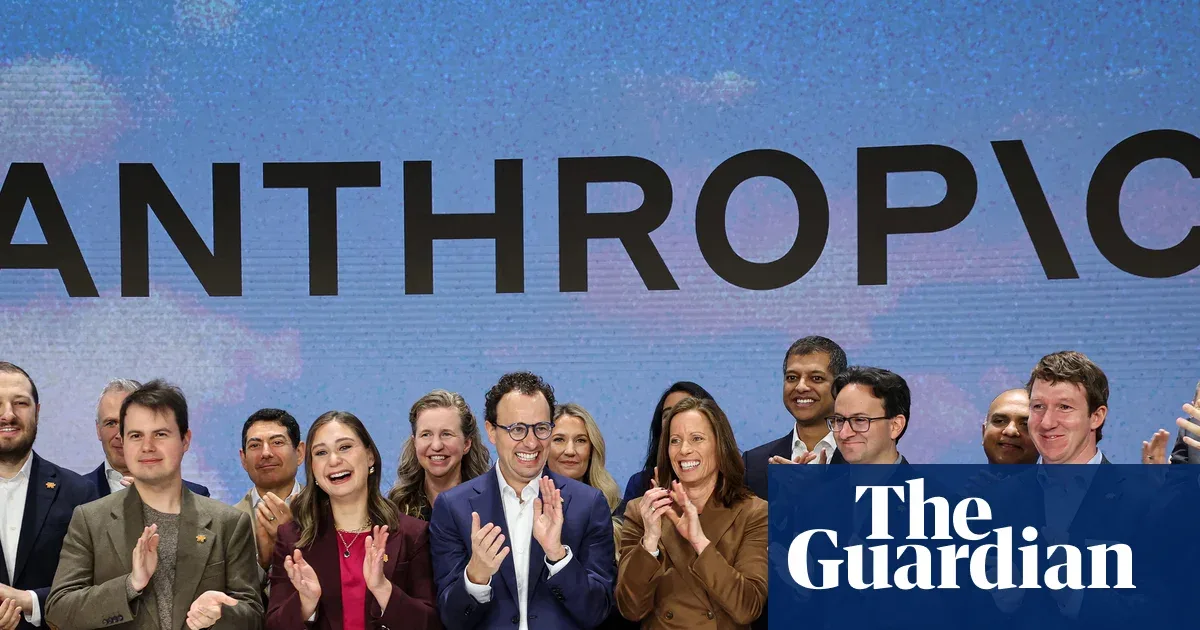
The verification lends serious weight to the achievement. However, the timing of the announcement, close to Anthropic's initial public offering on Nasdaq, raises questions about the motive behind it. Alpöge himself acknowledged that the timing was not ideal. “I would have finished it much earlier if I could,” he wrote, as quoted from his personal notes.
The Riemann Hypothesis was first proposed by Bernhard Riemann in 1859. At its core is the distribution of prime numbers—numbers divisible only by one and themselves. Riemann formulated a conjecture about how often primes appear and how their pattern is distributed along the number line. To date, no one has been able to prove it mathematically, even though it is one of the seven Millennium Prize Problems set by the Clay Mathematics Institute with a prize of US$1 million per problem.
This breakthrough is not the first to involve AI in mathematics. Last September, OpenAI claimed its model helped solve part of another Millennium problem. At the time, the company deployed 10,000 AI systems at a cost of about US$15 million—an approach some observers considered unusual. Alpöge himself was then working on a different problem for Anthropic.
Several mathematicians voiced discomfort with this trend. James Robinson of the University of Warwick said big technology companies tend to show off their models' capabilities at great expense, without considering the environmental impact. “It's like showing off in a kindergarten, but with billions of dollars behind it and potentially significant environmental damage,” he told The Guardian.
On the other hand, some have tried to prove the hypothesis conventionally. Alessandro Masullo, an Italian mathematician, released an incomplete proof he had worked on for nearly 12 years. He said he did not use AI because he does not yet fully trust the systems. The difference in approach shows that the mathematical world remains divided on the role of AI.
For Indonesia, this development offers an important lesson. AI-supported basic research can accelerate discoveries in various fields, including health, energy, and materials. However, reliance on foreign technology without strengthening domestic capacity risks leaving Indonesia merely a user rather than a creator. Investment in mathematics and computer science education, as well as the development of local AI models, is becoming increasingly urgent.
Going forward, the question is no longer whether AI can help solve the hardest mathematical problems, but how far the scientific community can verify and adopt it ethically. If Alpöge's claim holds, history will record that a large language model took part in one of humanity's greatest intellectual achievements. But if doubts arise, AI's reputation in science could be at stake.