UK Sends 1,000 Long-Range Attack Drones to Ukraine in £260 Million Weapons Package
Baca dalam 60 detik
- London mengumumkan pengiriman 1.000 drone serang berjangkauan 1.000 km ke Ukraina dalam paket bantuan £260 juta.
- Delapan puluh persen nilai paket dibelanjakan di dalam negeri Inggris, memperkuat industri pertahanan nasional.
- Langkah ini menandai keterlibatan militer Barat yang semakin dalam menjelang musim dingin dan negosiasi damai.

UK Prime Minister Andy Burnham announced the delivery of 1,000 long-range attack drones to Ukraine, a £260 million aid package designed to strengthen Kyiv's defenses through the winter. The announcement was made at a meeting of the coalition of countries supporting Ukraine in Berlin, Germany, attended by 36 countries.
The drones being sent can reach targets up to 1,000 kilometers away and carry heavier warheads, allowing Ukraine to strike Russian military production facilities beyond the front line. According to the UK government, 80% of the package's value will be spent domestically, making the program a stimulus for the UK defense industry and drone technology sector as well.
The announcement in Berlin coincided with a meeting between US President Donald Trump and Russian President Vladimir Putin on the sidelines of the APEC summit in China. Trump said that he and Chinese President Xi Jinping both want an end to the war in Ukraine. The presence of US envoys Jared Kushner and Steve Witkoff at the coalition meeting in Berlin is seen as a signal that Washington is beginning to work on a diplomatic track.
Burnham, who led the meeting alongside his counterparts, stressed that the coalition's mood was "more determined than ever to hold" in support of Ukraine. He described Russia as "possibly the party that has lost the most" in this conflict, referring to the scale of casualties. "Europe is ready to enter these negotiations, we are clear about what we will and will not accept, but we are also clear that we stand with Ukraine today, tomorrow, for as long as it takes, until this unjust war ends," he said at a press conference.
"This clearly has to be a moment to move toward peace because of the US engagement we are seeing today and the clear progress that is being made." — Andy Burnham, UK Prime Minister
Defense Secretary Wes Streeting added that the UK government is fulfilling its promise to increase support for Ukraine in the budget. "Ukraine's front line is the front line of freedom and democracy, and we will stand with them for as long as it takes," he said.
On the battlefield, Ukraine in recent days has launched strikes on oil refineries in southern Russia and repeatedly hit the Crimean Bridge, a key logistical and symbolic asset for Moscow. Meanwhile, Russian forces have been intensively attacking Ukraine's energy infrastructure to cut off electricity before winter. The UK is among the countries supplying light missiles to intercept Russian jet drones, and Downing Street claims Ukraine's success rate in shooting down Russian drones is now close to 70%, more than double that of a few months ago.
UK involvement in drone technology for Ukraine is not new, but the delivery of long-range attack drones in large numbers marks an escalation of London's military support. This week, the UK also announced sanctions on 10 major Russian oil producers and additional air defense aid. The move reinforces the UK's position as one of Ukraine's largest military backers in Europe, with total commitments reaching £35.5 billion since the February 2022 invasion.
For Indonesia, these developments have indirect implications for the stability of global energy and food prices. Ukraine's strikes on Russian oil refineries and disruptions to energy supplies could affect world crude oil prices, which in turn affect energy subsidies and domestic inflation. In addition, prolonged tensions in Europe could divert the attention of major powers from the Indo-Pacific region, affecting regional security dynamics and Indonesia's diplomacy, which has long adhered to a non-aligned principle.
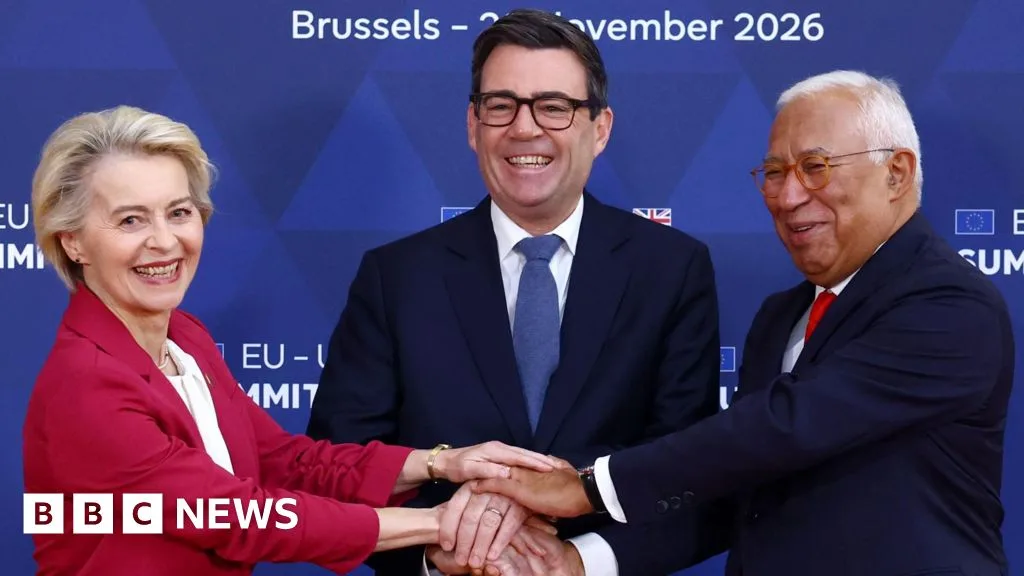
On Friday, Burnham is scheduled to travel to Brussels for the UK-European Union summit, where both sides hope to announce new agreements on food, youth visas, and the relocation of UK industry into the EU carbon trading regime. Meanwhile, the world waits to see whether the Trump-Putin-Xi meeting at APEC will produce a breakthrough toward a ceasefire, or instead prolong the uncertainty that has changed the global security landscape.