UK Green Party Abandons Nuclear Opposition: New Strategy or Contradiction?
Baca dalam 60 detik
- Partai Hijau Inggris dan Wales resmi mengakhiri penolakan menyeluruh terhadap energi nuklir dalam pemungutan suara di konferensi partai.
- Kebijakan baru tetap memprioritaskan angin dan surya, tetapi anggota parlemen dapat mendukung reaktor nuklir baru secara kasus per kasus.
- Keputusan ini memicu perdebatan internal dan eksternal, dengan kritik dari akademisi yang menilai langkah tersebut tidak rasional.
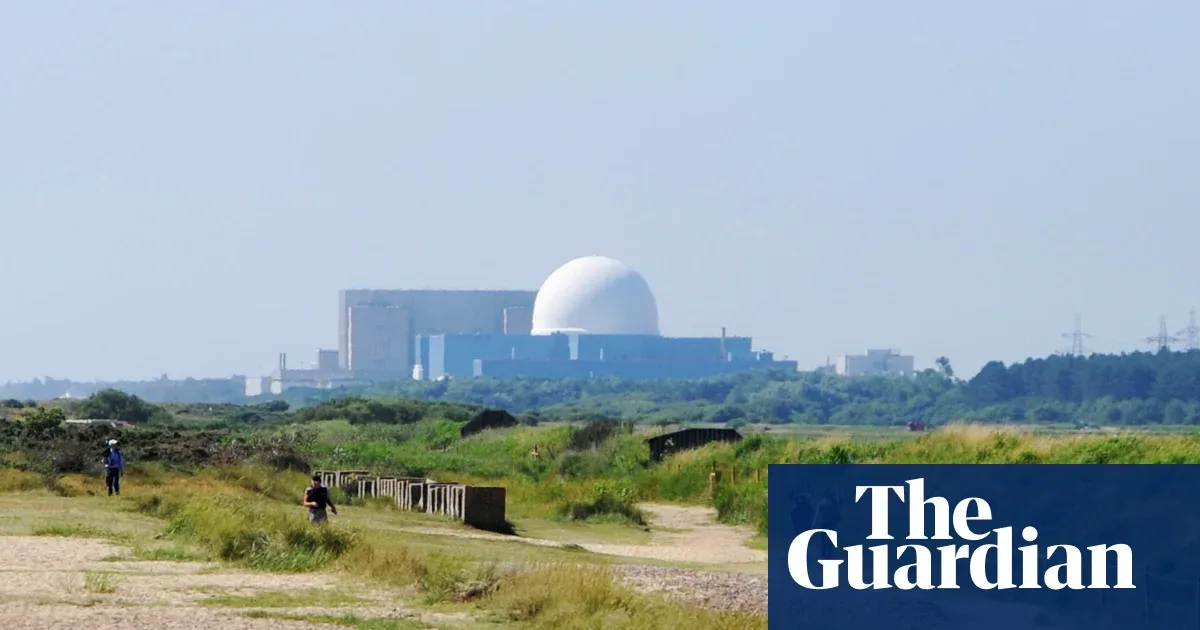
The Green Party of England and Wales has surprisingly ended its long-standing rejection of nuclear energy. In a vote at the party conference, members approved a motion removing the commitment to halt nuclear fission technology, marking a major shift in the party's energy policy that had long been one of its hallmarks.
The motion does not immediately make the Green Party a supporter of nuclear power. Their electricity generation policy still places offshore wind, onshore wind, and rooftop solar as the main sources. However, MPs are now given leeway to assess new nuclear projects on their individual merits, opening the door to support for specific reactors if deemed reasonable.
Green Party MP Carla Denyer stated that the decision acknowledges the role of nuclear during the transition to a renewable-based electricity system. According to her, this policy does not bind the party to support new nuclear, but accepts the reality that this resource will still persist for some time. Denyer added that maintaining existing nuclear plants could be a low-carbon option because most of their carbon footprint comes from construction. She emphasized that an evidence-based approach would carefully consider cost, speed, and environmental impact.
This shift contrasts with Denyer's stance in 2023, when she called nuclear "very slow and very expensive". At the time, she asserted that renewables were the way forward and nuclear would not help address the climate emergency. Similar criticism was also voiced by Green Party leader Zack Polanski, who likened investment in new nuclear reactors to "making fax machines". Last year, Adrian Ramsay, when still co-leader, criticized the government's support for Sizewell C, arguing the funds would be better spent on home insulation and lowering energy bills.
The Green Party's opposition to nuclear fission was previously rooted in strong opposition to nuclear weapons, one of the party's founding principles. However, Eugene McCarthy, a co-founder of Greens for Nuclear and a supporter of the motion, argued that the urgency of the climate crisis demands openness to all available options. He described the current phase as "throwing everything at the kitchen" in the climate crisis, where nothing can be set aside. This motion, McCarthy said, allows MPs to assess proposals individually, for example extending the life of Sizewell B or rejecting other projects if the numbers do not add up. Responding to Polanski's criticism, McCarthy said the party leader remains entitled to his views, and can now take a more nuanced position.
"Why has a party that pioneered concerns about nuclear power—concerns proven right by history—now chosen to change its position?" — Prof Andrew Stirling, energy policy adviser.
Prof Andrew Stirling, who has advised the government on nuclear energy policy, called the motion "completely irrational". He questioned why a party that has long voiced nuclear concerns would shift. According to him, all authoritative sources agree that climate action is faster, more affordable, and more impactful when combining renewables and storage. He questioned the rationale for spending scarce resources on less effective measures. McCarthy responded that renewables are indeed cheaper and have greater capacity, and can be deployed faster, but there is a baseload problem that nuclear can help with.
The Green Party's decision reflects a global dilemma in the energy transition: between environmental idealism and the reality of stable electricity needs. In Indonesia, a similar debate has emerged as the government pursues a 2060 net-zero emissions target. Indonesia has abundant renewable energy potential, but is also considering nuclear as a baseload option. The Green Party's move could serve as a mirror for green political parties in Indonesia to reconsider their position on nuclear, although geographic context and earthquake risk are differentiating factors.
Going forward, this motion will be tested in the next election. Will the Green Party be able to maintain its identity as a pro-environment party while embracing nuclear to a limited extent? Or is this the beginning of a larger paradigm shift in global energy politics? What is clear is that the energy transition can no longer rest on black-and-white positions alone.