Aeropod: Tiny Capsule to Save Soil, Farmers' Land Tillage Costs Could Be Cut in Half
Baca dalam 60 detik
- Muju Earth memperkenalkan Aeropod, perangkat seukuran kuku yang diaplikasikan bersama benih untuk menggemburkan tanah tanpa traktor atau robot.
- Uji lapangan berbayar di Inggris menyasar petani bawang dengan klaim efisiensi biaya hingga 60% dibanding pengolahan tanah konvensional.
- Inovasi ini berpotensi mengubah lanskap pertanian global, termasuk Indonesia, jika terbukti skalabel dan terjangkau bagi petani kecil.
Farmers around the world face an expensive dilemma: the heavy equipment used to till the soil actually accelerates compaction and reduces land productivity. One study estimates that soil compaction can cut crop yields by between 20% and 60%. To address this problem, Muju Earth has developed Aeropod, a micro device claimed to be able to loosen soil automatically without machinery or robotics.
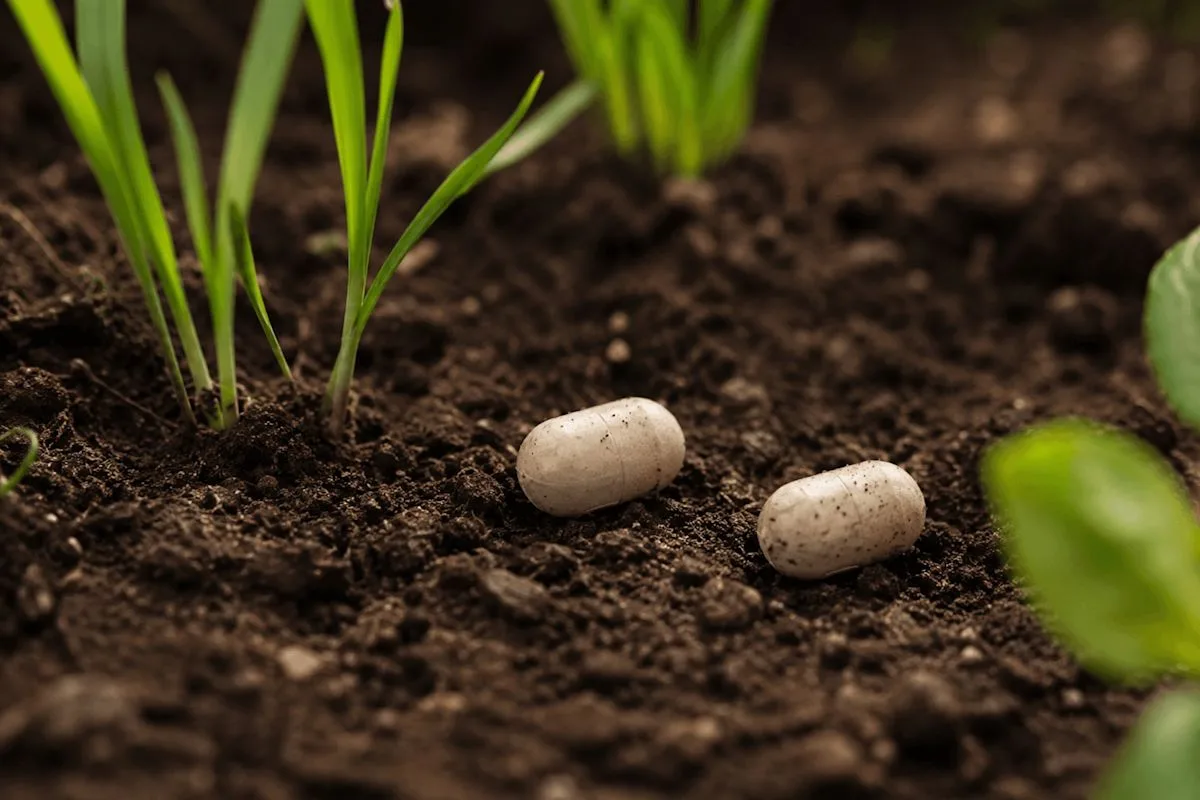
Unlike tractors or plows that require great power, Aeropod works in a much simpler way. This fingernail-sized device is planted together with seeds using existing planting tools. After exposure to a certain combination of temperature, pressure, and moisture, the capsule breaks open and creates small channels in the soil. These channels make it easier for air, water, and plant roots to move more freely.
This approach is claimed to cut land tillage costs by half or more. Ifeoluwa Afolayan, co-founder and CEO of Muju Earth, said the company wants to make the process as easy as planting seeds. "The device is designed like a seed, sown like a seed, and shipped like a seed," she told TechCrunch. She added that the solution makes a lot of sense because farmers no longer need to carry out time-consuming and labor-intensive initial tillage.
Muju Earth, one of 200 startups selected for the Startup Battlefield at TechCrunch Disrupt 2025, has tested its device in the lab and will begin paid field trials this autumn in the UK. The company is targeting onion farmers as its first market because this root crop is known to be vulnerable to soil compaction. Afolayan estimates that a single tillage pass can cost £250 to £400 per hectare, while Aeropod offers similar results for only £100 per hectare.
"The question that drives us is: how do we make this as simple as sowing a seed? That is the most equitable practice for every farmer on the planet," Afolayan said.
The idea for Aeropod began during the studies of Afolayan and her co-founder, Wangyang Hu, at Imperial College London. Both wanted to create a product that not only improves soil health but also improves farmers' margins. Besides farmers, Muju Earth has also received interest from companies developing biological amendments—products added to soil, often containing living microbes, to enhance or replace chemical fertilizers. Because these products work optimally in well-aerated soil, they are interested in partnering with Aeropod.
Even so, Afolayan stressed that adoption is coming from farmers. Most of the marketing that has happened so far has been inbound. "The best thing about Aeropod is that farmers intuitively understand the proposition," she said. She considers direct understanding from users to be a strong signal that the solution is relevant to needs in the field.
Indonesian Context
For Indonesia, this kind of innovation offers significant opportunities. The national agricultural sector still faces similar challenges: land degradation, dependence on chemical fertilizers, and ballooning operational costs. If Aeropod proves effective and can be mass-produced at an affordable price, smallholders in onion centers such as Brebes, Nganjuk, or Solok could potentially adopt it. However, it needs to be tested whether this capsule is compatible with tropical soil conditions that differ from land in the UK, as well as how import and distribution regulations would work. The government, through the Ministry of Agriculture, could encourage adaptation research or local partnerships to accelerate technology transfer.
Going forward, Muju Earth's success will depend on the results of field trials and their ability to keep production costs down. If proven scalable, Aeropod could become an alternative that changes the way farmers manage soil—without having to make large investments in machinery. The question is, will this innovation reach smallholders in developing countries, or will it only be a solution for advanced agriculture with high purchasing power?