Aurora Borealis Visible Again in 10 US States, Scientists: 2026 Is the Best Chance
Baca dalam 60 detik
- Fenomena aurora borealis diprediksi muncul di langit malam Rabu di 10 negara bagian AS dengan indeks Kp 5.
- Tidak ada badai geomagnetik yang memperkuat, sehingga penampakan hanya berlangsung singkat dan terbatas.
- Aktivitas aurora menurun sejak puncak siklus matahari 2024, namun 2026 disebut sebagai kesempatan emas terakhir sebelum meredup.
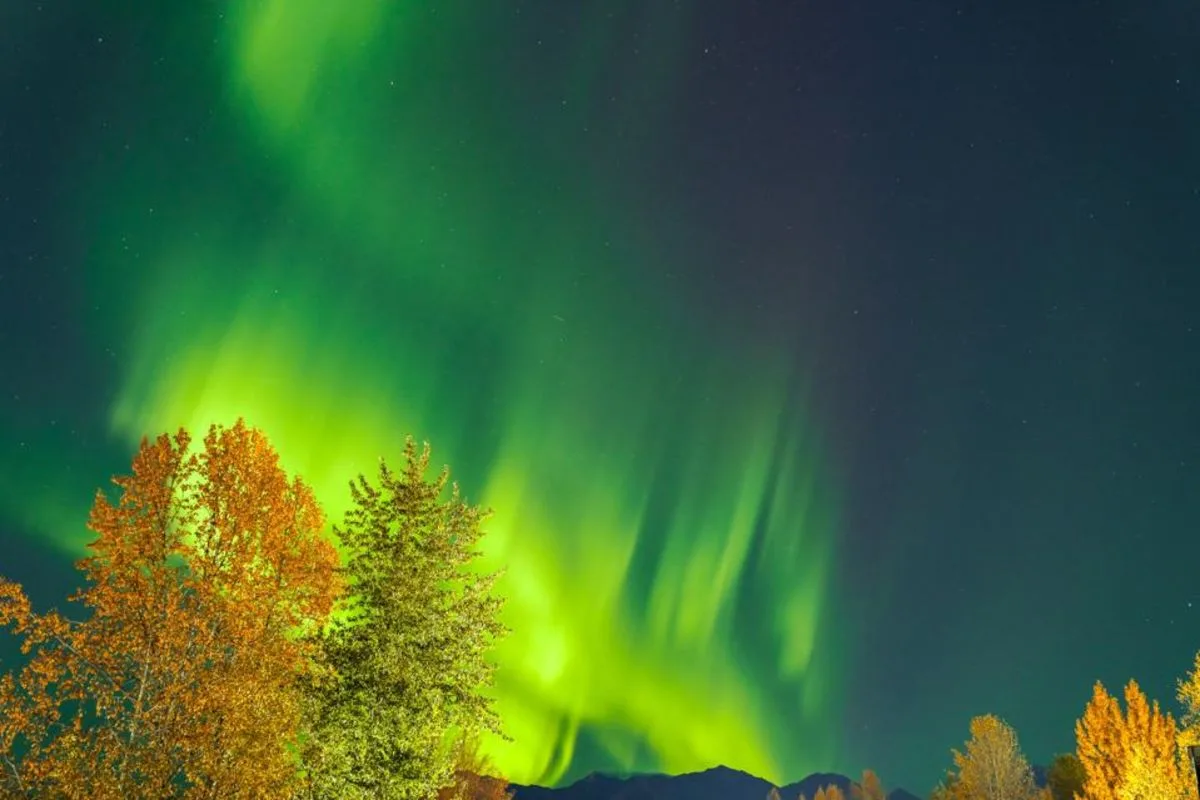
Residents in 10 US states may have a chance to see the aurora borealis on Wednesday night local time, according to a forecast by the National Oceanic and Atmospheric Administration (NOAA). The agency recorded the Kp index reaching level 5, meaning the northern lights could put on a fairly stunning display for observers in the right locations.
Even so, no geomagnetic storm is predicted that night. Such storms usually intensify the aurora, so without one, the display is expected to be only moderate and not as widespread as usual. NOAA mapped the areas that might be affected, from northern Washington, the northern tip of Idaho, most of Montana, the Wyoming-Montana border, North Dakota, northern South Dakota, northern Minnesota, northern Wisconsin, Michigan's Upper Peninsula, to northern Michigan. Alaska still has a greater chance than other parts of the contiguous US.
For those who want to try their luck, the best time is between 22.00 and 02.00 in the early morning. Finding a location with little light pollution and sufficient elevation will increase the chances of seeing those green curtains of light. The moon, which will illuminate 91% of its surface on Wednesday night, could slightly hamper visibility, but it does not dampen the hopes of aurora hunters.
Observers are advised to avoid using flash on their phones and to turn on night mode. Meanwhile, photographers with professional cameras should use wide-angle lenses, a tripod for stability, and a low aperture. A clear night sky with minimal artificial light is the main key.
Aurora activity has been declining since 2024, when the peak of the 11-year solar cycle produced the highest number of sightings in the last 500 years. As time moves away from the peak, aurora intensity is expected to keep weakening. NOAA estimates that 2026 could be one of the last chances to witness this phenomenon on a fairly frequent scale before it truly fades.
"We expect aurora activity to decline gradually, but 2026 still leaves opportunities worth pursuing," a NOAA official said in an official statement.
For readers in Indonesia, this phenomenon may sound distant, but it has indirect relevance. The aurora borealis is the result of interactions between solar particles and Earth's magnetic field, which also affects satellite technology, radio communication, and navigation. Increased geomagnetic activity can disrupt GPS signals and telecommunication satellites used daily, including by internet service providers in Indonesia. Although the impact is not significant at Kp level 5, space weather monitoring remains important for an archipelagic country that depends on satellite infrastructure.
In addition, research on auroras and space weather is increasingly drawing global attention, including in Southeast Asia. Indonesia's aviation and space agency (LAPAN) has now joined an international space weather monitoring network, which aims to mitigate the risk of technological disruptions caused by solar storms. Thus, even though the aurora is not visible from the equator, its indirect effects remain relevant for the national aviation, banking, and telecommunications industries.
Going forward, scientists estimate that the next solar cycle will peak around 2035. However, before that, the period from 2026 to 2028 is a critical window to collect data and enjoy the remnants of the aurora's grandeur. Are you ready to chase the northern lights before they fade? For aurora hunters, time keeps moving, and the night sky holds a charm whose intensity will soon diminish.