SpaceX Prepares Super Heavy for Starship's Inaugural Orbital Mission, Launch Set for September 28
Baca dalam 60 detik
- SpaceX memindahkan booster Super Heavy ke landasan peluncuran di Starbase, Texas, menandai persiapan akhir menuju penerbangan orbital pertama Starship yang dijadwalkan 28 September 2026.
- Misi ke-14 ini akan menguji kemampuan Starship mengorbit Bumi, menempatkan 26 satelit Starlink V3, dan melakukan pendaratan di dua lokasi berbeda—Teluk Meksiko dan Samudra Pasifik.
- Keberhasilan misi ini menjadi fondasi bagi ambisi SpaceX membangun konstelasi 100.000 satelit dan mewujudkan eksplorasi Bulan serta Mars yang ekonomis.
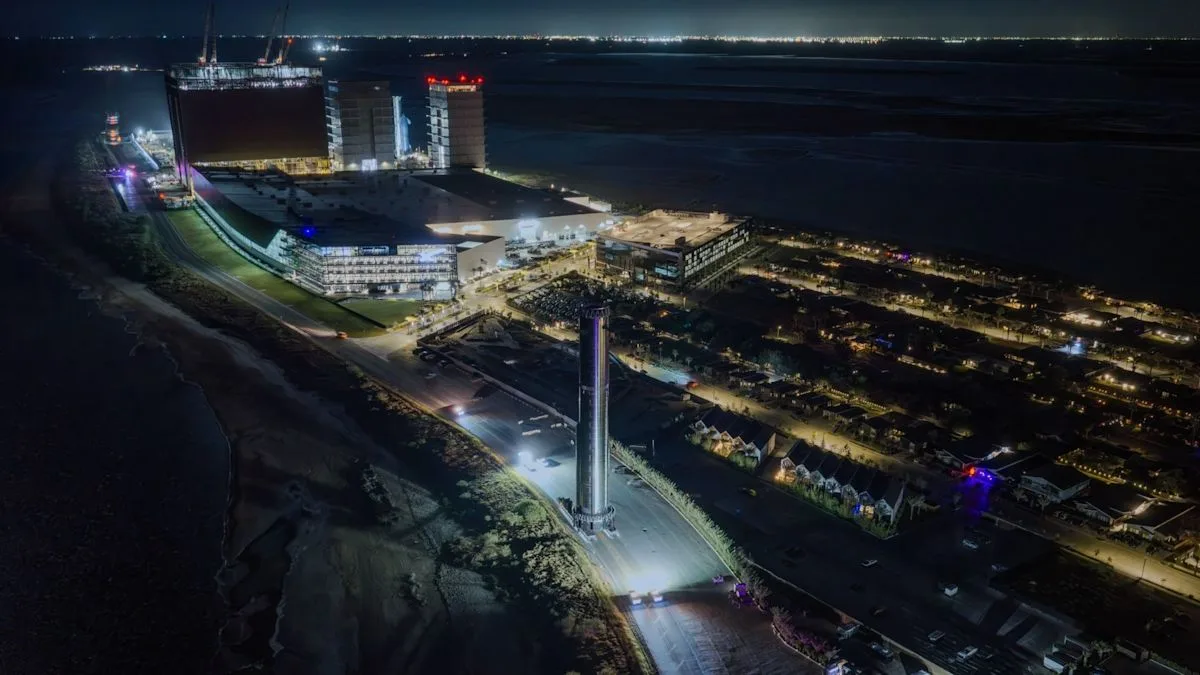
SpaceX is preparing to make new history in the space industry. Elon Musk's company moved the Super Heavy booster to the launch pad at Starbase, South Texas, on September 21, 2026, marking the final stage before the Starship rocket's inaugural orbital flight, scheduled for launch on September 28. This move signals that SpaceX's ambition to create a fully reusable space transportation system is moving closer to reality.
Super Heavy, the first stage of the colossal Starship rocket, will soon be stacked with the Ship spacecraft on the launch pad. Barring any technical or weather impediments, both will lift off on Starship's 14th mission—and its first to reach Earth orbit. This is not just a routine test; it's a significant leap after a series of previous suborbital flights.
This flight plan is far more complex than previous missions. Super Heavy is scheduled to perform a controlled landing in the Gulf of Mexico approximately seven minutes after liftoff. Meanwhile, Ship will continue its journey to low Earth orbit and deploy 26 next-generation Starlink V3 satellites. After orbiting Earth about six times, Ship will return and land in the Pacific Ocean, off the coast of Chile—a landing location never attempted before. Previous missions always concluded with landings in the Indian Ocean, near Western Australia.
The success of this mission will be a crucial milestone in SpaceX's ambitious effort to build the Starlink V3 constellation. Elon Musk, founder and CEO of SpaceX, has stated that this satellite network will eventually comprise around 100,000 units to provide global broadband internet connectivity. In the 13th flight two months ago, Ship deployed 20 Starlink V3 satellites, but as they were still on a suborbital trajectory, those satellites quickly returned to Earth. Now, with a true orbit, Starlink V3 will genuinely operate in space.
"Starship is the largest and most powerful rocket ever built. Both stages are designed to be fully and rapidly reusable—something SpaceX calls the 'holy grail' of rocketry," the company's official statement read.
For Indonesia, this development has significant implications. As an archipelagic nation facing connectivity challenges in remote areas, the presence of a more advanced Starlink V3 constellation could accelerate the provision of high-speed internet in 3T regions (frontier, outermost, underdeveloped). However, reliance on foreign providers also raises questions about data sovereignty and the role of the national telecommunications industry. The Indonesian government has so far opened its doors for Starlink to operate, but regulations regarding satellite ownership and data traffic are still being refined. The success of this inaugural orbital mission will signal domestic operators to prepare for tougher competition, while also presenting opportunities for partnerships in digital infrastructure provision.
Furthermore, Starship's capability to carry large and affordable payloads to orbit could also open opportunities for Indonesian satellites, whether for telecommunications, remote sensing, or navigation. If launch costs drastically decrease as promised by SpaceX, developing countries like Indonesia could more easily access space technology without having to build their own rockets. However, all of this depends on whether the September 28 mission runs smoothly or faces failures that could delay the schedule.
SpaceX itself targets Starship not only for Earth orbit but also for missions to the Moon and Mars. With a fully reusable design, the company is optimistic that space colonization will become economically viable in the near future. This inaugural orbital flight is the first test of that grand vision. If successful, it's not impossible that within a few years, Starship could become the backbone of global space logistics—including for countries wishing to send cargo to space stations or their own satellites.
The question now is: will September 28 be a historic day for SpaceX, or will it instead offer valuable lessons from failure? The world, including Indonesia, will be watching closely.