China Tests TMS-10 Supersonic Jet, Beijing-Shanghai Flight Could Take 30 Minutes
Baca dalam 60 detik
- TMS-10, pesawat demonstrator supersonik Tiongkok, masuk tahap perakitan akhir dan dijadwalkan terbang perdana akhir tahun ini.
- Desain canard dan ekor T ganda diklaim mampu memecah gelombang kejut, mengurangi dentuman sonik yang selama ini menjadi hambatan utama penerbangan supersonik komersial.
- Jika berhasil, pesawat ini berpotensi memangkas waktu tempuh Beijing-Shanghai dari dua jam menjadi setengah jam, tetapi masih tertinggal dari X-59 NASA yang sudah menembus Mach 1,5.
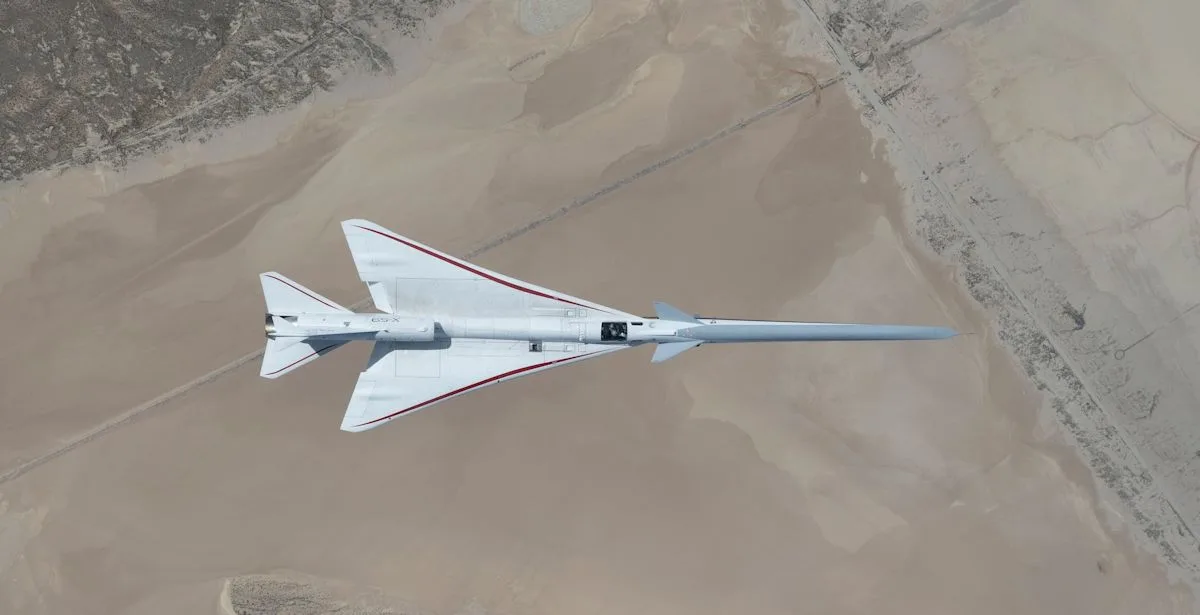
The race towards a new era of commercial supersonic flight is heating up. China has announced that its experimental TMS-10 aircraft has entered the final assembly stage and is scheduled for its maiden test flight by the end of this year. This move marks a significant advancement from the 1:18 scale prototype tested in June 2025, which at the time only flew below Mach 0.2 to test takeoff capabilities, stability, control, and landing.
This time, the TMS-10 will attempt to break the sound barrier while suppressing the sonic boom, which has long been a major challenge for high-speed flights over land. This project, developed by Tianmushan Laboratory in collaboration with Beihang University, targets a business-class aircraft with a capacity of 10–15 passengers. Its approach differs from NASA's X-59: instead of dampening the boom to sound like a "thump," the TMS-10 relies on canards at the front and a T-shaped tail to prevent shockwaves from the nose and wings from merging into a single, louder sonic explosion. Features at the rear are also designed to deflect and weaken sound waves.
If successful, the TMS-10 will cruise at Mach 2 (approximately 2,100 km/h) and still support subsonic flight at Mach 0.95 (approximately 1,170 km/h). At that speed, a Beijing–Shanghai flight, which typically takes two hours, could be reduced to just 30 minutes. However, several technical challenges remain. TMS-10 engineers, as reported by Global Times, acknowledge that the engine core, as well as the exhaust and inlet systems, still need to be finalized and validated. Various additional tests with updated aircraft models are also required before the final design is set.
Despite its ambition, China still has ground to cover. NASA's X-59 achieved supersonic speeds earlier this year, breaking Mach 1.5 (1,584 km/h) at an altitude of 55,000 feet. This achievement demonstrates that the United States is not standing still in the race to revive civilian supersonic flight. The difference in design philosophy between the two aircraft reflects their respective strategies: NASA focuses on publicly acceptable acoustics, while China is attempting a structural approach to break up shockwaves from the outset.
For Indonesia, this development is more than just technological news. As an archipelagic nation with high inter-island mobility, the advent of commercial supersonic aircraft could transform the landscape of domestic connectivity. Routes like Jakarta–Surabaya or Jakarta–Makassar, which currently take 1.5–2.5 hours, could be drastically shortened. However, there are important caveats: airport infrastructure, noise regulations, and the readiness of the national aviation industry remain homework. Furthermore, the likely high fares in the business class segment mean initial adoption would only target corporate and executive segments.
The question remains: will the TMS-10 truly fly on schedule, or will it face delays like many other ambitious aerospace projects? And if supersonic flight makes a comeback, is Indonesia ready to play a role in the supply chain or will it merely be an observer?