Persib Face Four Competitions, Luciano Leandro: Rotation and Squad Depth Are Key
Baca dalam 60 detik
- Persib Bandung akan bersaing di empat ajang musim 2026/2027, menuntut manajemen skuad yang cermat.
- Pengamat menilai kualitas pemain pelapis dan kemampuan rotasi tanpa kehilangan identitas permainan akan menentukan langkah Maung Bandung.
- Perekrutan pada bursa transfer sebaiknya didasari kebutuhan taktis, bukan sekadar menambah jumlah pemain.
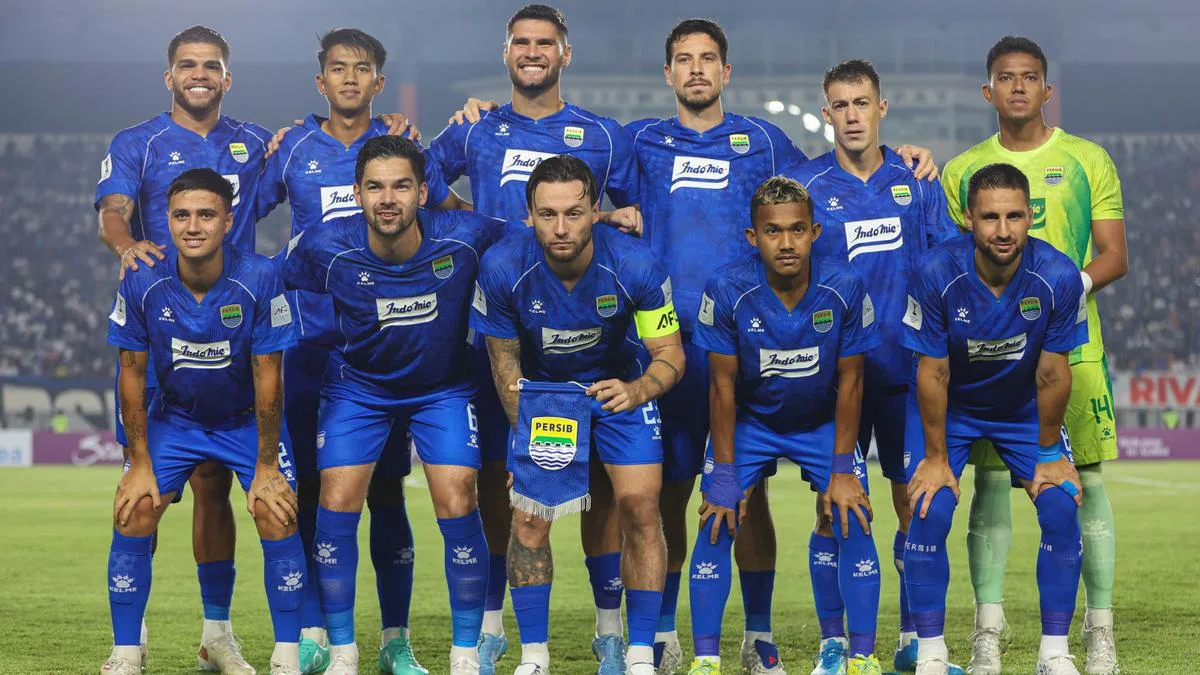
Persib Bandung enter the 2026/2027 season with a far heavier competition load than usual. Besides competing in the BRI Super League, Maung Bandung must also play in the AFC Champions League Two (ACL 2), the ASEAN Club Championship, and the I League Cup. Consequently, managing player rotation becomes the main bet if they want to stay competitive in every competition.
So far, Persib's performance in the domestic league has been promising. They sit in fourth place in the provisional standings and have already secured a place in the ACL 2 round of 16. However, the packed schedule and the differing intensity between competitions have put the overall quality of the squad—not just the starting eleven—under scrutiny.
National football observer Luciano Leandro assesses that Persib's player material is strong enough to compete at both domestic and Asian level. Nevertheless, he reminds that a team's strength is not measured only by the quality of the starters, but also by the ability of substitute players to maintain the standard of play when rotation is applied.
“Persib's squad quality is good enough to compete at domestic and Asian level. But the quality of a squad is not seen only from the 11 main players, but from the ability of the substitutes to maintain the standard of play when rotation happens,” Luciano told Bola.com on Monday (23/11/2026).
According to Luciano, there are three aspects Persib need to pay attention to in navigating four competitions. First, the quality of the backup players must approach that of the main players. Second, balance of composition in every position, especially in midfield and defense. Third, the team's ability to rotate without losing its playing identity.
Luciano also highlighted the importance of strategy in the transfer market. He does not advise Persib to recruit players merely to add numbers, but based on tactical needs and an objective evaluation of the team's performance. If there is an opportunity, Persib should look for players with different characteristics who can provide solutions when facing opponents with a different playing approach.
“For me, a big team is not a team that has many star players, but a team that has many quality players with clear roles and responsibilities,” he added.
Furthermore, Luciano assesses that Persib's foundation is already fairly good. The next challenge is to maximize the squad's potential, maintain player fitness, and ensure the quality of play remains stable amid the packed schedule. According to him, if Persib want to succeed in the domestic competition while also going further in Asia, squad depth and rotation quality will be the determining factors.
Luciano's statement aligns with the reality faced by many Indonesian clubs that are beginning to venture into Asian competitions. A packed schedule often becomes a boomerang if squad management is not prepared thoroughly. Persib, with their experience and combination of local and foreign players, are said to have the potential to compete at Asian level. The success of reaching the ACL 2 round of 16 is an early proof, but long-term consistency will be tested.
Going forward, Persib's management face a difficult choice: keep the current squad with smart rotation or add new ammunition in the transfer market. What is clear is that the ambition to achieve in four competitions demands planning that cannot be half-hearted. The people of Bandung certainly hope the club's steps are not merely jargon, but materialize in the form of a trophy or at least stable performance throughout the season.