Chinese Fighter Jets Spotted in Laos, First Air Foothold in Mainland Southeast Asia
Baca dalam 60 detik
- Citra satelit komersial menangkap delapan pesawat serang ringan di Bandara Ban Keun, Laos, yang dibuka Beijing sebagai 'pusat dukungan dan pelatihan' pada 29 September.
- Keberadaan skuadron itu menandai kemampuan militer Tiongkok menempatkan aset udara tempur di luar negeri untuk pertama kalinya di kawasan Asia Tenggara daratan.
- Negara-negara tetangga, termasuk Vietnam dan Thailand, diperkirakan akan meningkatkan pemantauan terhadap perkembangan fasilitas tersebut di tengah persaingan geopolitik yang memanas.
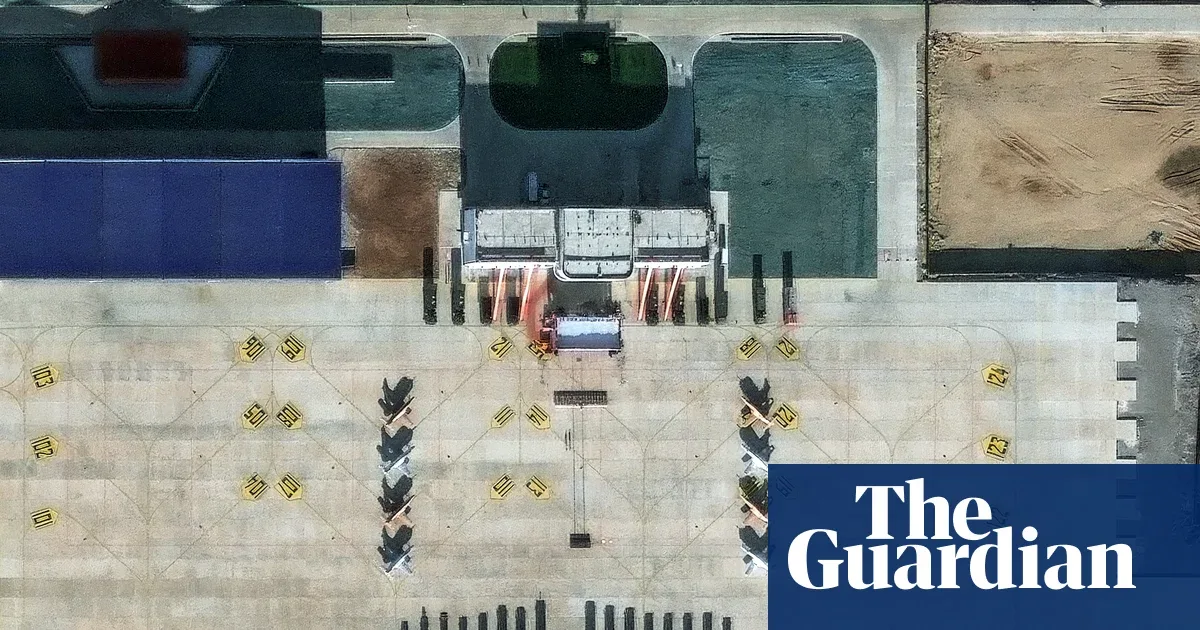
Commercial satellite imagery circulating this week shows eight light attack aircraft parked at Ban Keun Airport in Laos, just days after Beijing inaugurated what it calls a joint 'support and training center' on September 29. The sighting is the most concrete indication yet that China now has an air power foothold in mainland Southeast Asia, a breakthrough that redraws the map of Beijing's military presence beyond its borders.
Images supplied by satellite provider Vantor show eight aircraft lined up on the tarmac, accompanied by more than a dozen neatly arranged military vehicles. The aircraft silhouettes match the Hongdu JL-8, a Chinese-made two-seat trainer jet that can be modified for combat missions and carry bombs. According to the London-based International Institute for Strategic Studies, Laos is reported to operate only four aircraft of that type — far fewer than what appears in the latest imagery.
The expansion of Ban Keun Airport has been significant over the past year. Satellite imagery from several months ago still showed farmland and dirt roads; now new buildings and a paved runway stand there. Analysts assess that the ongoing construction is aimed at extending the runway, which once completed would allow the facility to serve larger aircraft such as strategic bombers.
China's Ministry of Defense says the center aims to 'help Laos strengthen the training of its air force pilots' and stresses it is not 'directed at any third party.' But the statement does not mention the delivery of fighter jets, while the Laotian government has so far remained silent on the project. It is the combination of minimal official claims and visual evidence on the ground that has fueled suspicion among observers.
"It is not impossible to conclude that this is the first fully operational overseas base of the PLA in Southeast Asia," said Collin Koh, a Singapore-based security analyst, referring to China's People's Liberation Army.
Over the past two decades, China has indeed built a network of outposts on disputed islands in the South China Sea, complete with airfields and air defense installations. Beyond that, however, there is only one logistics base, in Djibouti. A similar pattern previously emerged in Cambodia, specifically at the Ream naval base, which Beijing announced in April last year after years of denial — though that facility has no runway. The presence of fighter jets in Laos makes Ban Keun qualitatively different.
The US-based Institute for the Study of War calls Ban Keun 'the PLA's first overseas military facility focused on air power.' Even so, the institute assesses that the base is not yet equipped to support large-scale combat operations, unlike US military bases. Its strategic value lies more in alternative access to the South China Sea and strategic air routes than in direct strike capacity.
For Indonesia, this development adds a new layer to the region's defense calculus. As a country that actively promotes ASEAN centrality and has a direct interest in the stability of the South China Sea, Jakarta has an interest in ensuring that foreign military presence in neighboring countries does not unilaterally alter the balance of power. ASEAN itself faces a credibility test: can this regional forum respond collectively to China's military expansion without being split by the bilateral interests of its individual members?
Thailand, which shares a direct border with Laos, says it will continue to monitor developments. Thai Ministry of Defense spokesperson Rear Admiral Surasant Kongsiri said Bangkok views Vientiane's decision as a sovereign right, but stressed the importance of building mutual trust. Vietnam, which has disputes with China in the South China Sea, is certain to be watching closely as well. Ironically, Ban Keun Airport was once used by US forces for covert operations during the Vietnam War era of the 1960s and 1970s — a history now repeating with different actors.
The big question is no longer whether China is expanding its military reach, but how far that expansion will go and how Southeast Asian countries will balance economic interests with security concerns. If the Ban Keun runway is extended as satellite imagery indicates, China's ability to project air power in this region will rise to an unprecedented level — and ASEAN must decide whether to speak with one voice or let each member negotiate its own position.