26 Wantimpres Members Inaugurated, Rp 23.9 Billion a Year and the Groupthink Risk Behind Palace Doors
Baca dalam 60 detik
- Presiden Prabowo melantik 26 anggota Dewan Pertimbangan Presiden pada 2 Oktober 2026, dengan Pratikno sebagai ketua dan Hatta Rajasa wakil.
- Struktur besar ini memicu pertanyaan soal efektivitas: hak keuangan Rp 76,5 juta per orang per bulan berpotensi membebani APBN hingga Rp 23,9 miliar setahun.
- Tanpa mekanisme yang mendorong perbedaan pendapat, dewan penasihat berisiko terjebak groupthink dan sekadar menjadi ruang pembenaran kebijakan.
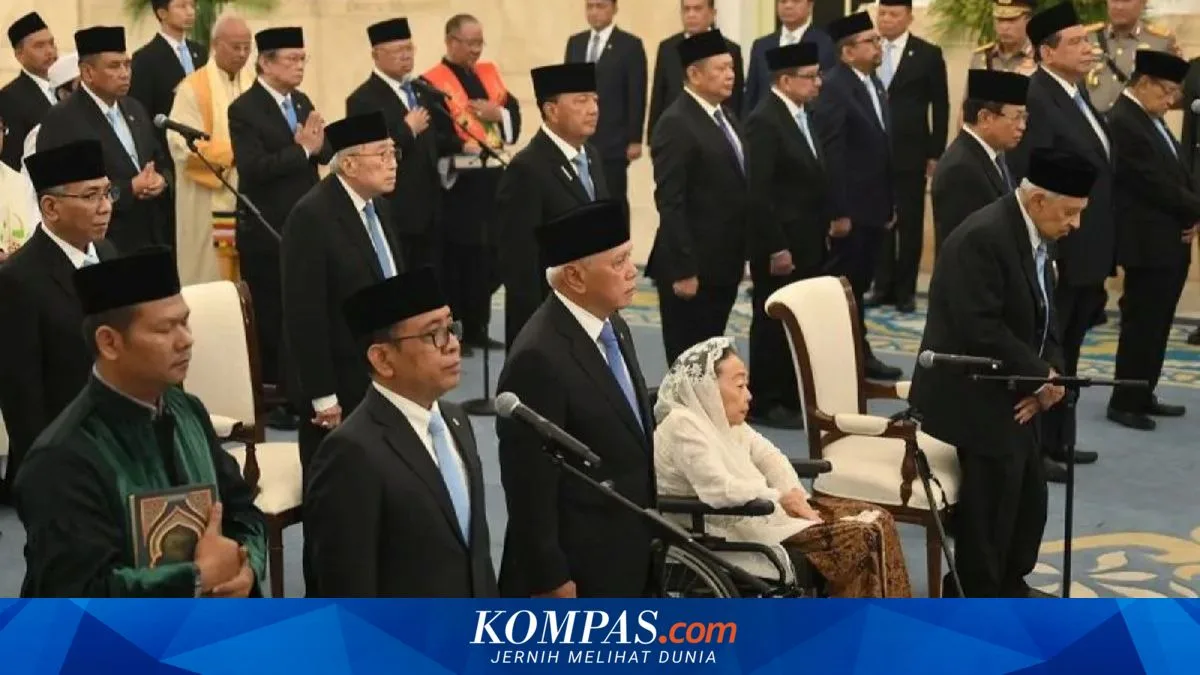
President Prabowo Subianto officially inaugurated 26 members of the Presidential Advisory Council (Wantimpres) at the State Palace in Jakarta on Friday (2/10/2026). Pratikno was appointed chairman, Hatta Rajasa deputy chairman, and Muhammad Qodari secretary. The composition immediately sparked public discourse: does a bloated membership guarantee quality advice, or does it instead enlarge the fiscal burden and widen the distance between the palace and reality?
Among those who took the oath were former senior officials, businesspeople, clerics, academics, and community figures. Chairul Tanjung, Sinta Nuriyah Wahid, M. Quraish Shihab, Budi Gunawan, Anwar Usman, Rocky Gerung, and Ignasius Jonan are among them. That diversity of backgrounds reflects, on one hand, an effort to embrace many perspectives. Yet the crucial question is not who sits on the council, but how boldly they speak when their advice runs counter to the president's wishes.
Constitutionally, the existence of Wantimpres is nothing new. Article 16 of the 1945 Constitution mandates the president to form an advisory council. Its technical regulation is set out in Law No. 19 of 2006, later revised through Law No. 64 of 2024. That revision removed the maximum limit on the number of members; the number is now set according to the president's needs with consideration for government effectiveness. This means the 26-member formation does not violate the law. Yet formal legality does not automatically answer the substantive question: does a structure this large produce commensurate public value?
The debate over cost has drawn attention. With a financial entitlement of Rp 76.5 million per month per member, the total annual budget could reach Rp 23.9 billion. This figure is not the realized 2026 spending because they were only inaugurated in early October. But the projection gives a sense of the fiscal scale the state must bear. The follow-up question, as often arises in public policy discourse, is how much benefit is gained compared with the cost incurred. Without a transparent evaluation mechanism, that tens-of-billions figure risks becoming mere administrative routine.
More intricate is the question of deliberation quality. The history of political thought has long warned that power tends to be surrounded by people skilled at pleasing the ruler's ear. Niccolo Machiavelli, in Chapter XXIII of The Prince, warned of the danger of flatterers and stressed the importance of giving the wise room to speak the truth. The main problem is not a shortage of clever people, but a shortage of constructive disagreement. In this context, psychologist Irving Janis introduced the concept of groupthink in 1972: a group of intelligent individuals can still make bad decisions when the drive for consensus overcomes the courage to test alternatives.
"A room can be filled with dozens of people and still hold only one opinion."
That warning is relevant to Wantimpres. With 26 members, the risk of groupthink could actually rise if internal mechanisms are not designed to facilitate dissent. The presence of figures with differing views—such as Rocky Gerung, known for his criticism—is an early test. Will they truly function as policy challengers, or merely as attendance-list padding? The public will judge from the track record and the recommendations produced, not from the number of names inaugurated.
The Indonesian context shows that the need for honest advice is urgent. A country of more than 280 million people faces layered challenges: from food security and the energy transition to its geopolitical position amid rivalry among major powers. All of that demands broad and bold perspectives, not mere affirmation of policies already decided. Unfortunately, Indonesia's political tradition has often placed advisory councils as instruments to strengthen legitimacy, not as forums to test assumptions. If this pattern continues, Wantimpres risks becoming an expensive ivory tower.
Going forward, the public will wait to see whether Wantimpres can produce measurable policy breakthroughs, or instead sink into formality. The first test may come from issues that require the courage to disagree, such as energy subsidy policy, investment governance, or bureaucratic reform. If this council only produces recommendations uniform with the president's wishes, then the fundamental question is no longer about the number of members, but about why the state pays tens of billions for a voice that never differs.