Constitutional Court Mandates Sugar-Salt-Fat Labels, but Without Education They Are Just Packaging Decor
Baca dalam 60 detik
- Mahkamah Konstitusi memerintahkan pemerintah mewajibkan produsen makanan dan minuman mencantumkan label warna serta simbol kandungan gula, garam, dan lemak pada kemasan.
- Anggota Komisi IX DPR menilai kewajiban itu tidak akan efektif tanpa sosialisasi masif karena konsumen Indonesia masih bertumpu pada harga dan rasa saat membeli.
- Pakar ekonomi kesehatan mengingatkan tingkat pendidikan yang belum merata membuat sebagian besar masyarakat berisiko tidak memahami arti label, sehingga edukasi harus menjadi prioritas anggaran.
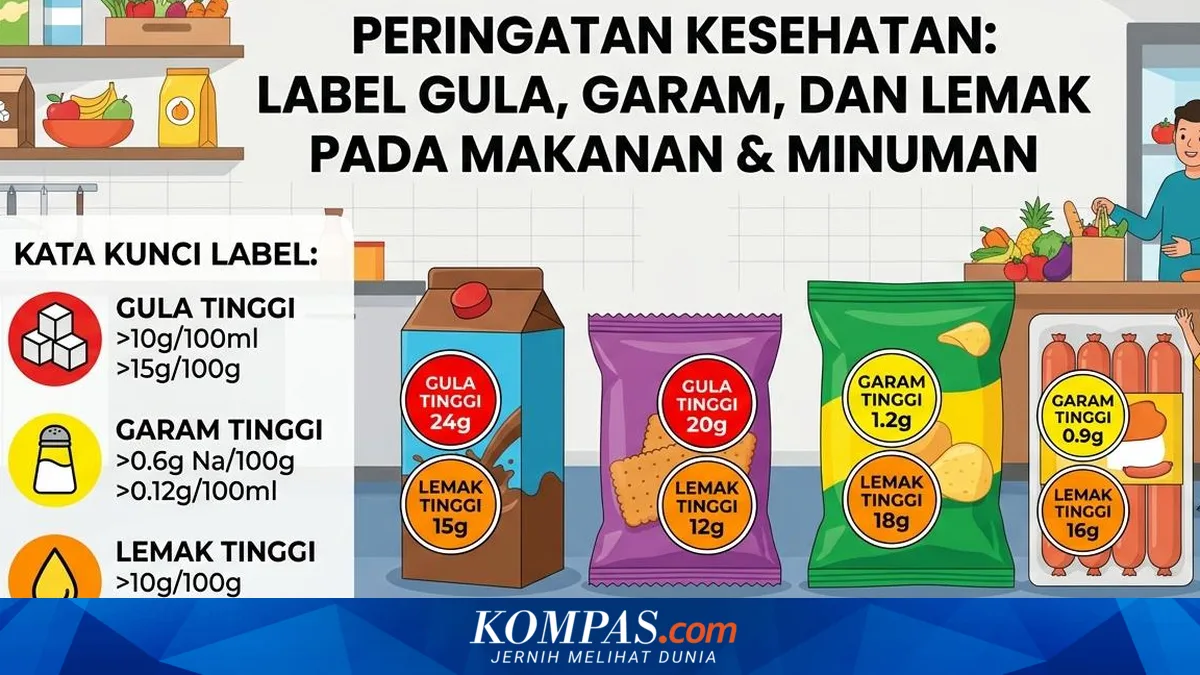
The Constitutional Court (MK) has ruled that the state can no longer rely solely on producers' goodwill in disclosing nutrition information. Through Ruling Number 110/PUU-XXIV/2026, read on 29 September 2026, the constitutional justices ordered the government to require food and beverage businesses to attach color labels and symbols indicating sugar, salt, and fat (GGL) content on every package. The decision answers a petition by two citizens, Imamudin and Andru Steven, who argued that consumers have been left to guess the contents of the products they consume.
In its considerations, Constitutional Court Justice Guntur Hamzah stressed that access to information on GGL content is an inseparable part of public health protection. He cited the risk of non-communicable diseases looming over excessive consumption, from obesity, hypertension, cardiovascular disorders, stroke, to type 2 diabetes. According to Guntur, clear information and adequate education are needed so consumers can consciously weigh their consumption choices, rather than merely following taste.
However, the obligation just won in the legal arena immediately confronts reality on the ground. Member of Commission IX of the House of Representatives (DPR RI), Irma Suryani Chaniago, reminded that labels on packaging do not automatically change people's shopping behavior. She assessed that Indonesian consumers are still heavily influenced by price and taste rather than nutritional composition. "This labeling still needs to be socialized so that ordinary people understand the harms and benefits of the goods they buy," she told Kompas.com on Thursday (1/10/2026).
Irma did not deny that nutrition labels are easier for upper-middle-class buyers accustomed to reading product information to understand. Meanwhile, for lower-middle-class groups, the function of labels still requires assistance. "For the lower middle class, socialization of the label's function is still needed," she added. This statement implies that without a communication strategy that reaches the grassroots, the new rule could amount to an administrative formality that does not change consumption patterns.
A similar view came from health economist Hasbullah Thabrany. He highlighted the disparity in education levels in Indonesia as the main obstacle to nutrition literacy. According to him, some people are not yet able to translate the numbers and symbols on packaging into rational consumption decisions. This condition makes education not merely a complement, but a prerequisite for the GGL labeling policy to truly function.
This nutrition literacy issue intersects directly with the burden of non-communicable diseases that continues to loom over the national health budget. Every year, the state spends large sums on treating diseases that could actually be prevented through a more controlled diet. Therefore, investment in socializing GGL labels could become one of the cheapest public health interventions, provided it is carried out consistently and reaches the groups that need it most.
The government now stands at a crossroads: executing the Constitutional Court ruling quickly or ensuring that every rupiah allocated for regulation and campaigns actually reaches people's dining tables. Without a down-to-earth educational approach, the colored labels on packaging will only become ornaments that buyers pass by. The question is, is the state ready to seriously fund nutrition literacy, or will it let consumers go back to guessing the contents of their own products?