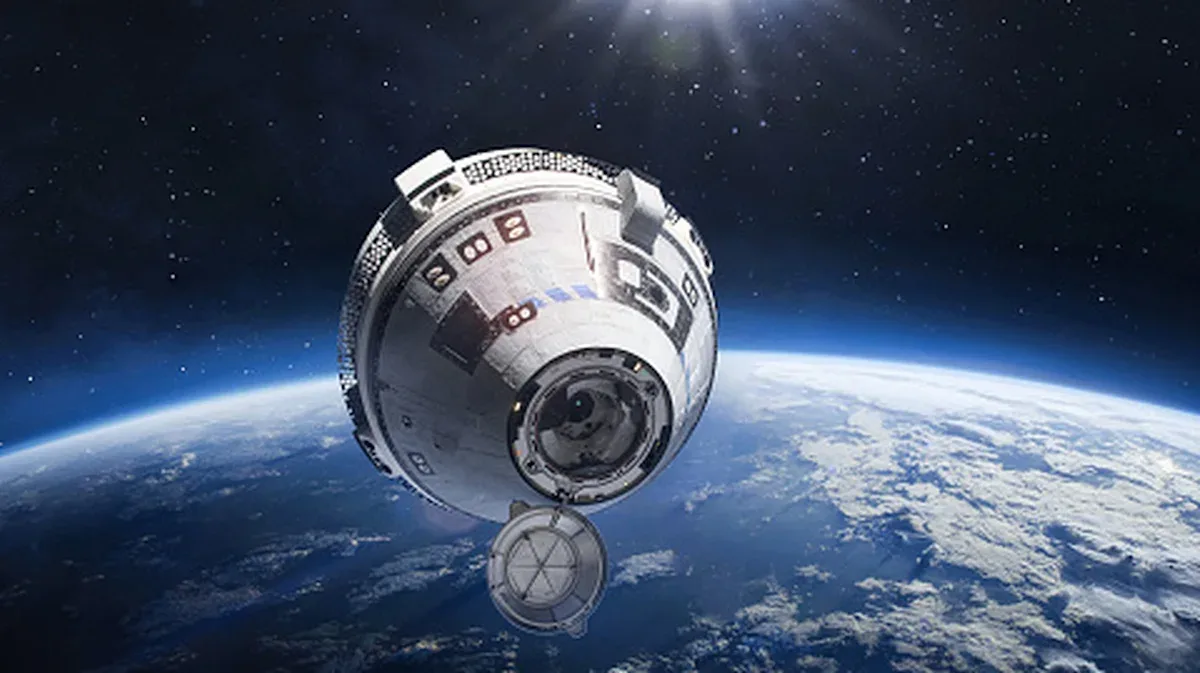
Crew-13 Launches, SpaceX Sets Fastest Docking Record to ISS
Baca dalam 60 detik
- Misi Crew-13 membawa empat astronaut dari NASA, CSA, dan Roscosmos menuju Stasiun Luar Angkasa Internasional dengan roket Falcon 9.
- SpaceX mencatatkan waktu tempuh tercepat dari peluncuran hingga docking otonom di modul Harmony, memangkas durasi perjalanan antariksa komersial.
- Eksperimen medis berbasis sel punca dan pertanian luar angkasa menjadi fokus utama misi yang diprediksi mempercepat persiapan ekspedisi ke Bulan dan Mars.
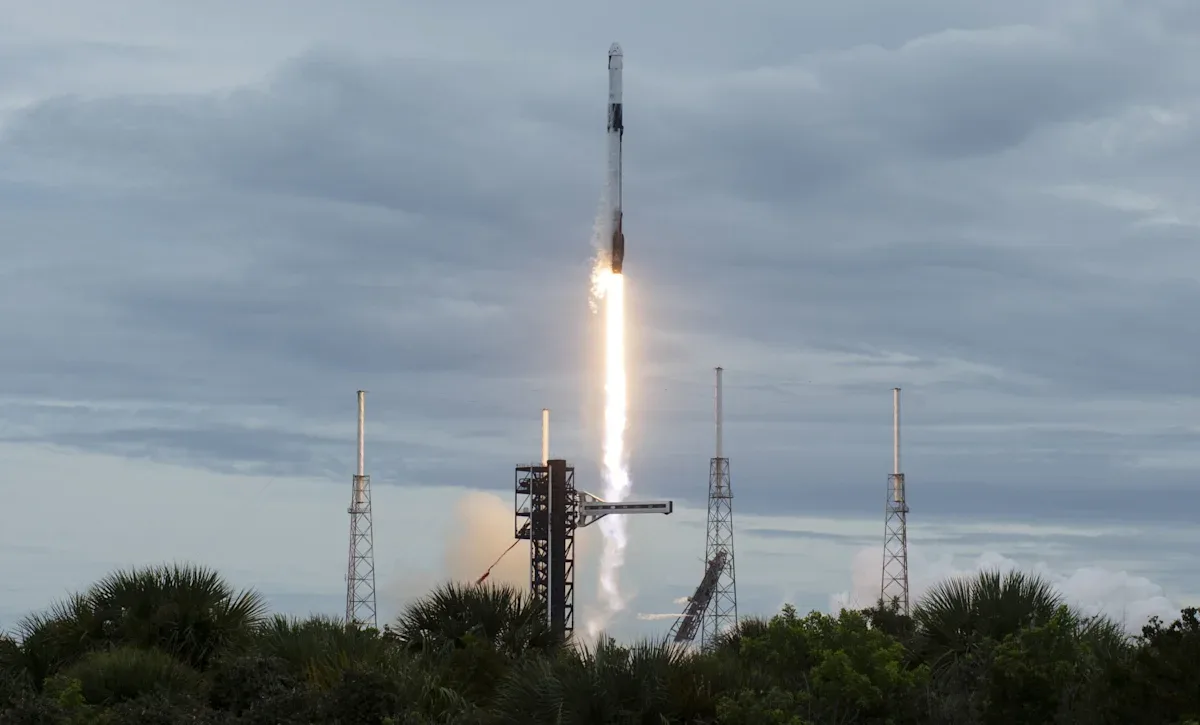
Four astronauts launched from Launch Complex 40 at Cape Canaveral Space Force Station, Florida, on Thursday (1/10/2026) at 11.10 local time. The NASA SpaceX Crew-13 mission marks the 13th crewed trip to the International Space Station (ISS) and sets a new record: the fastest autonomous docking ever achieved by a US spacecraft at the orbiting laboratory.
SpaceX's Falcon 9 rocket carried the Dragon capsule along with NASA astronauts Jessica Watkins and Luke Delany, Canadian Space Agency (CSA) astronaut Joshua Kutryk, and Roscosmos cosmonaut Sergey Teteryatnikov. The capsule docked at the forward port of the Harmony module at around 19.00, just hours after liftoff—an achievement that drastically cuts the duration of crewed space travel, which usually takes more than a day.
NASA Administrator Jared Isaacman called the mission proof of the United States' crewed spaceflight capability and the strength of its commercial partnership. "Jessica, Luke, Joshua, and Sergey will continue the important work aboard the International Space Station while helping us build the experience and capabilities needed for ambitious missions to the Moon and beyond," he said in an official statement.
Dr. Lori Glaze, Associate Administrator of NASA's Human Exploration and Operations Mission Directorate, stressed that a steady commercial launch cadence strengthens the ISS's role as a stepping stone for long-term exploration. "Every station mission adds to our exploration blueprint, and the crews' work guides the plan while ensuring we keep pushing the limits of crewed spaceflight," Glaze said.
During the journey, SpaceX monitored a series of automated maneuvers from its mission control center in California, while NASA oversaw station operations from the Mission Control Center in Houston. The combined oversight from the two centers shows an increasingly mature division of roles between private operators and government space agencies—a model that has been the backbone of the Commercial Crew program since the start.
Dana Weigel, NASA's Low Earth Orbit Program Manager at Johnson Space Center, said the Crew-13 astronauts will help researchers study human stem cell-derived tissues to improve treatments for heart disease and Parkinson's. The research is expected to accelerate disease modeling and pharmaceutical testing. In addition, the crew will explore plant production aboard the station and test new diagnostic equipment to monitor crew health.
"During the mission, the crew will help researchers tackle heart disease and Parkinson's by studying human stem cell-derived tissues that can improve treatments, disease modeling, and pharmaceutical testing," Dana Weigel said.
Beyond the science agenda, the Crew-13 astronauts will also support SpaceX's commercial resupply mission SpaceX-35 this fall and Northrop Grumman's Commercial Resupply Services-25 mission scheduled for the end of the year. Involvement in the two logistics missions underscores that the ISS remains the main hub for crewed space operations, even as NASA and its partners begin shifting some focus to the Artemis program.
For Indonesia, this achievement is not just technology news. The space station has long been a laboratory producing breakthroughs in medicine, materials, and agriculture—sectors relevant to national research needs. Stem cell research conducted in orbit, for instance, could pave the way for regenerative treatments that may one day be applied in domestic hospitals. Meanwhile, space agriculture development could offer lessons on resource efficiency in limited land, something useful for Indonesia's food security.
With the frequency of commercial launches continuing to rise, the question is no longer whether the ISS will keep operating, but how quickly the technology tested there can be transferred to Earth. If this pattern continues, missions like Crew-13 will become the new standard—no longer an extraordinary feat, but a routine that accelerates humanity's steps toward the Moon and Mars.