Parliamentary Threshold: An Elite Battle or the Future of Indonesian Democracy?
Baca dalam 60 detik
- Perdebatan ambang batas parlemen (parliamentary threshold) dalam RUU Pemilu masih alot, dengan partai-partai besar terbelah antara angka 4 hingga 7 persen.
- Angka ambang batas bukan sekadar statistik, melainkan alat gatekeeping yang menentukan partai mana yang lolos ke Senayan dan suara rakyat mana yang terbuang.
- Tanpa arah pembangunan politik yang jelas, Indonesia berisiko terjebak dalam 'demokrasi-demokrasian'—prosedur elektoral berjalan, tetapi substansi representasi tergerus.
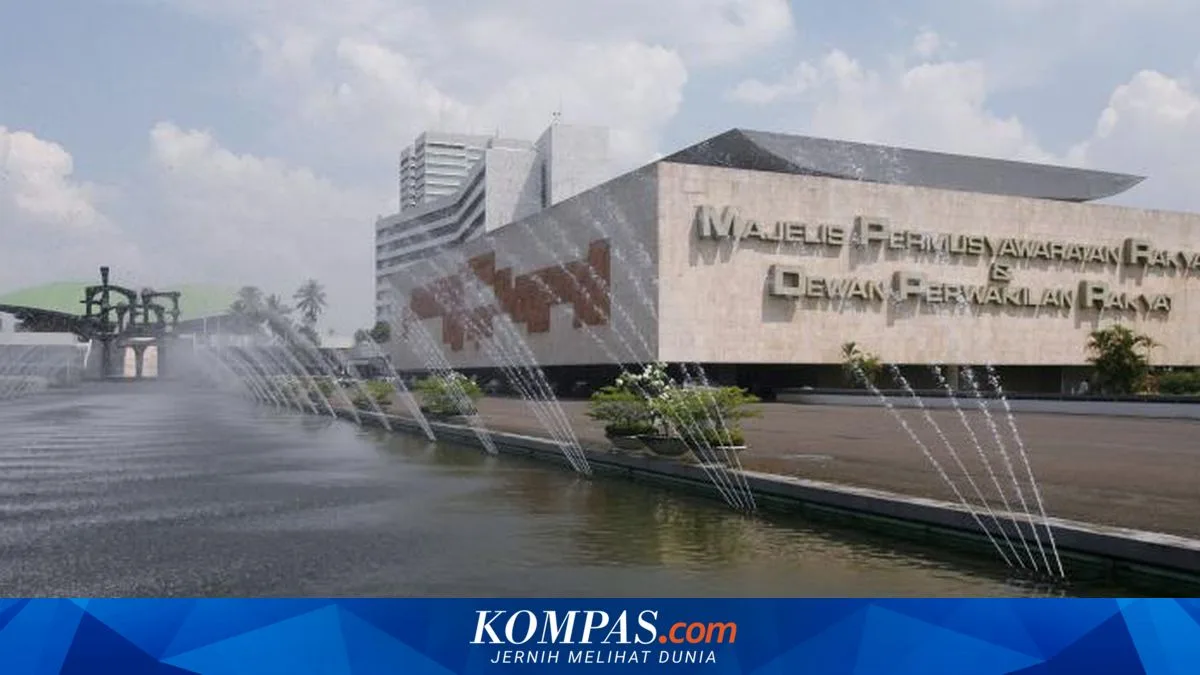
The debate over the parliamentary threshold (PT) in the Election Bill has heated up again. Political parties in the DPR RI have yet to reach an agreement on the figure that will serve as the minimum vote share required for a party to sit in Senayan. Proposals on the table range from 4 percent to 7 percent, with most major parties leaning toward 5 percent.
Gerindra and Golkar have openly stated their support for 5 percent, considering it ideal and proportional. Meanwhile, NasDem has from the outset pushed for a higher threshold, around 7 percent, as an instrument to simplify the national party system. On the other hand, PAN firmly rejects any increase above 4 percent. The Democratic Party is not particularly concerned about the figure but stresses the importance of protecting people's voting rights so that few votes are wasted. PDIP, PKB, and PKS are reported to be in favor of 5 percent.
However, the real debate is not merely about numbers. A threshold figure is never politically neutral. It functions as a gatekeeping tool that determines who may enter the arena of power and who must be excluded. In this context, the fundamental question that is often overlooked is: in which direction should Indonesia's democracy and political system be built?
If not answered clearly, a misdirected threshold could trap this nation in a condition that Mohammad Hatta called "demokrasi-demokrasian" (pseudo-democracy). That is, political procedures run and elections are held routinely, yet the people are powerless because they become mere objects of political mobilization every five years. The political system becomes electorally noisy but substantively shallow. Political representation that should connect citizens with power is instead hijacked by elites wearing a populist face.
This symptom is increasingly visible in the current shape of Indonesian party politics. Theoretically, political parties are born from cleavages or social divides such as class, religion, or the rural-urban relation. From there, parties carry out the function of aggregating and articulating the interests of particular groups. In Indonesia, however, those dividing lines are increasingly blurred. Ideological differences between parties are fading, programs are hard to distinguish, and coalitions form more out of power calculations than shared ideas.
"A threshold figure will never be neutral. Setting the PT carries a high risk of becoming a tool of political gatekeeping: who may enter the arena and who must be excluded."
For readers in Indonesia, especially investors and professionals, this dynamic is not merely a matter of electoral politics. Regulatory stability and the direction of economic policy are strongly influenced by the political configuration shaped by threshold rules. If the threshold is too high, party fragmentation decreases, but the risk of domination by certain elites rises. Conversely, if it is too low, parliament can get stuck in fragile coalitions that struggle to make strategic decisions. This uncertainty can affect the investment climate and the pace of structural reform.
In addition, cross-party communication is still underway in the DPR to find common ground. To date, however, no final formula has been agreed. The public is also increasingly aware that this debate is not merely about seat arithmetic, but a contest of ideas about the future of Indonesian democracy.
Going forward, the crucial question is: will the threshold be used as an instrument to strengthen people's representation, or instead as a tool to perpetuate elite power? The answer to this question will determine the quality of Indonesian democracy for at least the next decade.