Starship Ready for First Orbital Test, SpaceX Passes Critical Rehearsal
Baca dalam 60 detik
- SpaceX menuntaskan wet dress rehearsal Starship pada 24 September 2026, menandai persiapan akhir menuju peluncuran orbital pertama pada 28 September.
- Penerbangan ke-14 ini akan membawa 26 satelit Starlink V3 dan menguji kemampuan Ship mengorbit serta splashdown di Pasifik lepas Chili.
- Keberhasilan misi ini dapat mempercepat dominasi SpaceX di pasar peluncuran global dan membuka jalan bagi ekspansi layanan internet satelit di Indonesia.
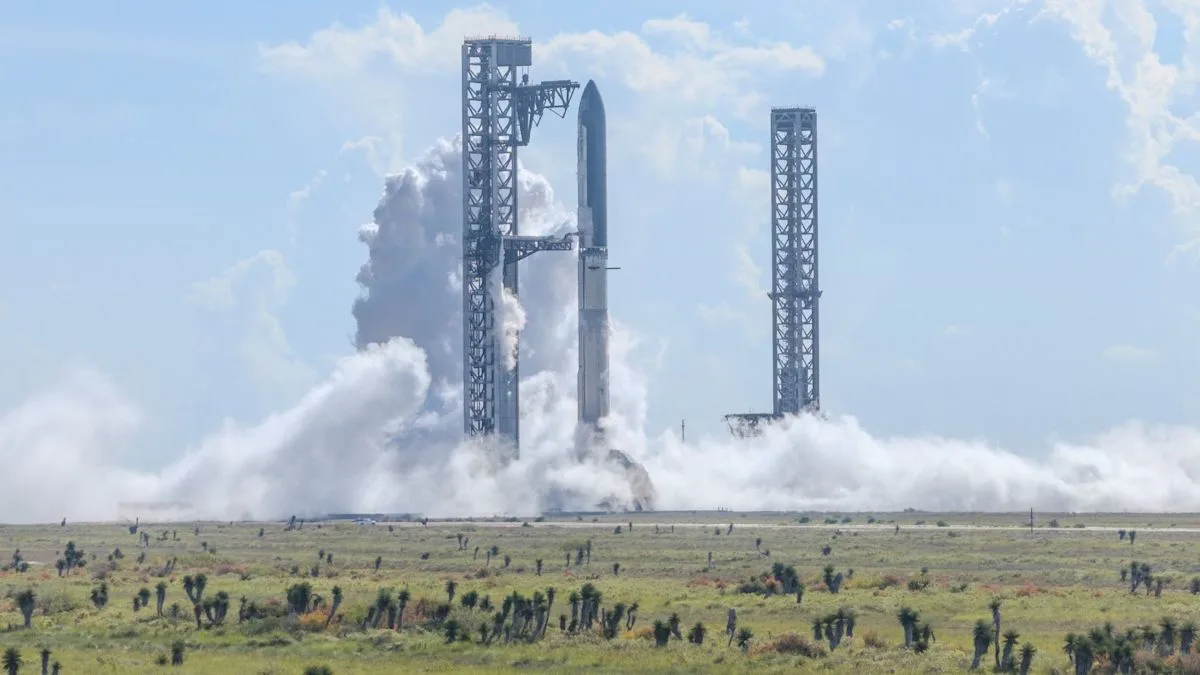
SpaceX has confirmed that its giant Starship rocket is ready for its first orbital test flight after completing a wet dress rehearsal (WDR) on 24 September 2026. The rehearsal, which involved fueling and simulating the entire launch procedure without engine ignition, was the final gate before the historic mission scheduled to lift off from Starbase in south Texas on 28 September.
This WDR was no mere routine. The mission team had to verify the integration between Super Heavy as the first-stage booster and Ship as the upper-stage spacecraft. With a total height of 124 meters, Starship is the largest vehicle ever built by humans. The success of this simulation confirms that SpaceX has secured the technical clearance to proceed to the next phase, though it is still awaiting weather confirmation and final regulatory approval from aviation authorities.
Unlike the previous 13 flights, which always placed Ship on a suborbital trajectory, Flight 14 will push the 52-meter-tall vehicle to orbital velocity. If successful, Ship will circle the Earth six times before splashing down in the Pacific Ocean off the coast of Chile — a new landing zone never tried before; earlier missions opted for the Indian Ocean waters off Western Australia. Meanwhile, Super Heavy will land in the Gulf of Mexico about seven minutes after launch.
The mission also serves as the debut stage for third-generation Starlink satellites. Elon Musk, SpaceX's founder, has said the Starlink V3 constellation will eventually consist of 100,000 satellites — a figure far exceeding the current number of active satellites worldwide. The launch of the first 26 units will test the capacity and reliability of space communications technology that could later extend internet reach to remote regions, including Indonesia.
"SpaceX has demonstrated remarkable engineering capability by completing the WDR on time. But the real challenge is maintaining operational consistency amid regulatory pressure and global competition," said a space industry analyst who declined to be named.
For Indonesia, the implications of this mission cannot be ignored. As an archipelago of more than 17,000 islands, Indonesia still faces gaps in internet access in its frontier, outermost, and least-developed (3T) regions. The presence of the Starlink V3 constellation could accelerate more equitable connectivity, but it also raises questions about data sovereignty and the role of local providers. The government, through the Ministry of Communication and Digital Affairs, has opened the door to foreign satellite operators, but on the condition of partnerships with state-owned enterprises and compliance with data protection regulations.
In addition, Starship's success could drastically reduce satellite launch costs. Until now, the cost of sending payloads to orbit has remained a major obstacle for developing countries seeking to own satellites. If Starship proves fully reusable, launch prices are estimated to fall below USD 100 per kilogram — opening opportunities for Indonesian universities, startups, and research institutions to develop space technology independently.
Nevertheless, SpaceX still faces a number of challenges. The company has never attempted to catch Ship with the "chopstick" arms on the launch tower, although it has succeeded three times with Super Heavy. A failure at this stage could delay Starship's commercial operational schedule, targeted within the next few years. In addition, pressure from US regulators and concerns about space debris are mounting as the number of satellites in low Earth orbit grows.
With the launch only days away, the world will watch whether Starship can truly transform the space industry landscape or simply add to a long list of high-risk test flights. If successful, the mission will not only be a milestone for SpaceX but also trigger a new race among countries seeking to dominate the orbital economy. Will Indonesia take a more active role in the global space supply chain, or remain a spectator at the edge of the launchpad?