Coordinating Minister Yusril Opens Cibinong Prison to Media: What Lies Behind the Luxury Facilities?
Baca dalam 60 detik
- Menko Hukum dan HAM mempersilakan awak media memverifikasi langsung dugaan fasilitas mewah di Lapas Cibinong.
- Ombudsman RI menemukan kluster kamar bertingkat dan area parkir mobil mewah, sementara Kanwil Ditjenpas Jabar menyebutnya rumah dinas.
- Publik menanti tindak lanjut atas potensi pelanggaran yang melibatkan oknum pemasyarakatan.
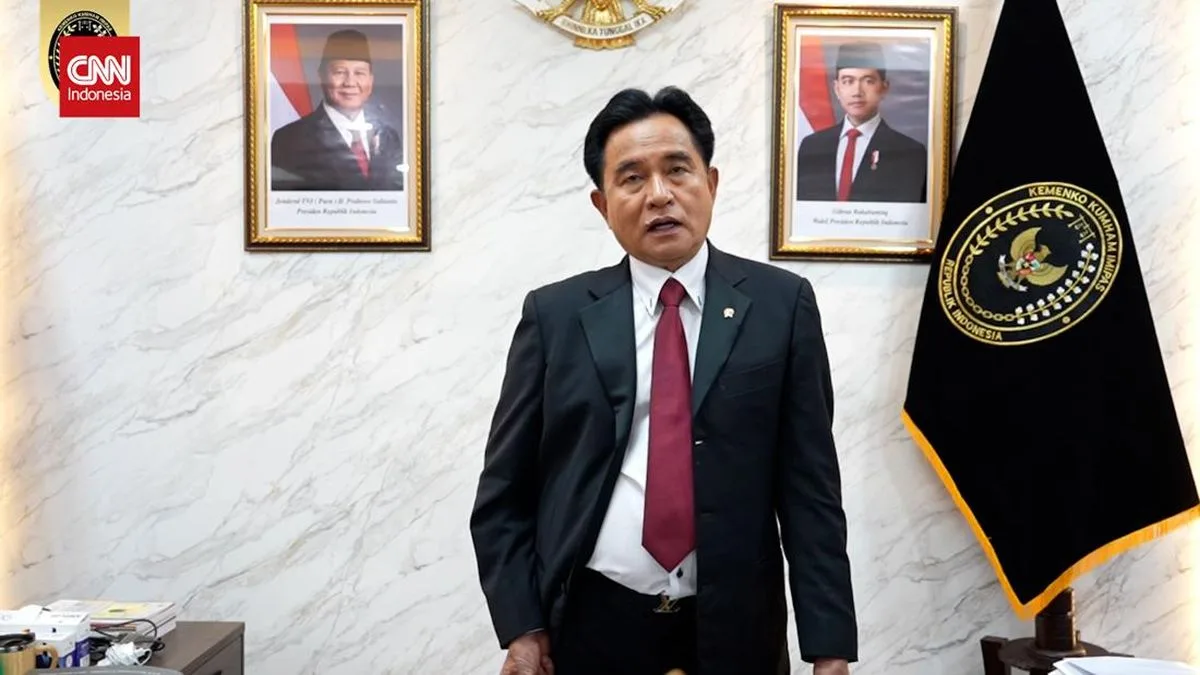
The Coordinating Minister for Law, Human Rights, Immigration, and Corrections, Yusril Ihza Mahendra, has openly invited the mass media to report directly on the alleged presence of luxury facilities at the Class IIA Cibinong Penitentiary (Lapas) in West Java. The move is intended to address the Indonesian Ombudsman's findings that have shocked the public, while also testing the transparency of prison management amid sharp scrutiny of practices in correctional institutions.
Yusril stressed that openness is key to verifying the Ombudsman's findings following an unannounced inspection (sidak) at the prison. "We decided today that the media is welcome to report directly on what the Ombudsman found. Whether it is true that there are luxury facilities with apartment standards there," he said on Thursday (24/9). He also emphasized that firm action would be taken if violations were found, whether committed by corrections officials or Cibinong Prison staff. "If there are, make sure what those facilities are. Are they staff housing inside the prison, a place for inmate assimilation ahead of release, or are they indeed luxury facilities for certain inmates who can afford to pay," he added.
The Ombudsman's findings themselves revealed several types of rooms within a luxury cluster found at Cibinong Prison, Pondok Rajeg, Bogor Regency. Ombudsman member Syafrida Rachmawati, at a press conference in Jakarta on Thursday (24/9), said the rooms were standardized like lodging, with suite, deluxe, and superior types. "Now the next one is another type, inside it is still the same, there are differences, it seems there is also standardization like lodging, there are suite, deluxe, and superior rooms, it seems like that," Syafrida said. In addition, the area also has a parking area for luxury cars, further reinforcing suspicions of exclusive facilities beyond the standard of ordinary prisons.
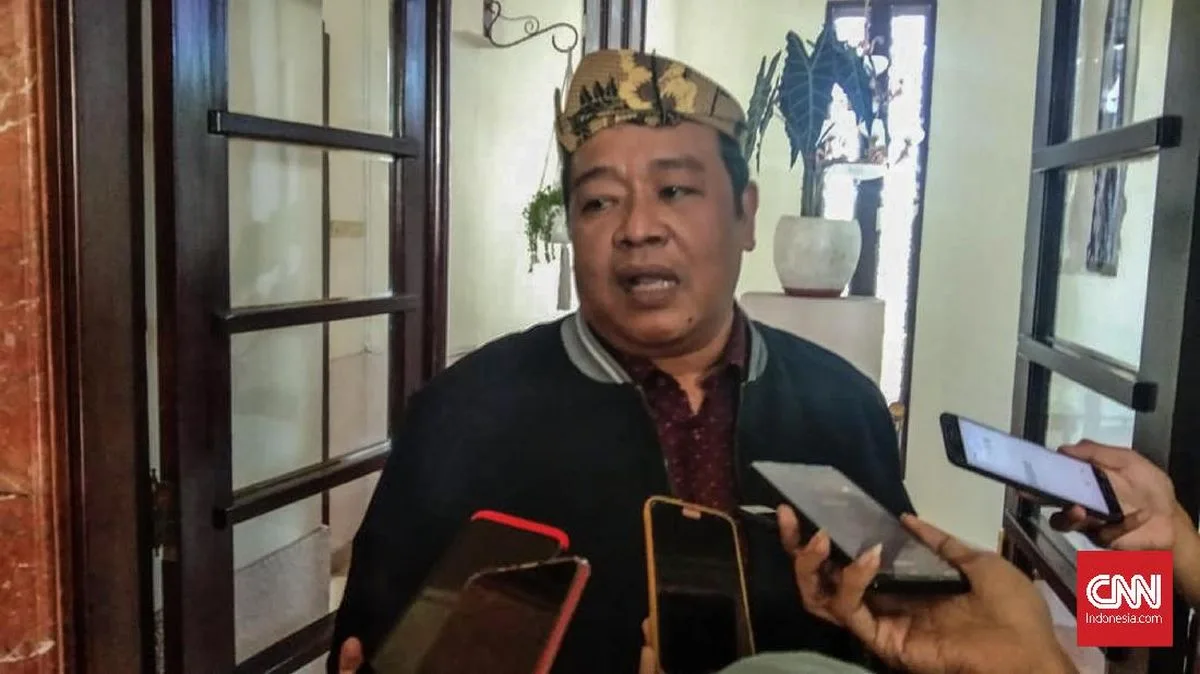
Responding to these findings, the Head of the West Java Regional Office of the Directorate General of Corrections (Kakanwil Ditjenpas Jabar), Yudi Suseno, provided clarification. He stated that the building highlighted by the Ombudsman was official housing located in the assimilation area, formerly known as the Assimilation and Education Facility (SAE). "The location referred to by the Ombudsman Team is the assimilation location, formerly called SAE, Sarana Asimilasi dan Edukasi. There are several official residences there. So the houses visited by the Ombudsman Team are official residences that have an Official Residence Decree," he said. Yudi also added that his office was looking into the dynamics at Cibinong Prison after the Ombudsman's unannounced inspection on Wednesday (23/9). "As for whether there are things that should not be in that assimilation area, our team is currently investigating. On the leadership's commitment, we will conduct an examination and act in accordance with the rules proportionally," he said.
This case is not the first to surface. Previously, various reports have highlighted the condition of prisons in Indonesia, which are often far from adequate, with overcrowding and minimal oversight. However, the discovery of luxury facilities in Cibinong raises a new question: is there extreme inequality within the correctional system? If there are indeed exclusive facilities accessible only to certain inmates with financial means, this could tarnish the principle of justice that underpins law in Indonesia.
Public policy experts assess that Yusril's move to open media access is an effort to dampen public suspicion. However, according to analysts, transparency alone is not enough if not followed by firm action. "This is a test for the government to show that there is no favoritism in enforcing rules in prisons," said a legal observer who declined to be named. He also highlighted the importance of sustained oversight from the Ombudsman and civil society to prevent similar practices from recurring.
The impact of these findings could be wide-ranging. If violations are proven, not only individual prison staff could be implicated, but officials at the regional office and even central levels could also be dragged in. In addition, public trust in correctional institutions, which has long been fragile, could erode further. On the other hand, this case is also a momentum to push for comprehensive reform within the corrections system, including improving staff welfare and infrastructure.
Going forward, the public will await the results of the internal investigation promised by the West Java Ditjenpas Regional Office. Is the area really just official housing, or is there misuse of facilities? The media granted direct access is expected to uncover the actual facts. What is clear is that the Cibinong Prison case mirrors how important strict oversight and accountability are in correctional institutions. Without them, justice will only be an empty slogan.