Meta Releases Holographic Avatars on Smart Glasses, Coming to Indonesia?
Baca dalam 60 detik
- Meta memperkenalkan avatar holografik yang dapat digunakan dalam panggilan video melalui kacamata pintar Ray-Ban Display dan VR glasses, menandai lompatan besar dalam teknologi komunikasi imersif.
- Teknologi ini memungkinkan pengguna tampil sebagai avatar realistis tanpa perlu kamera, dengan setup hanya lima menit, namun masih terbatas pada ekosistem perangkat Meta dan memiliki bug awal.
- Kehadiran avatar holografik berpotensi mengubah cara kerja remote dan interaksi sosial, tetapi menimbulkan pertanyaan tentang privasi, autentisitas, dan kesiapan infrastruktur digital di Indonesia.
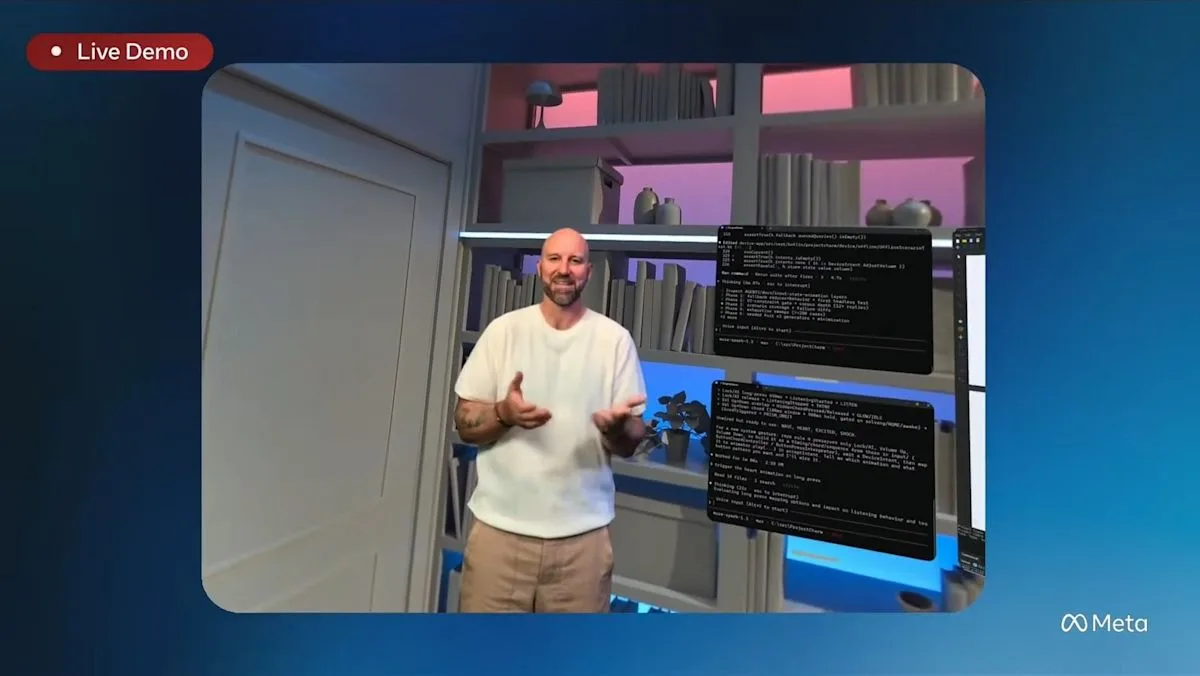
Meta has officially announced the arrival of holographic avatars that can be used in video calls through its Ray-Ban Display smart glasses and latest VR devices. The technology allows users to appear as a digital representation that closely resembles themselves, without needing to turn on the camera. The announcement was made at the Connect event, and an exclusive demo showed that the avatar has reached a surprising level of realism, even able to fool the eyes of ordinary users.
In the demo, the avatar creation process took about five minutes through the Meta AI app. Users were asked to scan their faces from various angles and answer several questions to record voice characteristics. The Muse Realtime Avatar model then used that data to mimic facial expressions in real-time while speaking. As a result, the avatar could smile, nod, and speak with synchronized lip movements. Even so, there were still technical issues such as the app suddenly skipping questions because it failed to detect voice, although this did not disrupt the overall process.
The experience of using the avatar from the call recipient's side turned out to be quite convincing. In the trial, a user interacting with an avatar for the first time admitted to being briefly fooled, especially because the video background looked normal. However, the transparent watermark embedded by Meta served as a marker that the call used an avatar. Meanwhile, from the sender's side, users could see a preview of their own avatar in the corner of the glasses screen, creating a unique sensation between the real self and the digital representation.
Meta is also developing holographic avatars for VR devices with more advanced capabilities. Thanks to more advanced internal cameras and sensors, users can create full-body avatars without needing to manually train facial expressions. This avatar automatically captures the user's facial movements. In the demo, interaction with a life-sized hologram felt more natural than Apple's persona avatar, although there were still distortions in the legs and edges of the head. This avatar only displays a front view, so it is not yet fully 3D.
“Meta states that holographic avatars can increase the sense of presence in video calls, and we experienced the benefits ourselves in the demo,” said a Meta representative.
Although promising, the technology is still in an "early preview" stage and has limitations. Users can only interact between compatible devices; Ray-Ban Display owners cannot receive calls from VR users, and vice versa. For now, VR avatars only work between VR headsets. Meta plans to open early access for Ray-Ban Display this fall, but there is no definite date for global availability.
For Indonesia, the arrival of holographic avatars opens up opportunities as well as challenges. On one hand, this technology can be used to increase remote work productivity, especially in the creative and technology sectors that are starting to adopt the metaverse. However, mass adoption will depend on the readiness of network infrastructure, device prices, and data privacy regulations. The Indonesian government through Kominfo is drafting a regulatory framework for immersive technology, including protection of biometric data used in avatar creation. If not matched with adequate digital literacy, this technology risks being misused for identity fraud.
Going forward, the big question is whether holographic avatars will become a new standard in digital communication or just a niche feature limited to certain groups. Meta seems ambitious to make it part of the hybrid work ecosystem, but technical, ethical, and social acceptance challenges still have to be answered. For Indonesia, the opportunity to be not only a consumer but also a developer of similar technology is wide open, as long as there is research support and cross-sector collaboration.