26,386 Joint Personnel Secure 99 Rallies in Jakarta, Police Prepare Traffic Diversions
Baca dalam 60 detik
- Polda Metro Jaya mengerahkan 26.386 personel gabungan untuk mengawal 99 kegiatan masyarakat di Jakarta, mayoritas berupa unjuk rasa.
- Titik konsentrasi massa terbesar berada di Bundaran HI, Monas, dan Gedung DPR/MPR dengan total personel mencapai 11.704 orang.
- Rekayasa lalu lintas situasional disiapkan untuk mengantisipasi kemacetan, masyarakat diminta mencari jalur alternatif.
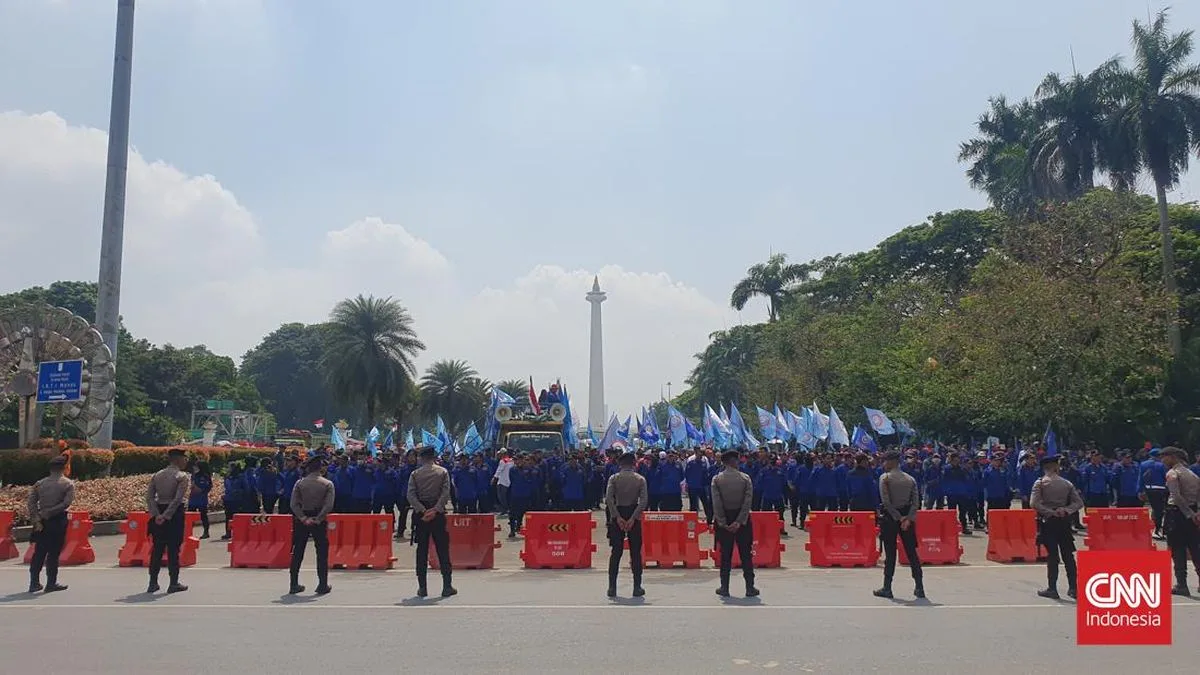
A total of 26,386 joint personnel from the police, the Indonesian Military (TNI), the DKI Jakarta Provincial Government, and the DPR-MPR internal security force were deployed to secure 99 public activities in Jakarta on Thursday (24/9). Of that number, 73 were public opinion demonstrations, while 26 other activities took place at various locations.
Head of Public Relations of the Metro Jaya Police, Senior Commissioner Budi Hermanto, detailed the personnel placement based on vulnerable points. The Bundaran HI, Dukuh Atas, and Thamrin areas were prioritized with 4,051 personnel. Monas received 4,020 personnel, while the DPR/MPR Building was guarded by 3,633 personnel. In addition, 2,055 traffic police personnel were deployed specifically to manage vehicle flow.
Budi revealed that the rally at Bundaran HI was attended by participants from labor groups, while at the DPR/MPR the combined mass of students, workers, and farmers was estimated at 600 to 750 people. In the Monas area, the Kamisan rally, which is routinely held every Thursday, also enlivened the scene, along with student elements and labor unions.
"The National Police is present for democracy. Expressing opinions is a public right that we must all respect," said Budi.
He added that the police had prepared situational traffic diversions to anticipate congestion caused by the rallies. People intending to pass around the demonstration sites were urged to use alternative roads.
This large-scale security operation highlights the national political dynamics heating up toward the end of the year. The wave of demonstrations involving workers, students, and farmers shows that labor, agrarian, and government policy issues remain the main triggers. The police are trying to balance the right to express opinions with public order, but the effectiveness of this approach will be tested on the ground.
For market players and investors, repeated demonstrations can create short-term uncertainty, especially if the rallies turn violent or disrupt economic activity in business centers such as Thamrin and Sudirman. Nevertheless, the massive presence of security personnel is expected to dampen the potential for escalation.
Going forward, the question is whether the government will respond to the masses' demands with substantive dialogue, or instead rely on a security approach. Without addressing the root causes, similar waves of demonstrations could continue to recur, draining resources and disrupting social stability.