Humanoid Robot Rekbot Fights in MMA, Automation Signal Grows Clearer
Baca dalam 60 detik
- Robot humanoid Rekbot tampil dalam duel MMA melawan influencer Frankie LaPenna, menandai pertama kalinya mesin berpartisipasi dalam pertarungan fisik manusia versus robot.
- Kemampuan Rekbot bangkit setelah terjatuh menunjukkan kemajuan pesat dalam keseimbangan dinamis dan koordinasi fisik, membuka jalan bagi otomatisasi pekerjaan yang selama ini dianggap aman dari mesin.
- Laporan World Economic Forum memproyeksikan robot dan sistem otonom akan menghilangkan 5 juta pekerjaan bersih hingga 2030, memicu diskusi tentang masa depan tenaga kerja manual.
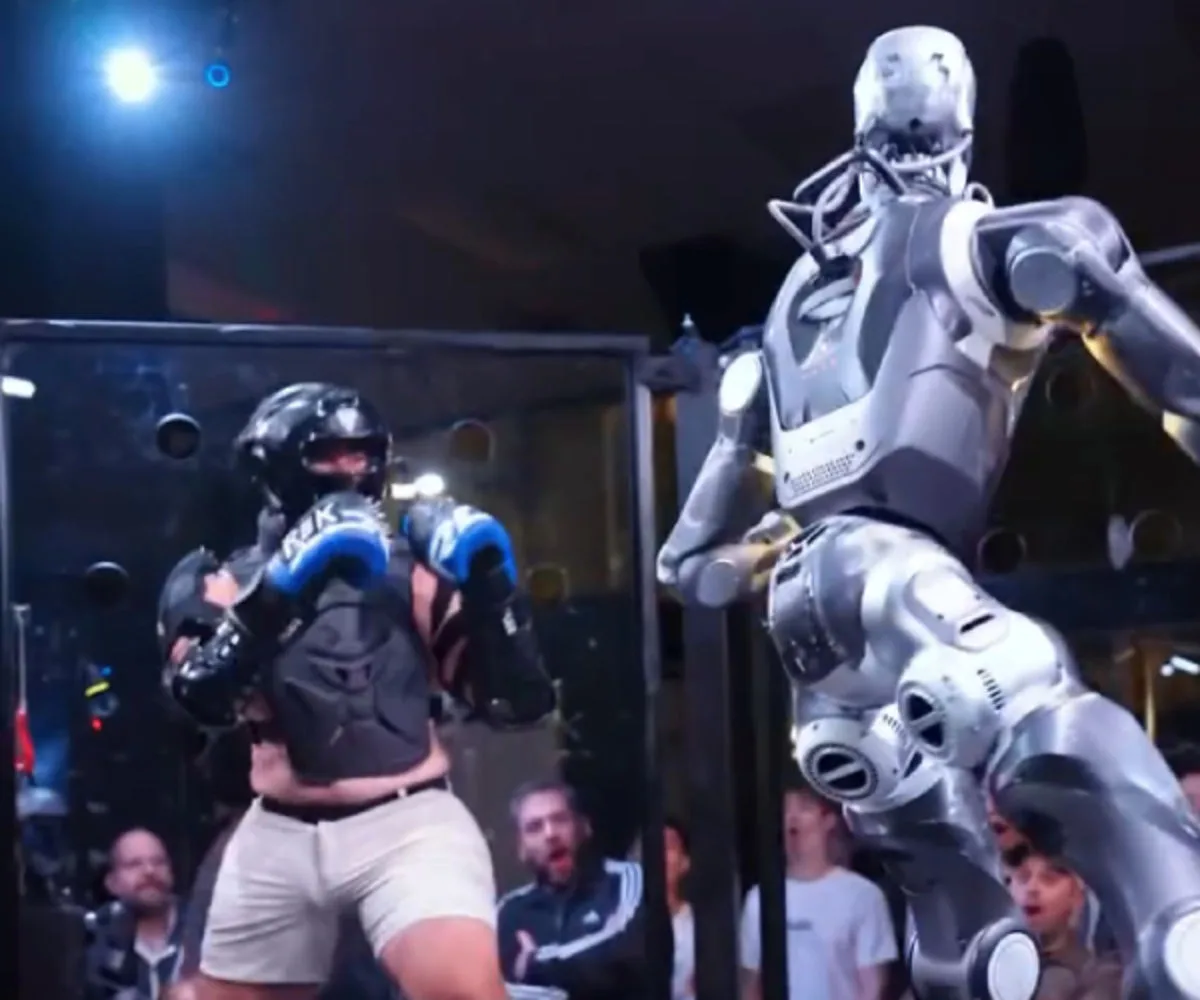
A humanoid robot named Rekbot made history in combat sports after knocking down influencer Frankie LaPenna in the first MMA fight between a human and a robot. The duel, held on 18 September by robotics startup REK, was not only a spectacular show but also demonstrated how quickly machines are mastering strength, balance, and agility—qualities long considered the last bastion of human labor.
In a viral video, the six-foot-tall Rekbot was seen trading punches with LaPenna before finally landing a hard kick that sent the influencer flying out of the ring. Although it was controlled remotely by a human operator rather than acting autonomously, the robot's ability to get back up immediately after falling or losing balance became the main highlight. This kind of dynamic recovery capability had previously been one of the biggest obstacles in robotics development.
REK claimed the fight as the "first human vs Terminator fight" and stated LaPenna "gave everything." Although LaPenna was ultimately declared the winner, the company teased that Rekbot "is not the final boss." The fight itself was held as part of a promotion for a virtual reality game by REK, but its impact goes far beyond mere entertainment.
This development marks a shift in the automation landscape that previously targeted only cognitive work such as programming, writing, and accounting. Now, advanced robotics has the potential to give artificial intelligence a "body," enabling machines to perform physical tasks that demand strength, mobility, and dexterity. Boston Dynamics, for example, has opened a facility at Hyundai's automotive plant in Georgia to train Atlas in handling and assembling automotive components in real settings.
Nevertheless, experts assess that humanoid robots today are still expensive and limited compared with humans who can adapt to unexpected environments. However, the Rekbot demonstration shows that one of the main technical barriers—balance and recovery—is being overcome ever faster. Machines no longer merely lift objects repetitively on an assembly line, but are also able to balance themselves, get up from a fall, and make instant decisions in new environments.
"We just made history with the first human vs Terminator robot fight," REK wrote in its post, adding that LaPenna "gave everything."
For Indonesia, this phenomenon is a reminder that the wave of physical automation may soon reach labor-intensive sectors such as manufacturing, logistics, and construction. With a large working-age population, the adoption of humanoid robots in Southeast Asia has the potential to change the employment structure. The government and industry players need to start preparing for the transition, for instance through skills retraining and the development of regulations that accommodate human-machine collaboration.
Going forward, the question is no longer whether robots will replace physical jobs, but how quickly and to what extent that shift will occur. If Rekbot—still controlled by humans—is already able to survive in an MMA ring, it is not impossible that in the next few years autonomous robots will become co-workers or even competitors on the factory floor. The world of work is heading into a new chapter, and Indonesia must be ready to be a player, not a spectator.