Google Discover Algorithm: The Black Box That Decides Your News Every Day
Baca dalam 60 detik
- Google Discover, sistem rekomendasi konten yang tertanam di ponsel Android, memproses miliaran artikel setiap hari untuk menyusun feed personal tanpa penjelasan resmi dari Google.
- Sistem ini bekerja melalui serangkaian tahap: indeksasi, pemetaan minat, prediksi perilaku, hingga peringkat akhir, namun formula penggabungan sinyalnya tidak diungkap ke publik.
- Bagi pengguna dan industri media di Indonesia, ketergantungan pada algoritma ini memunculkan pertanyaan tentang transparansi, netralitas, dan dampak terhadap konsumsi informasi.
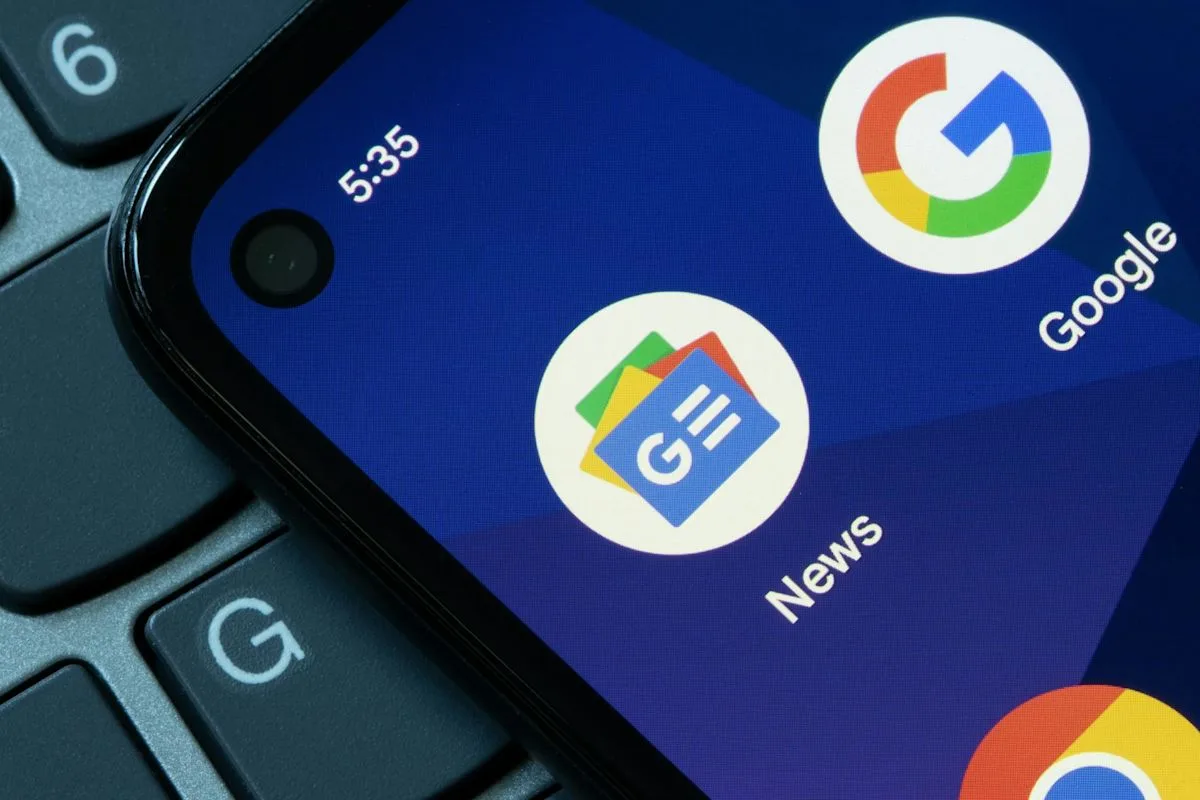
Google Discover, a content recommendation service that has become an inseparable part of the Android phone interface, serves a wide range of articles to hundreds of millions of users every day without requiring a search. But exactly how the algorithm behind this service selects content for each individual remains a mystery that Google rarely reveals.
Unlike the search engine that is synonymous with a white search box, Discover offers an experience like a social media feed—without comments, retweets, or user-to-user interaction. The service has no separate app; it is embedded in the Android operating system and is usually accessed by swiping right from the home screen. The question is, what makes an article appear in your feed? Is it purely interest, or are there other, more complex factors?
According to a number of studies published by Google engineers, Discover is an industrial-scale content recommendation system that combines information retrieval with algorithmic curation. Although the details are not disclosed, independent researchers have tried to dissect its architecture. They describe the process as a funnel divided into several stages. First, Google indexes billions of pieces of content from across the internet and filters out content that violates policy, such as terrorism content or graphic images without journalistic context. Content that passes the filter is only eligible, not guaranteed to appear in the feed.
Next, the system identifies entities—for example the name of chef Ferràn Adrià, presenter Pilar Rubio, or the retail brand Lidl—that appear in a user's search history or interactions. These entities are linked to form broader topics and subtopics. To compare and find related content at scale, the system uses mathematical representations called embeddings. These vectors map clusters of entities and user interests into coordinates, similar to the game battleship: the closer two points are, the greater their relatedness.
Once the interest profile is formed, the system moves to a predictive model. AI tries to predict the user's reaction to each content candidate. There are eleven predictive goals described by Google, seven of which are specific: five positive signals (click, like, positive survey response, click for details, click to expand text) and two negative signals (ignore or permanently block). These predictions are then combined into a single score, with different weights for each signal. An article may have a high probability of being clicked, but also a high probability of being blocked; another article may spark less curiosity but generate more positive signals. Discover must resolve this trade-off, but Google does not disclose its combination formula.
After ranking is formed, some systems apply a final filter to include criteria such as diversity, freshness, or fairness. This prevents the top five items from all covering the same new gadget from Lidl. At the end of the funnel, Discover has decided what to show. But the process does not stop there. The system learns from feedback: explicit signals (blocking a source, liking content) and implicit ones (stopping reading, moving on to the next article). This new data is used to train and update the model. Recommendations generate interactions, interactions generate data, and that data feeds the next round of recommendations.
"There is no single algorithm or grand equation that you can control. Recommendation systems like Google Discover are supported by a vast and opaque network of algorithmic infrastructure," the researchers wrote in an article published in The Conversation.
The impact of this system on the media industry cannot be ignored. In Indonesia, many news publishers rely on traffic from Google Discover to reach readers. A small change in the algorithm can mean a surge or a drastic drop in visits. When Google is not transparent about how Discover works, publishers and users are in a vulnerable position. They do not know why certain content is promoted or hidden. This raises questions about the neutrality and accountability of digital platforms that increasingly dominate access to public information.
Looking ahead, pressure for algorithm regulation is growing stronger. In Europe, the Netherlands forced Meta to give users the option to leave the algorithmic feed. Similar measures could soon hit Google Discover. In Indonesia, with its large number of Android users, algorithm transparency is a crucial issue. Will we let this black box keep deciding what we read, or will there be pressure to open it up?