James Acaster Admits Lying to Ed Gamble About The Celebrity Traitors, Comedians Seen as Most Suspicious
Baca dalam 60 detik
- James Acaster mengaku terpaksa menutupi keikutsertaannya di The Celebrity Traitors dari Ed Gamble, sahabat sesama komedian yang menjadi host podcast pendamping acara tersebut.
- Dominasi komedian di musim kedua memicu kekhawatiran bahwa mereka akan menjadi target utama tuduhan sejak awal permainan, terutama setelah Alan Carr menang di musim perdana.
- Acara yang kembali tayang 1 Oktober ini diprediksi menghadirkan dinamika baru, dengan Acaster menilai peluangnya bertahan hingga akhir sama besarnya dengan peserta lain.
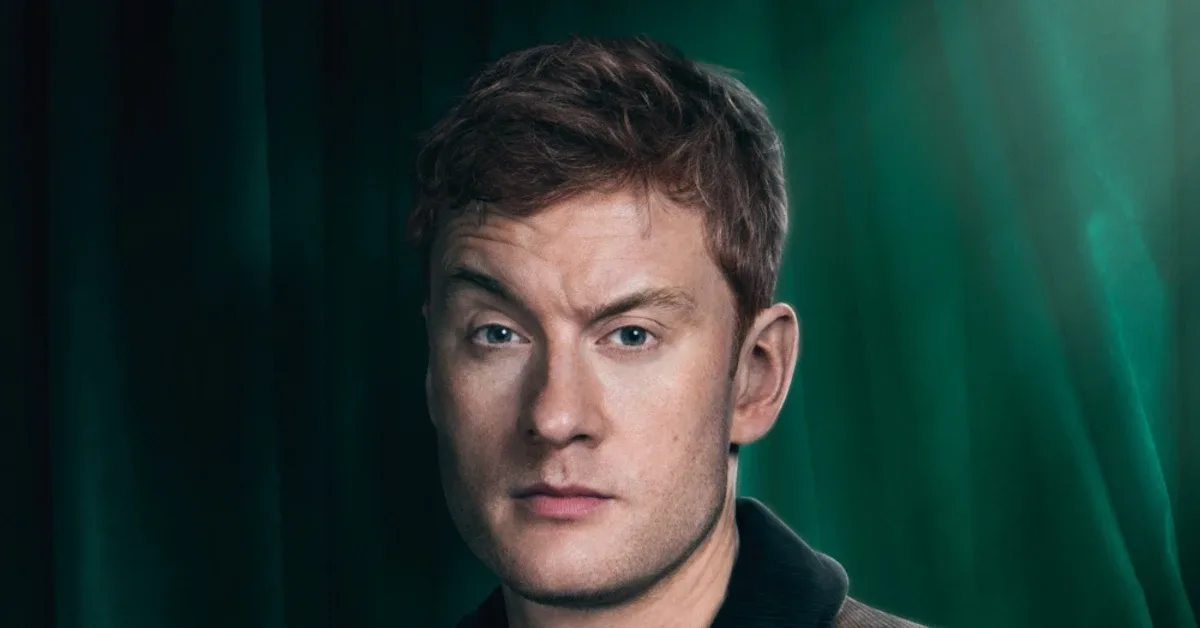
James Acaster revealed that he once hid his involvement in The Celebrity Traitors from Ed Gamble, the comedian who also hosts the show's official companion podcast. The admission came when Acaster was asked about the biggest lie he had ever successfully pulled off.
The 41-year-old comedian is one of the contestants in the second season of The Celebrity Traitors, the BBC spin-off scheduled to premiere on 1 October. He deliberately kept his participation secret from Gamble, known as the host of The Traitors: Uncloaked, the talk show that discusses how the game unfolds.
"I'm not good at lying and I don't usually do it. Perhaps the biggest lie I ever successfully told was telling Ed Gamble that I wasn't doing The Celebrity Traitors," Acaster told the BBC, as quoted in the interview.
Acaster said he had watched the first season of the celebrity spin-off and admired the strategy of Alan Carr, who emerged as the winner. He had also spoken with Joe Wilkinson and Nick Mohammed, two contestants from the previous season, to get a sense of the game's atmosphere. According to Acaster, Wilkinson was more relaxed, while Mohammed tended to be serious about cracking the case. He expects his own playing style to fall somewhere between the two.
The second season features many names from the world of comedy. Acaster called the lineup a "concern" because the comedians could be seen as a collective threat. "There will be suspicion that at least one of us has been chosen as a Traitor, and we might form an alliance if we aren't split up," he said.
He expects the comedians to be the first group singled out, especially early in the game when there are no strong clues yet. "You also have to consider that a comedian won last year, with Alan Carr disarming everyone through jokes. He has tainted us all," he added, half joking.
Acaster also highlighted the possibility of a mathematical logic intervention from Hannah Fry, another contestant known as an academic. According to him, Fry could convince the group that, probabilistically, a comedian would be chosen as a Traitor because of how many of them there are. "Although it could be three non-comedians who are chosen... if the maths turns against us, we're in big trouble," he said.
"Every time I watch this series, there's no clear pattern. Quiet people can last to the end, and so can big characters. Anyone can make it to the final. You can avoid being murdered or banished just by not being seen as dangerous enough."
— James Acaster
As for his own chances, Acaster said he doesn't know whether he has what it takes to survive to the end. He considers the game highly unpredictable: quiet contestants can slip through, while prominent characters are the ones vulnerable to being targeted. "I might be seen as harmless. Yes, I could make it to the end. This is anyone's game," he said.
For Indonesia's entertainment industry, the phenomenon of The Celebrity Traitors shows how reality game formats built on social strategy continue to draw global attention. The success of this celebrity spin-off could serve as a reference for local producers who want to develop similar programs with homegrown stars, especially amid rising consumption of streaming content and digital television. However, the main challenge remains the ability to build a narrative that relies not only on contestants' popularity but also on authentic psychological dynamics.
With the second season airing on 1 October, the public will soon judge whether the comedians' dominance is truly a strategic disadvantage or rather a hidden weapon. Will Acaster and his peers prove that laughter can be a shield, or the opposite?